
Written by Kat Niewiadomska, Founder Fitness Index
People use the phrase growth mindset so loosely that it starts to mean almost nothing. I don’t find that helpful. If you are a bootstrapped founder, mindset has to earn its place. It has to help you make better decisions, recover faster, and protect limited runway. Otherwise it stays in the world of startup slogans.
Silicon Valley loves “fail fast.” Self-funded founders need a more disciplined version of that idea. You need enough room to test, learn, and adjust without blowing up your savings, your confidence, or the trust of the people around you.
The stakes are real. Over two-thirds of startups never deliver a positive return to investors. I work at the intersection of systems, human behavior, and strategy, and in my work through the Founder Fitness Index I measure founder failure risk, coachability, and blind spots across the entrepreneurial journey. The patterns that hurt a company usually show up in the founder first.

Start with the kind of risk you can actually carry
Every founder is different. Every founder’s tolerance for risk is different too.
So start there. Ask yourself what you are actually willing to tolerate. Ask what kind of downside you can absorb. Ask how much uncertainty you can carry before you stop thinking clearly and start reacting.
This matters more than people think. A lot of founders borrow somebody else’s identity. They hear the loudest founder in the room and assume they should operate the same way. That can get expensive fast.
A growth mindset starts with honest self-awareness. Then you slowly build that muscle.
For a bootstrapped founder, failure tolerance should mean small, recoverable mistakes that teach you something useful. It should mean experiments you can survive. It should mean enough stretch to grow, without putting yourself in a hole so deep that one miss knocks you out of the game.
I once worked with a founder who had very low risk tolerance. The first step was not telling him to become more fearless. The first step was helping him understand his own appetite for risk. Once you know your baseline, you can expand it through better reflection, clearer learning, and evidence from your own work.
That kind of confidence is grounded. You are building proof.
I look for growth mindset in how you feel, think, and act
A lot of people talk about growth mindset like it is a personality trait. I look at it as a pattern.
In the Founder Fitness Index, I focus on three domains. I look at how you handle pressure. I look at how you process information. And I look at what you actually do when things get hard.

The first layer is emotional
I want to know how steady you are under pressure. Can you recover from a setback? Can you regulate stress? Can you stay motivated without getting hijacked by every rough week? Confidence, stress tolerance, and emotional agility live here.
The second layer is cognitive
This is how you make sense of what is happening around you. Can you adapt when the market gives you new information? Can you question your own assumptions? Can you keep learning, or do you keep defending an old story because it feels safer?
The third layer is behavioral
This is where mindset becomes visible. Do you follow through? Do you respond to feedback? Do you turn learning into a better process next week? Or do you keep repeating the same pattern and call it persistence?
Coachability
Coachability sits right in the middle of this. It sounds soft, but it is very practical. It tells me whether you can hear feedback without turning it into a threat to your identity.
There is good evidence that this can be developed. Entrepreneurs who received structured growth-mindset training showed higher self-efficacy, which is really just stronger belief that they could handle the work in front of them. They also took more entrepreneurial actions.
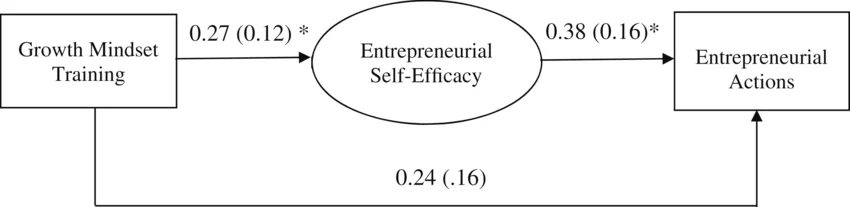
The researchers even described “newfound confidence and grit”. That tracks with what I see. Better mindset shows up in cleaner action.
Use an oscillating process of reflection and action
One of the biggest mistakes founders make is turning the growth mindset into nonstop motion. I don’t recommend that. I also don’t recommend endless navel-gazing.

What works is an oscillating process of reflection and action.
I use that phrase very intentionally. Action gives you data. Reflection helps you understand the data. Your next move gets sharper. Alternating between the two is how you learn the fastest.
Research keeps landing in the same place. In one study, people who paused to reflect on how they solved a problem performed about 18% better on the next round. In a field setting, spending 15 minutes a day reflecting led to about 22.8% higher test performance. When a peer-sharing step was added, the gain rose to around 25%. Another review put it simply: reflection helps people “do it better next time”.
That is exactly what I want founders to do.

I recently spoke with a founder who had low risk tolerance. Through the Founder Fitness Index, we saw that she was very good at moving fast and breaking things. She could execute. She could take on new projects. She could get things done and breathe a sigh of relief when it worked.
What she was not doing was stepping back.
She was not taking time to ask what worked well, what could have been done differently, or what she had just proven about her own ability. So I encouraged two checkpoints.
The weekly checkpoint
The first checkpoint was simple. Every Friday afternoon, stop.

Ask how you operated that week. Ask what worked well. Ask where you fell short of your goals. Ask what you would have liked to do differently. Ask where your process is leaking time, energy, or attention.
This kind of review keeps you from drifting. It helps you catch patterns before they harden into habits. It also gives you a clearer picture of how you work when things are going well and how you work when stress starts to take over.
The post-delivery debrief
The second checkpoint came after delivering a service. Sit down and debrief the work.

Ask how it went. Ask what feedback came in. Ask what opportunities were overlooked. Ask where the service can improve and where there is room for innovation. Then ask what parts can be encoded so the next round gets easier.
For founders who sell services, build projects, or work in repeated cycles, this step is gold. It helps you improve the work itself. It also helps you improve how the work gets delivered.
Turn reflection into proof
That pause does a lot of work. It increases confidence because you now have proof instead of a vague memory. It improves risk tolerance because you can point to what you know how to do. And if you are growing organically, it often gives you something else you badly need: case studies, clearer language, and marketing material you can reuse.
For bootstrapped founders, that matters. Each project can either disappear into exhaustion or become an asset. A clean debrief can turn into a better process, a tighter offer, a stronger client conversation, or a clearer story about the value you create.
I also tell founders to evaluate with another person when they can. Say it out loud. Write it down. Let somebody challenge your version of events. That kind of external reflection matters because founders can get trapped in their own loops. If you skip the pause for too long, you can become irrelevant, frankly, because you are so busy delivering that you never improve the offer.
One question I come back to often is very simple.
Are you moving forward in a meaningful way, or are you just frantically splashing around and not really making progress?
Meaningful progress leaves traces. Your process gets cleaner. Your market understanding gets sharper. Your work becomes easier to repeat and scale.
Sheer perseverance often comes with blinders
Founders get praised for grit so often that they stop checking whether the grit is still helping. This is where I see a lot of people drift into the ‘failure to learn’ category.
Sheer perseverance often comes with blinders.
The risk shows up when you keep pushing but stop asking better questions.
- What am I missing?
- What should I be learning here that I am not learning?
- Should I be talking to somebody and listening more?
- Should I be asking more questions of my customers, my stakeholders, or the market?
Perseverance needs to be intelligent and reflective. Otherwise you can spend months defending a plan that reality already rejected.
Harvard Business School has been blunt on one major version of this problem. Founders need to validate ideas with real customers. If you skip that step and stay attached to your own assumptions, the market will eventually do the teaching for you. The lesson just gets more expensive.
I also push back on the romantic startup trope of the founder who refuses to compromise. A strong vision matters. An unwavering vision that ignores feedback turns into stubbornness. Once that happens, buy-in drops. The people who were willing to help start backing away. The founder ends up alienated, and that isolation becomes its own risk factor.
Stress can make your gut lie to you
I hear a lot of advice about trusting your gut. Under stress, that gets risky fast.
When people are stressed, stress narrows the scope of solutions they can access. The brain leans on past experience. So what feels like instinct is often just memory. You are reusing an old pattern because your system is overloaded, not because it is the best answer for the current problem.
Sometimes that old pattern works. Sometimes it just delays the real solution. Either way, stress is shaping the choice.
Bootstrapped founders are especially vulnerable here because work bleeds into everything. The stress is constant. That is why I tell solo founders to actively manage stress and treat it like part of the business. It affects creativity. It affects listening. It affects decision quality.
Talk to people. Have mentors. Get a sounding board. Let somebody hear you out before you turn a stressed thought into strategy. The more isolated you are, the louder your assumptions get.
I also recommend creative exercises that widen your options again. One of my favorites is simple. Don’t stop at the first right answer. Don’t stop at the second. Look for the fifth right answer. Force your brain past the obvious. That is usually where new territory starts.
My own growth mindset got sharper when I asked for help
I learned this very directly when I launched my first consultancy. I had never worked on my own before. I was also living in a country where I did not have a network and did not fully understand how the market worked.
So I asked myself a hard question. What have I done in the past that caused me to fail, and how can I do things differently this time?
When I looked back honestly, I saw one clear pattern. I did not ask for help. I was always the one giving support. I was not the one requesting it.
So I changed that on purpose. I hired somebody to help me walk through the process as an accountability partner. I reached out to mentors. I asked questions. I made sure I was being a good student and getting into that learner mindset rather than being the expert.
I also kept reminding myself of something simple. Just because I did not know how to do this yet did not mean I could not learn how to do it. I had done hard things before. So I stopped treating the situation like a dramatic success-or-failure verdict. I focused on the right next step.
That is still how I think about uncertainty. Action, reflection, action, reflection. Then a longer look at my own patterns so I do not keep repeating the same fatal flaws.
Final thought
For bootstrapped founders, a growth mindset should make your company steadier and your decisions cleaner. It should help you listen, adapt, and keep moving without burning yourself out on noise.
For me, this also comes back to freedom. Better systems give you more room to choose instead of react. My focus has always been simple: build systems that work for the business and the humans inside it.
If you want to reduce failure risk, learn your risk tolerance. Build in reflection. Manage stress. Ask for help. Keep getting into that learner mindset. Then move again. That rhythm lowers failure risk because you keep learning before the market has to teach you the hard way.
FAQs
How does a growth mindset directly improve early customer acquisition?
A growth mindset forces you to stop defending assumptions and start listening. Harvard Business School notes skipping customer validation drives failure. Treating early sales as data-gathering experiments lets you adapt to what the market actually needs, protecting your runway.
Can you actually train yourself to execute more consistently when stuck?
Yes. Mindset creates tangible behavioral shifts. According to the Strategic Entrepreneurship Journal, founders given structured training took significantly more entrepreneurial actions and built newfound confidence. When you reframe setbacks as manageable data, execution becomes far less intimidating.
How do you separate a growth mindset from toxic hustle culture?
Hustle culture demands nonstop motion. A true growth mindset demands strategic pauses. Operating blindly burns resources. Harvard Business School found that adding a brief peer-sharing reflection step produces a 25% performance gain. Growth requires evaluating data, not just grinding harder.
How should self-funded founders handle the imposter syndrome of a major pivot?
Recognize that sticking to a failing plan out of pride is the real risk. Harvard Business Review states over two-thirds of startups never deliver positive returns. A pivot isn’t a failure of identity. It is intelligent survival.
Can a growth mindset translate into better organic marketing and PR?
Absolutely. Bootstrapped founders can’t afford massive PR campaigns. By turning your reflections into public case studies, you share raw, unfiltered lessons. This normalizes the grind and transforms operational friction into authentic storytelling that organically attracts peers, partners, and clients.
About the author
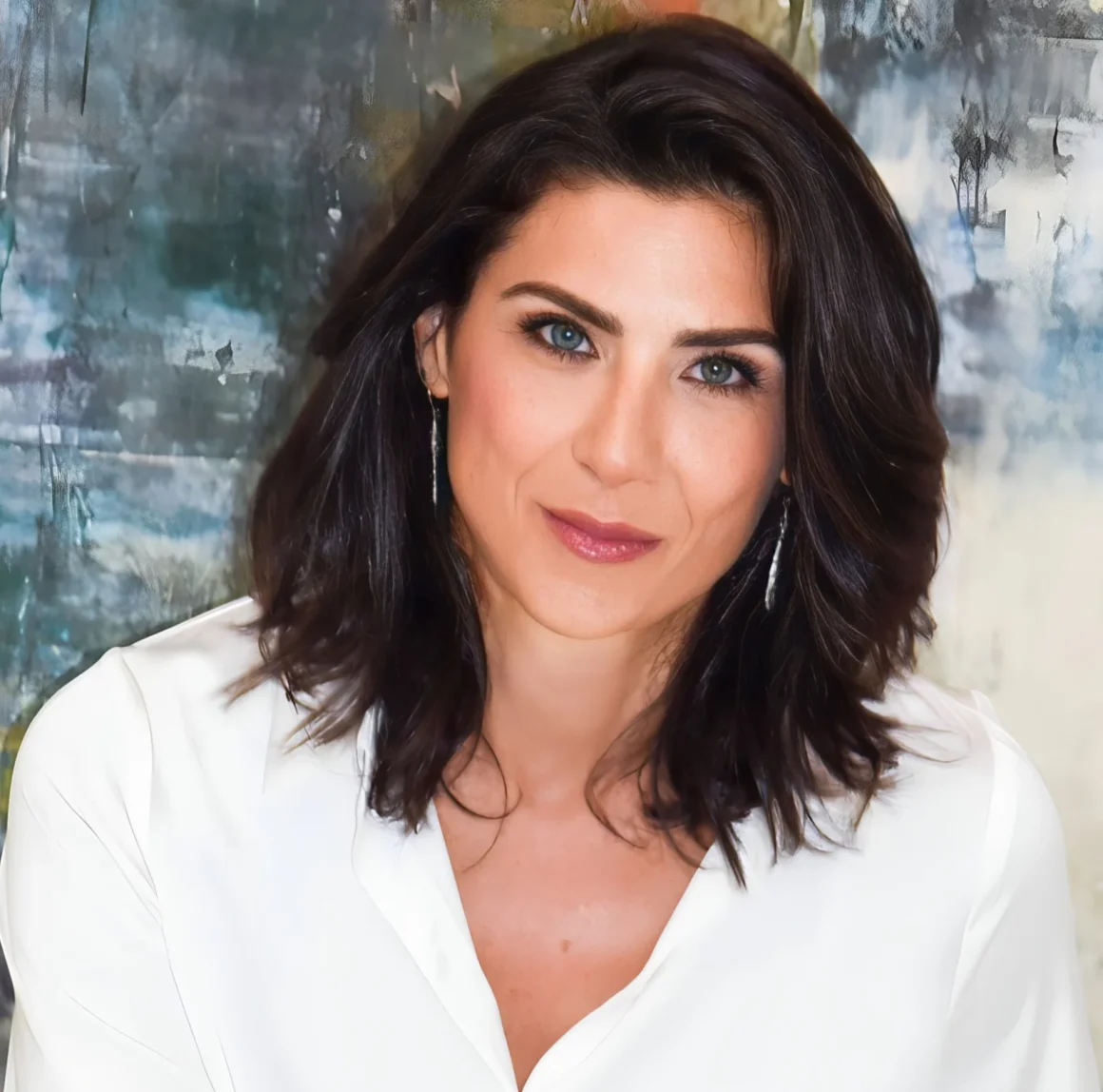
Kat Niewiadomska is a global Executive Coach and Leadership Development Consultant who blends engineering, business, and behavioral science to help founders and entrepreneurs achieve sustainable success.
With over 15 years of experience across startups, SMEs, NGOs, and multinationals, she specializes in Creativity and Innovation, Design Thinking, Emotional Intelligence, and Leadership. Her background spans consulting, engineering, and academia, including 6 years as a design engineer working with governmental and military organizations in the US and France, and a role as Adjunct Professor teaching Entrepreneurship and Innovation at leading universities in the Middle East.
Kat holds a B.E. in Electrical Engineering from SUNY, an M.S. in Engineering from MIT, and a PhD in Environmental Sciences from the Sorbonne.