
Written by Lidia Vijga
If you read startup stories between meetings and think you need to quit before you start, slow down.
You do not need a dramatic founder moment. You do not need VC friends. You do not need a TechCrunch launch.
A lot of people begin exactly where you are. In 2023, 44% of entrepreneurs started as side hustlers while still working for another employer. Among founders aged 25 to 34, 49% launched as side gigs.
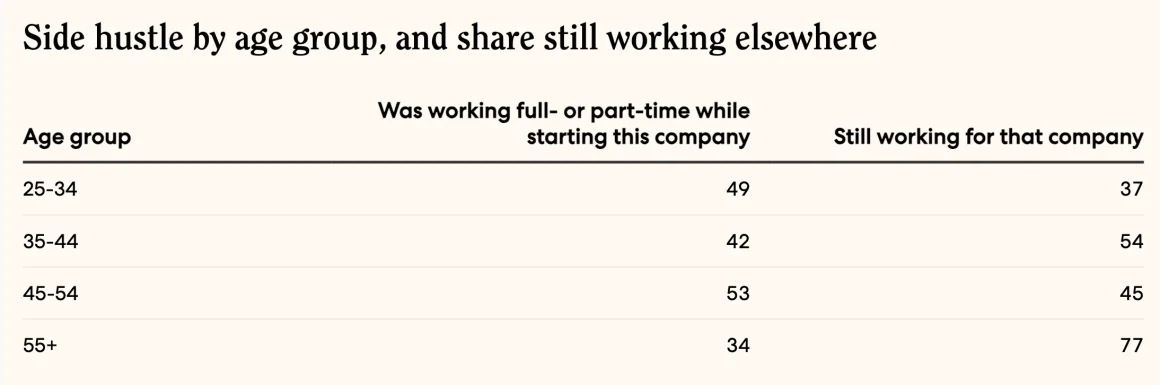
And in early 2025, 8.9 million Americans held multiple jobs. This is normal now.
A lot of people also start for very practical reasons. 71% of entrepreneurs who wanted extra household income were side-hustlers. So if part of your reason is money, security, or wanting more control over your future, good. That is real life.
Forget the hype. And let me show you how things really work. Working 9-to-5 and starting a company is really difficult. Your time is tight. Your energy is limited. But your job can also be your biggest advantage if you use it properly.
Every company I worked for gave me skills that moved me one step closer to starting my own businesses. That is the mindset I want you to have. Your job can train you. It can fund you. It can expose you to the exact problems worth solving.
Use your job as leverage

When you only have a few free hours a day, leverage matters more than motivation.
You need to focus on something where you already have an edge. That edge could be industry knowledge. It could be a network. It could be understanding how buyers think. It could be seeing the same pain every day at work.
There is research behind this too. Prior industry experience significantly increases a founder's chances of success. I agree with that completely.
I once spoke with a founder who wanted to build in a space that had nothing to do with his background. He already had 10 years of experience in another industry. I told him to use that. Solve a problem for clients he already understood. Those 10 years are not random. They are leverage.
Your 9-to-5 gives you a front-row seat to friction. You can see what is slow. You can see what keeps breaking. You can see what clients complain about again and again. Pay attention to repeated pain. Pay attention to the manual workarounds. Pay attention to what people are not saying.

Sometimes the best startup idea is sitting in plain sight inside your job, but everyone around you has accepted the pain as normal.
I would not quit too early. I would wait until you have the industry knowledge, the expertise, and the right partnership in place. Being inside the company helps you learn what is really happening in the market. It helps you meet people. It helps you understand buyers. That matters a lot more than people think.
Pick a problem close to your expertise

A lot of first-time founders want to build something flashy. Frequently it is a marketplace of some sort.
I get it. Connecting two parties and making a profit from it sounds exciting. It sounds big. It sounds like that happy startup land.
But it is also a trap for many part-time founders.
A marketplace is almost like running two separate businesses. You need supply. You need demand. You need both sides happy at the same time. That is hard when you are full-time. On nights and weekends, it can bury you fast.

I would keep it much simpler. Focus on solving a problem for one audience. Look for something unresolved, underserved, or full of friction in the industry you already know well. If you ever move toward a marketplace later, think about single-player mode first. One side should get value even if no transaction happens.
That matters because your biggest enemy in the early stage is complexity.
I think founders get stuck because they chase the cool idea instead of the clear pain. Many successful bootstrapped founders quietly build around boring problems for a very specific ICP. They do not perform success online. They just solve something painful and useful.
I have seen this in my own work. BriefBid came first. Then DeckLinks came out of that because sellers on the marketplace wanted a way to track their PDFs and proposals. We saw the demand under the hood. We listened. We built around it.
That is how I would think if I were starting after work today. One audience. One painful problem. One simple path to value.
Accept the work-life blend
I know a lot of advice tells you to create perfect boundaries from day one. I do not see it that way for early-stage founders.

There is no work-life balance. There is more like work-life blend.
That does not mean you should destroy yourself. Take care of yourself, yes. But if you want to create something meaningful, your startup has to become a real part of your life. Your brain is 100% on. You notice customer pain during the day. You save ideas in your notes. You work at night. You use weekends well.
That is the season.
The key is focus. You cannot do everything when you only have a few free hours. Pick the highest-leverage work. Talk to potential buyers. Build the first version. Write content about the problem. Skip the busywork that makes you feel productive without moving anything forward.
You can use tools to move faster. Just be careful with them. More than 20% of new businesses used generative AI tools in 2023. And 82% of those startups used AI for marketing tasks. Fine. Use AI to automate tasks or repurpose content if it saves you time. I do that. But do not let it invent your core ideas for you.
And if you can turn your work into play, you will keep going longer. That matters more than some fake routine that looks good on social media.
Validate with money, not compliments
This is the part where I get very direct.
Compliments do not validate a startup. Waitlists do not validate a startup. Friends saying, "This is amazing, keep going," do not validate a startup.
It's all fugazi, whazy and woozie. This doesn't exist and it's not real.
I care about people swiping the card, showing that they are interested.
When founders build on the side, the first clients usually come from the network. That is normal. Quietly tell people what you are working on. Offer them a better solution. Invite them into the journey. If there is enough appetite, keep building.
By then, you should have some kind of MVP. And please forget polished. Make it usable.
The right person should feel the pain, see the value, and be able to pay. That is what real validation looks like.
I have seen how the first paying customers can change a founder's confidence. At BYVI, we wrote about a founder who was trying to validate their MVP. After the story went live, that founder started receiving emails from potential clients. That mattered because the market responded. The problem was real enough for people to reach out and pay for the solution.
I also believe transactions and empathy go together. A lot of founder spaces talk about support. Real support is buying from each other when the product can actually help. Advice is useful. Revenue is what keeps the company alive.
So chase proof. You need more than encouraging words. You need a paying user.
Build ethically while you are employed
A lot of people worry that building a side business while employed is somehow wrong. I think that fear gets overblown.
It is normal for people with jobs to pursue their own ideas. A lot of employers know ambitious people will not stay forever. People are openly trying things now. That is part of modern work.
The line is simple. Do not poach your employer's clients. Do not take business away from them. If you are offering a different solution and you are not stealing clients, I think you are on solid ground.
Meet your co-founder at your current job

Your job can also help you find the right co-founder. Sometimes the best partner is inside the company you already work for. You are both seeing the same market pain. You both understand the buyer. You already know how the other person thinks.
I have seen co-founder relationships start because people worked together, stayed in touch, and reached out later when the timing was right. That makes sense to me. You are not starting from zero trust.
Still, do not rely on chemistry alone. Test the partnership under pressure.
Join a small hackathon. Build a mini project in 24 to 72 hours. You will learn a lot very fast. You will see whether the person becomes resourceful or starts the blaming game. You will see whether they take accountability. And you will for sure see whether they can handle stress without creating more chaos.
One intense weekend can save you a year or two of failure.
Build the audience before you build the launch
This is where many aspiring founders get distracted. They dream about the big launch. They dream about TechCrunch. They dream about a perfect reveal.
I understand why. Press feels like proof.
Today's playbook, however, looks different. Start by building an audience on platforms like X, Substack, Instagram, TikTok, or LinkedIn. Once you establish a community around a specific problem, develop a product to serve them. Whether you vibe-code an MVP or take another path, the key is audience-first growth.

I know how powerful publicity can be because I lived that shift myself. My team and I went through difficult times when it was hard to get any traction or exposure. Then a journalist came out of nowhere and wrote about us. That gave us the greatest feeling. It also led to partnerships and clients.
But I still would not tell you to build your whole growth strategy around traditional press.
Your ideal clients most likely do not read TechCrunch unless you sell to other startups, investors, or advisors. In most cases, you need to own your media growth engine instead. You need to be discoverable by Google and AI searches. You need to become the most helpful brand on the internet for your niche.
That starts before the product is fully polished. And if you consider building in public, this is where you could start:
- Talk about the problem you are solving and WHY it matters.
- Share the common questions buyers ask.
- Share what you are testing.
- Share what you are building and what you are breaking.
- Share your wins.
- If you talk about a failure or a pivot, explain what you learned. Otherwise you are just venting.
Many founders hold back because they think they need a perfect image in public. I see the opposite. Sharing the ugly truth and getting very vulnerable is often what makes people trust you. The details you feel shy about are often the parts people need to hear most.
Day 14 of doing SEO
— YiMing (@yimingdothan) March 30, 2026
Added more back links and ref domains
my domain rating is still stuck - maybe it's lagging? https://t.co/PAKcQTK6oH pic.twitter.com/Lcq4JMo68v
Use content collaborations to land your first clients
If you are short on time, I would seriously look at content collaborations.
I think content collaborations are the most underrated strategy in content marketing for early-stage founders. Collabs with the industry experts are also one of the best ways to build a relationship with your target audience.

Here is how I think about it and what I do.
- Start with your audience to define the topic.
- Find the expert or ideal collaborator who cares deeply about that same topic and has the audience you want to reach.
- Get in touch with the collaborator. When I reach out, I like to mention one specific post or insight the person shared that I genuinely found smart. Then I propose expanding it into something useful. That could be an article, a video, a podcast, or a newsletter conversation.
- Make it super easy for them to contribute. For article collaborations, I ask for bullet points or voice memos. Then I handle the writing and everything else.
- Spend time on distribution. This is where both you and the collaborator get involved. Share the content or repurpose it for your social media channels and a newsletter.
Why does this works?
It is a win-win. You create something helpful for your audience. The other person gets exposure and looks great. You get to borrow trust and authority from an expert.
I have seen this strategy create real outcomes. I collaborated with an expert on a financial podcast guide, and that piece still ranks on Google and attracted clients.
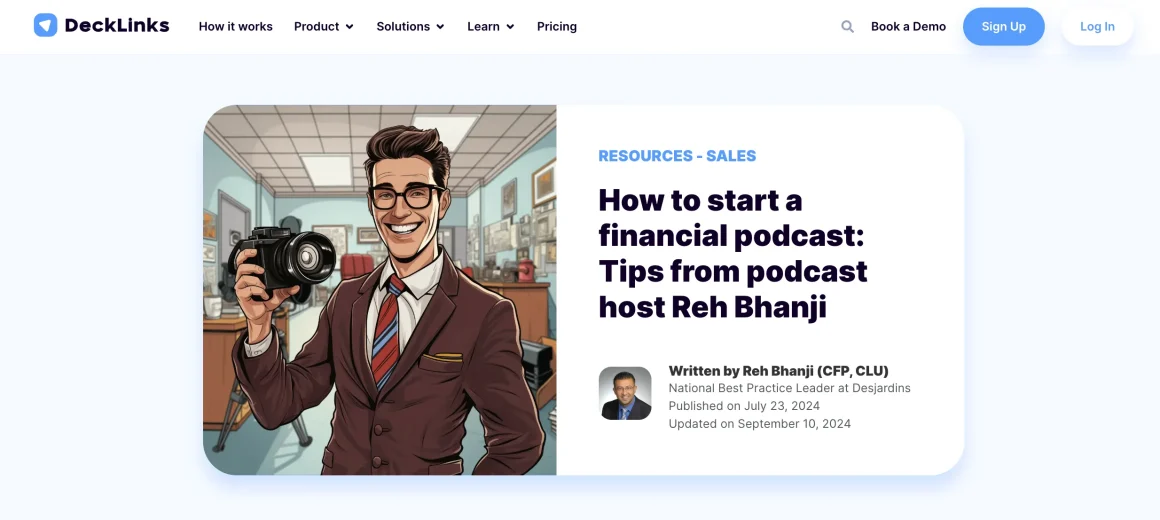
I collaborated with an insurance company around the issue of trust in that industry, and that collaboration led to the company becoming a client. I also worked with the founder of Advite on a guide about comment marketing and avoiding Reddit bans. That guide got some great engagement on social media and brought them leads.
I have even used content collaboration to reopen conversations with ghosted prospects. Instead of pushing harder, I proposed a joint article. That created a relationship, and that relationship led to business.
One more thing. Distribution matters as much as the content itself. I spend three times more effort on distribution than on writing. You can repurpose the content into a different format. Share it on social media. Put it in the newsletter. Or use it in your email communications with potential clients.
Find a mentor that will push your limits
A lot of new founders chase famous mentors who exited their company decades ago. Sometimes that helps. Often it does not.
Markets move fast. Advice gets old fast too.
I would rather learn from someone who is still in the industry and still talking to customers. Aim for people who are 10, 15, or 20 steps ahead of you. The right person will often see a younger version of themselves in you.
And your mentor does not need to be a startup celebrity.
If you plan to sell into enterprise, someone on the buying side can be one of the best mentors you will ever find. They can tell you how internal buying decisions work. They can show you what buyers care about. They can even become your first internal champion.
Before asking for mentorship, do a little work first. Read what they write. Engage with their content. Show that you understand their world. If they are busy, offer something mutually useful, like a collaboration or partnership.
Quit your job when the evidence is there
You do not need to make one dramatic leap based on emotion.
Founders often think in black and white colors. They feel they either need to quit now or give up on the dream. Real life has much more grey area than that.
The side-hustle path can become full-time. Nearly half of founders who started as side-gig entrepreneurs had quit their prior jobs by early 2024. But the right moment comes from evidence.
I would look for these signs:
- You understand the industry well.
- You know the problem is painful.
- You have an MVP people can use.
- Buyers are willing to pay.
- You may have found the right partner.
- You may have built an audience that trusts you.
- You may already be getting leads through content.
That is also why I tell founders to delay raising venture capital until they really understand product-market fit, positioning, messaging, and customer acquisition. Forced fast growth poured into a blurry strategy just creates a bigger mess.
The early stage is hustle, grind and endless pivots. That is normal. One thing leads to another. Then that leads somewhere else. Pivots are part of the path.
But right now, I still think it is a very good time to build something new. Younger founders with fresh ideas do not need to know everything before they begin. They just need to start somewhere and start solving a problem they deeply care about.
Final thought
Starting a tech startup while working a 9-to-5 is hard. I want to be honest about that. There is a dark side to entrepreneurship, and it can feel mentally breaking. However, this pressure is what shapes you into a more resilient individual, ready to lead teams and tackle greater challenges.
Still, I think this is one of the smartest ways to begin.
Your job gives you knowledge. It gives you context. It gives you patterns, pain points, and people. Use that. Build around a problem you truly understand. Validate with money. Build the audience around the problem. Use content collaborations to create warm relationships.
And do not give up.
If you keep building, keep listening, and keep iterating, you will get somewhere. Sometimes one payment, one collaboration, or one story changes the whole path.
FAQs
How much money do I actually need to start a tech startup?
You need far less than you think. Ignore the massive VC funding rounds on TechCrunch. Many successful founders start with just a few hundred dollars to cover software, some AI tools, and hosting. Keep your 9-to-5 to fund your initial experiments. The goal is to build organic traction and get paying users before ever worrying about capital.
Do I need to know how to code to launch a tech company?
No. If you cannot code, leverage no-code platforms or AI to build the first version of your product. Over 20% of new businesses surveyed in 2023 used generative AI tools, according to Gusto. Focus on solving a painful problem first. Technology is simply the vehicle you use to deliver that value.
Should I ask people to sign an NDA before sharing my idea?
No. This is a classic trap for first-time founders. Ideas are practically worthless. Execution is what matters. Nobody is dropping their life to steal your untested concept. Talk to buyers openly. Sharing the problem is exactly how you get feedback, build trust, and find out if anyone will actually pay you.
What happens if my first startup idea completely fails?
Then you iterate. Aspiring founders often view entrepreneurship in black and white - success or total ruin. Real life is just endless pivots. Your first idea will probably break. That is entirely normal. You learn why it failed, adjust your product, and try again. Failure is just data. It will not destroy you.
How long does it take to get real traction with a startup?
There is no overnight success. It usually takes six to twelve months of quiet, unglamorous work to see real movement. You must build an audience, test your MVP, and speak to buyers. Do not panic if nothing happens in month two. Keep your 9-to-5, listen to customer friction, and play the long game.