
Written by Adam Gellert, founder at Linkus Group
Most companies call me when they needed to hire somebody as of yesterday. That part hasn’t changed.
What has changed is this: AI is now sitting inside your hiring process whether you asked for it or not. It’s in sourcing. It’s in screening. It’s in scheduling. It’s in the way candidates write their resumes and prep for interviews.
And in 2026, it’s going to be even more baked in.
If you’re a founder or a hiring leader at a startup, you don’t have time to chase shiny tools. You need hires that stick. You need people who can perform. You need alignment.
So when I talk about AI, I’m not talking about theory. I’m talking about what helps you hire better, faster, and with less risk.
AI is already everywhere (and the data proves it)
This isn’t a “future” problem. It’s already here.
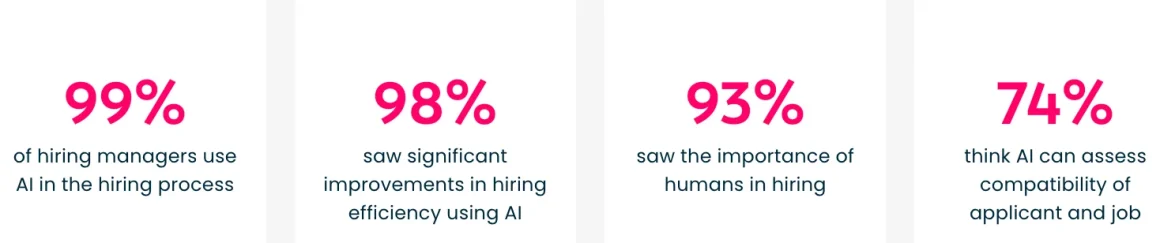
Insight Global’s 2025 AI in Hiring Report says 99% of U.S. hiring managers are using AI in some way, 98% say it improves efficiency, and 93% still say human involvement matters. That lines up with what I see every day. AI helps with speed and admin. Humans still own judgment.
The catch is simple. Most teams use AI to move faster inside a messy process.
Speeding up a messy process doesn’t make it better. It just gets you to the wrong outcome quicker. So before we talk about trends, we need to get honest about what AI can and can’t do for you.
What won’t change in 2026: hiring still lives and dies on alignment

Here’s the thing most people miss. Hiring breaks because people avoid alignment.
They avoid the hard conversation. They oversell the role. They hide the ugly parts. Then they act surprised when the hire doesn’t work out.
Employers don’t like to know the hard things about hard things. I get it. You’re proud of your company. You’re building something. You want people to want it.
But surface-level, most startups look the same now. Remote. Flexible. Great mission. Solid benefits. AI is going to make that sameness even louder, because every job post will read like it was written by the same “perfect” template.
Your advantage in 2026 won’t be better words. It’ll be clearer truth.
Overcomplication is still the real enemy

Founders tell me hiring is complicated. Then I look at their process and it’s 10 steps long. Seven rounds. Five stakeholders. No clear decision-maker. Half the team is interviewing off “gut feel.”
That’s where hiring dies. Not because talent doesn’t exist.
Hiring can be much more of a straight line than you make it. You just have to stop adding things that don’t actually reduce risk.
And I’ll keep saying this until it disappears:
“Hire slow, fire fast is one of the biggest lies ever told.”
If you hire really well, you don’t need to fire at all. You also can’t move so slowly that a competitor signs the best person before you even make an offer.
TAG still matters: trust, attitude, grit

In startups, I use TAG as the acronym: trust, attitude, grit.
AI can help you find profiles. It can summarize calls. It can highlight patterns. It can’t tell you if someone is going to show up with grit when the roadmap blows up on a Tuesday afternoon.
TAG is still the filter. And in 2026, with AI making everyone look “polished,” TAG becomes even more important.
Trend 1: “Off-market” talent becomes the main market

Job boards aren’t going away. But if you’re building a serious team, you can’t depend on them.
The best candidates usually don’t apply online. They’re working. They’re busy. They’re already getting messages.
This is exactly why I built Hipo around “off-market” talent and smart matching. Startups need access to people who aren’t raising their hand publicly.
In 2026, AI will make this shift faster. You’ll see more teams using AI to map talent pools, spot likely movers, and keep pipelines warm.
The danger is how people use it.
AI makes it easy to spam. It makes it easy to send 500 messages that sound “personal” but aren’t.
Candidates can feel that instantly. You burn your brand. You burn your team’s time. You get ghosted.
And please, let’s kill this idea while we’re here. I can’t stand it when people say the candidate was in your back pocket. People are not sitting there waiting for your job. You have to understand their motives, career trajectory, and what they actually want next.
AI can help you do the research faster. It can’t replace the relationship.
Trend 2: Resumes will look perfect, so verification will matter more than ever

In 2026, resumes will get cleaner. Cover letters will get smoother. LinkedIn profiles will get sharper.
That doesn’t mean candidates are lying. It means the “presentation layer” is getting easier for everyone.
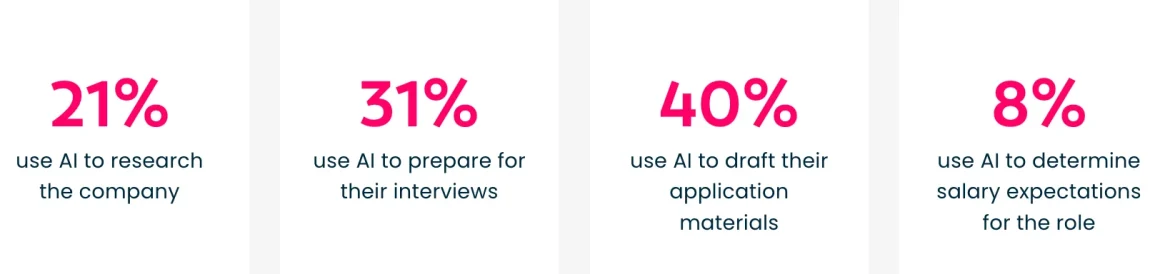
The same Insight Global report says 40% of job candidates use AI to draft application materials, and 31% use AI to prepare for interviews. It also says 88% of hiring managers can tell when applicants used AI, and 54% are concerned when they see it.
So what do you do with that?
You don’t panic. You don’t turn hiring into an interrogation. You verify.
Verification is simple. You dig into what the person actually owned. You ask how they made decisions. You get specific about outcomes, tradeoffs, and what went wrong. You look for consistency across the resume, the conversation, and references.
AI is going to make “vibes hiring” even riskier. You need signal.
If you’re a startup, this is good news. Big companies often struggle to adapt. You can move faster with a tighter, more focused approach.
Trend 3: AI matching will improve, but your inputs still have to be real

A lot of founders want AI to solve the hardest part of hiring: “Tell me who’s perfect.”
That’s not how it works.
AI is a mirror. If you feed it a confused role, you get confused output.
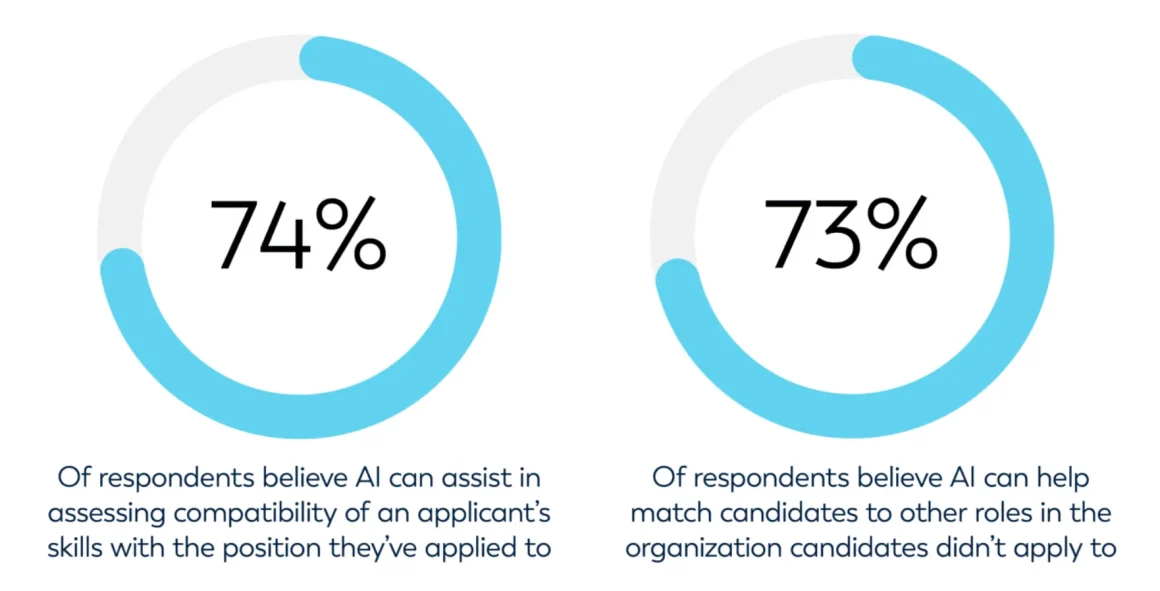
Insight Global says 74% of hiring managers believe AI helps assess how well an applicant’s skills match job requirements. I believe that too. Matching is getting better.
But the keyword is “requirements.”
Most startups don’t define requirements. They write wishlists. They try to combine three roles into one because they’re scared of missing something.
Then they wonder why nobody fits.
Stop hiring for a “Frankenstein role”

If your job description reads like, “We need a senior engineer who also does DevOps, security, data, product strategy, and can mentor the whole team,” the problem isn’t sourcing.
The problem is realism.
AI won’t fix that. It will just screen harder for something that barely exists.
Start with the business problem. Hiring is just business problems that need to be solved. If the problem is “ship product in 30 days,” your solution might be contract. It might be fractional. It might be a full-time hire plus a temporary bridge. You don’t know until you define the problem clearly.
Give AI a scorecard, not a vibe

In 2026, the teams that win will run hiring like adults. They’ll define what “good” looks like in plain language.
What outcomes do you need in the first 90 days? What does success look like by month 12? What are the true non-negotiables? What can you train?
When you have that clarity, AI becomes useful. It can help you sort, prioritize, and move fast. Without that clarity, it’s noise.
Trend 4: AI literacy becomes a baseline requirement across roles
This isn’t just about hiring engineers who build AI. It’s about hiring people who can work in an AI-shaped workplace.
In 2026, your marketer is using AI. Your SDR is using AI. Your operations lead is using AI. Your finance team is using AI. Your recruiters are definitely using AI.
If you’re not assessing AI literacy at least a little bit, you’re guessing.
Gartner predicts that by 2027, 75% of hiring processes will include certifications or assessments of AI-related skills. That’s not a random stat. That’s the direction we’re heading.
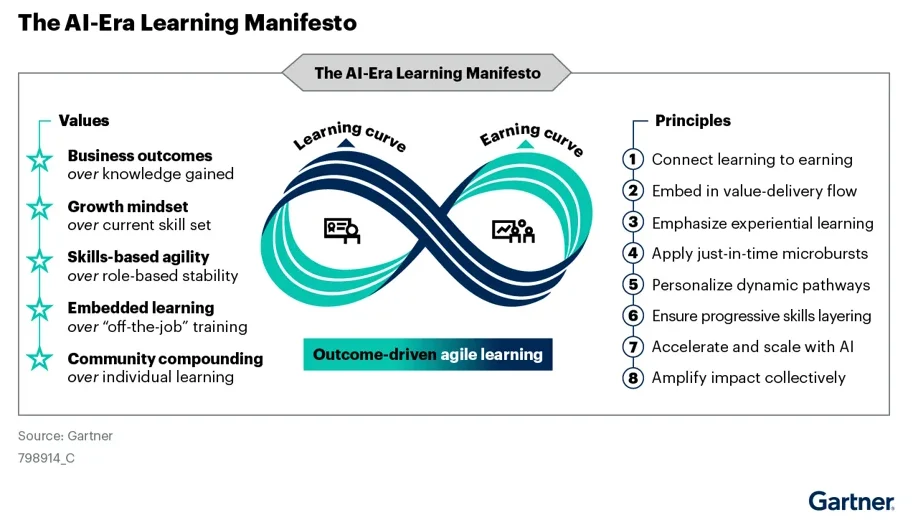
For startups, the practical move is to decide what “AI capable” means inside your company. Do you need people who can write prompts? Use AI responsibly with customer data? Automate workflows? Spot hallucinations? Explain their work clearly even when AI helped?
You don’t need a fancy test. You need a clear expectation.
Trend 5: Interviewing gets tighter, faster, and more structured

AI will keep removing admin from hiring. Scheduling gets easier. Transcripts get cleaner. Notes get auto-summarized. Interviewers get nudged to fill out scorecards.
That’s all helpful.
The trap is what founders do next. They add more rounds because it’s easier to manage.
More rounds don’t automatically reduce risk. They often increase it, because you lose the candidate.
I use sports analogies for a reason. Hiring is like signing a free agent. If you hesitate, the other team gets them. Time can kill all deals.
If you’re serious about 2026 hiring, tighten the process. Keep it focused. Make sure every conversation has a purpose. And pick a decision-maker who can actually decide.
You can hire a top engineer in a day if you wanted to. You just need to set the expectation, know what you’re looking for, and move.
Trend 6: Offer strategy gets more data-driven, but founders still need courage

AI is going to make comp data easier to access. Candidates will benchmark faster. Founders will benchmark faster.
Insight Global says 8% of candidates use AI to determine salary expectations today. That number is going up. Candidates are getting smarter, faster.
So here’s what matters in 2026. Stop negotiating against yourself, and stop losing great hires over small gaps.
I’ve said it before and I’ll keep saying it. When a founder hesitates over something like a $5,000 difference, the opportunity cost usually destroys them. Restarting the search costs time. It costs momentum. It costs revenue. It costs your team’s energy.
Great hires should generate three to five times their salary. That’s the mindset. If you believe the person is a 9 or a 10 for your business, act like it.
And if you can’t afford the role, be honest about that too. Adjust the scope. Go fractional. Change the timeline. Just don’t pretend you can buy a Ferrari for Honda money.
Trend 7: AI moves into onboarding, and that’s where startups will win or lose

I’m going to repeat this because it’s the most underrated part of hiring: 90% of recruiting is the onboarding process.
Startups lose great people because they “close” the candidate and then disappear. No plan. No ramp. No clarity. Then they act surprised when the person struggles or leaves.
AI is going to help here in 2026. It’ll help managers create 30-60-90 day plans faster. It’ll help document processes. It’ll help new hires find answers without interrupting the whole team.
That’s good. But it doesn’t replace leadership.
Onboarding still needs a manager who shows up. It needs clear expectations. It needs feedback early. It needs honesty when something isn’t working.
We spend 90,000 hours of our time at work. If someone’s first month feels like confusion and radio silence, they’re going to remember that. They’re also going to tell their friends.
At Linkus Group, we measure success through retention and trajectory. We’ve had a 95% retention rate because alignment is real and expectations are clear. Long-term fit is the goal, not a quick placement.

Trend 8: Transparency about AI becomes a recruiting advantage
Candidates are already suspicious. They’re wondering if they’re getting screened out by a robot. They’re wondering if anyone read their application. They’re wondering if your process is fair.
In 2026, the companies that win will just tell the truth.
Tell candidates if you use AI for scheduling. Tell them if you use AI to summarize interviews. Tell them if AI helps screen, and explain what humans look at next.
This ties back to trust. Without honesty and transparency, there’s no trust. Without trust, you don’t have a strong relationship. It’s that simple.
And if you want to stand out in a market where every startup looks the same, this is one of the few levers you fully control.
My practical 2026 playbook for startup hiring

If you want to use AI well in 2026, keep the strategy simple.
1. Start by defining the business problem in one sentence.
Not the job title. The problem. If you can’t explain why this hire matters, you’re going to hire the wrong person no matter what tools you use.
2. Next, get clear on what “good” looks like.
Talk outcomes, not adjectives. “Fast-paced environment” doesn’t mean anything. “Own onboarding for 20 customers per month and cut time-to-value” means something.
3. Then build a process you can actually run.
Keep the steps tight. Make sure each step reveals new signal. Make sure the decision-maker is present early, because waiting until the end creates delays and second-guessing.
4. Use AI to reduce admin and noise.
Use it to help you source smarter, write clearer outreach, summarize conversations, and keep your pipeline organized. Keep humans responsible for the final call, because humans own judgment and accountability.
5. Be radically transparent with candidates.
Talk about the good, bad, and ugly. It repels the wrong people and attracts the right ones. Surprises kill retention.
6. Treat onboarding like part of recruiting.
Build the ramp before the person starts. Check in early. Make sure your team is ready for the hire, not just excited about the hire.
If you do that, AI becomes a real advantage. If you don’t, AI becomes a faster way to make the same mistakes.
Where a high-touch partner helps in an AI-heavy world

AI makes it easier to do “more.” It doesn’t make it easier to do “better.”
This is where a high-touch partner matters. At Linkus Group, we stay selective because we want long-term partnerships. We want to understand your business. We want to understand the market. We want to tell you the truth even when it’s uncomfortable.
Founders don’t need another tool. They need clarity, speed, and a process that produces hires who stick.
The bottom line
AI is going to be part of hiring in 2026. That’s done. The question is how you use it.
Use AI to cut noise. Use it to move faster. Use it to stay organized. Then do the human parts better than everyone else: alignment, honesty, decision-making, and onboarding.
Hiring is the most underrated way to excel a business. In 2026, the startups that treat it that way will pull ahead fast.
FAQs
Should startups use AI video screening tools to replace first-round interviews?
Don’t outsource your first impression. While 93% of hiring managers emphasize human involvement despite widespread AI adoption, passing initial screens to a bot kills the candidate experience. Startups win on culture and speed. Use AI to schedule the call, but a human must own the conversation and assess true alignment.
How do we evaluate candidates when everyone uses AI to write their application?
It is the new normal. Research shows 40% of candidates use AI to draft resumes. Stop penalizing them and start verifying. You need to dig into specific tradeoffs they made on past projects. AI writes perfect cover letters, but it cannot fake real-world problem-solving during a structured interview.
Can AI actually evaluate if a candidate has the right skills for our technical roles?
Yes, but only if you define the role correctly. Currently, 74% of hiring managers believe AI helps assess skill fit. However, AI is just a mirror. If you feed it a messy wishlist instead of clear 90-day outcomes, it will just confidently recommend the wrong person faster.
Are candidates using AI to negotiate higher startup salaries and equity?
Yes, and they are getting faster at it. Right now, 8% of job candidates use AI to determine salary expectations, and that is climbing. You cannot lowball anymore. Benchmark your compensation accurately and stop losing top-tier talent over minor gaps. Great hires easily generate multiples of their salary.
Will we need to test every new hire for artificial intelligence proficiency?
Absolutely. AI literacy is no longer just for engineers. Gartner predicts 75% of hiring will test AI skills by 2027. For any role, set clear expectations on using AI to automate workflows and spot hallucinations.
About the Author

Adam Gellert is a hiring expert and a founder at Linkus Group, a high-touch recruitment agency for mission-critical hires. With extensive experience in team building and a deep understanding of organizational growth, Adam is dedicated to helping startups and SMBs find their most passionate teammates. His innovative approach and commitment to improving candidate experience have made him a respected figure in the tech and startup community.