Written by Fatima Barrera, founder of Timeless Messages
When a VC-backed founder hits a big milestone, the celebration usually looks familiar. A new laptop. A high-end gadget. Some branded swag. Maybe cash.
I understand why people do it. It is fast. It feels polished. It looks good in a photo.
I also think it misses the moment.
I love tech. I use it every day. I built parts of my own business with it. I am not against useful things. I just know that a tool helps you work. It rarely helps you feel seen.
And founders need that more than most people realize.
I have spent more than 20 years working in marketing, customer experience, loyalty, and retention.
In every setting, one truth keeps showing up. People stay where they feel appreciated. Clients do. Employees do. Founders need it too.
If you are building with board pressure on one side and growth targets on the other, you know how strange the milestone moment can feel. The headline says success. Your body says pressure. The outside world sees the raise, the launch, the revenue number. You see the late nights, the pivots, the self-doubt, and the moments you had to sound certain when you did not fully feel certain.
That is why I care so much about better gift ideas for entrepreneurs. Some of these are gifts you can give a founder in your life. Some are things you can bring into your own company. All of them go deeper than tech and gadgets.
Why Gadgets Miss the Moment

When someone hits a revenue goal or a big company milestone, they typically get something standard. A laptop. A gadget. Something expensive enough to feel official.
The problem is simple. It celebrates the event and skips over the human being.
Founders spend years betting on themselves. They carry the risk quietly. They carry the doubt quietly too. The people around them may see how hard they are working, and the founder can still wonder if anyone truly notices what it has cost.
That is why cash often misses too.
Cash is a great gift in many situations. It is usually not the best gift for a founder. The business always needs something. More runway. Better tools. Another hire. As I often say, cash goes straight into the machine and the founder never actually receives it. It becomes one more resource to manage.
And founder loneliness is real. It gets sharper after the win, because everyone assumes the win solved everything. It did not. One report says entrepreneurs are about 30% more likely to experience depression than non-entrepreneurs. So when you choose a gift, you are doing more than marking a milestone. You are speaking into a very human pressure point.
Founders are givers by nature. They give their time, their energy, their certainty. Sometimes they give certainty before they fully feel it themselves. So if you want to give them something meaningful, give them something that reaches the person, not just the company.
What Makes a Gift Actually Land

A meaningful gift for an entrepreneur usually does three things.
- It reaches the person.
- It gets specific.
- And it lasts.
Specific matters because vague praise disappears fast. “Great job” is fine, but it does not stay with people. “You kept this team steady when things got messy” stays. “You made people feel safe when everyone else was anxious” stays. Those words have weight.
This is not just a warm and fuzzy idea. Recognition affects retention in a very real way. Gallup found that well-recognized employees were 45% less likely to have changed organizations after two years, and employees who received high-quality praise were 65% less likely to be actively looking for another job.
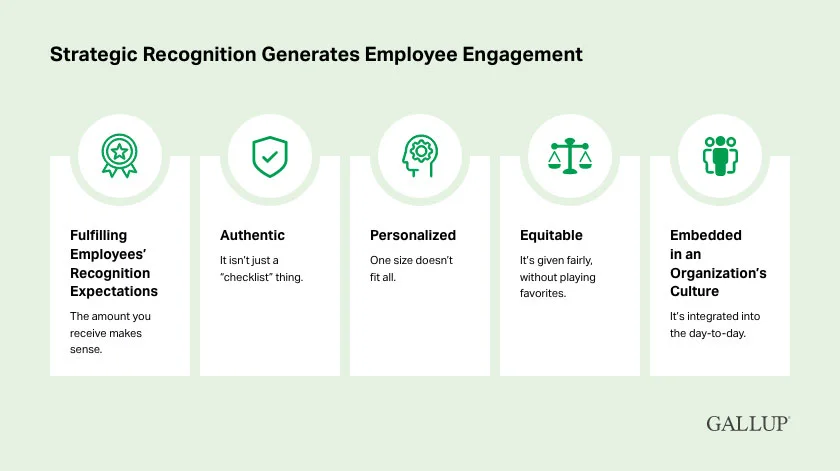
The gap is bigger than most leaders think. Gallup found that only 22% of U.S. employees say they receive the right amount of recognition, while 55% report getting none at all or getting recognition so weak it does nothing for engagement. If you are trying to scale and keep great people, that should get your attention quickly.
I see the same pattern in business growth work. Most companies are sitting on a goldmine of insight and never use it. The same is true with appreciation. The people around you often see your impact more clearly than you can see it yourself.
I use this analogy a lot because it is true. You can’t see yourself if you’re inside a jar. You can’t read the label that’s outside of the jar, but everybody else on the outside can.
Founders live inside the jar every day.
That is why the best gifts are the ones that hold up a mirror. They give the founder words they can come back to later. And I really believe in writing things down. Your brain is for thinking, not storing.
6 Gift Ideas That Go Deeper

1. A Timeless Messages Book
This is the gift I built, for exactly this reason.
A Timeless Messages book gathers messages from the people who know the founder best. Family. Friends. Colleagues. Mentors. Teammates. Anyone who has truly been part of the journey. Depth matters more than volume here. When those voices come together in one place, the founder receives something money usually cannot give them. They receive proof.

The idea came from a book I made for my daughter’s 20th birthday. When she read it, she said, “I didn’t realize people saw me that way.” That moment stayed with me. It became the mission behind Timeless Messages, because people don’t need more stuff, but they do need to know that they have made a difference.
That is why this gift lasts. It sits on a desk. It gets opened again on hard days. It reminds the founder that the people around them noticed, even when the world moved on to the next thing.
I also know busy people delay meaningful gifts because they think it has to become a big project. I hear this all the time.People try to create something like this on their own, and it turns into a scrapbook that never gets finished. I care about removing that burden. Waiting for perfection costs people in business and in relationships. Clarity comes through action.
2. Handwritten Impact Letters
If you need something meaningful this week, start here.

Ask a small group of people to write letters to the founder. Keep the request simple and focused. Ask them to answer one real question. What did this founder do that made a difference for you? What is one quality they have that they may not see in themselves? Tell me about a time something didn’t go as planned, and what they did next.
That kind of prompt changes the quality of what people write. You move past generic praise very quickly. You stop getting “Congrats” and “Proud of you” and start getting truth.
There is research behind this too. A study in Psychological Science found that sincere thank-you letters boost positive feelings for both the sender and the recipient. The same research showed that people underestimate how much happier the recipient will feel after receiving one. That part matters. A lot of people hesitate because they think the gesture will feel awkward or small. Usually it lands far more deeply than they expect.
3. A Milestone Dinner Built Around Real Stories

If you are going to gather people, make the gathering mean something.
A flashy dinner can look great from the outside and still leave the founder empty. A smaller dinner with the right people can stay with them for years. The key is the room. Invite the people who were actually there. The people who saw the hard parts. The people who know what it cost.
Then ask everyone to share one real story. Not a polished speech. Not a generic toast. A story. What did they witness? When did they see this founder steady the team? What did they do that revealed character, not just performance?
This works especially well after a raise. The public version of that milestone is already loud. The founder has already heard the headlines. What they have not heard enough is what the people close to them noticed while all of it was happening.
If you are a board member or investor, this kind of gesture can shift the tone of the relationship too. People can sense when they are being treated like a transaction and when someone genuinely wants to build a relationship.
4. A Customer-Voice Keepsake

This one is close to my heart because it brings both of my businesses together.
At Barrera Marketing, I help business owners uncover the voice of their clients. Most companies are sitting on a goldmine of insight and never really mine it. When you ask the right questions, clients tell you why they stayed, what they valued, where the business made a difference, and what they would miss if it disappeared.
That voice can become a very powerful gift for a founder.
Gather real customer notes, client messages, support emails, or user reflections. Pull the words that show impact. Keep them in the customer’s own language. Then turn them into something the founder can hold.
This matters because high-growth founders can get buried in metrics, board decks, hiring plans, and pressure. Those things matter. They can also pull you far away from the reason you started. Real words from the people you serve bring you back to intention very quickly.
And again, write it down.
Your brain is for thinking, not storing. A founder should not have to rely on memory when they need to remember why the work matters.
5. A Protected Day of Presence
Sometimes the best gift is time, but only if it is truly protected.
A vague “You should take a break” does not help much. What helps is a day where the founder does not have to carry every moving part. Someone else protects the calendar. Someone else handles the low-level decisions. Someone else creates actual space.
That space can be used in different ways. It might be family time. It might be quiet time alone. It might be a day with no meetings and no expectation to perform. The form can change. The gift is the same. You are giving them a chance to be fully present where they are.

I do not believe in perfect balance. I think balance changes by season. Some seasons lean hard into business. Some lean more into personal life. What keeps people steady is presence.
As a founder and a mother, I care about that deeply. Let your children see the entrepreneurial journey. Let them see the effort, the pivots, and the wins. And also protect moments where you can actually be with them. That kind of gift gives a founder something they almost never get enough of, which is their own attention.
6. Open-When Letters for the Hard Days

Entrepreneurship moves through emotional seasons very fast. One week can hold celebration, fear, pride, exhaustion, and doubt all at once.
That is why I love open-when letters.
Write a small set of letters for the moments founders usually do not talk about out loud. One for the day they doubt themselves. One for the day after the milestone, when the pressure comes rushing back. One for the nights they feel alone. One for the days they need to remember why they started.
Keep the writing simple. Say what you saw. Say what they meant. Say what they helped make possible. Founders are givers by nature, and words that give something back have a kind of staying power that a gadget never will.
This works especially well for solo founders. When you do not have a co-founder, your support system matters even more. Mentors, family, close friends, and community can become the voices you return to when things feel heavy.
If You’re the Founder Doing the Giving

The same thinking matters inside your company too.
A lot of startup leaders feel pressure to automate everything as they scale, including appreciation. I understand the impulse. Process matters. Speed matters. Still, when recognition turns into a generic HR transaction, people feel it right away.
I have seen this for years. Someone is retiring, a card goes around the office, and everyone writes the same thing. “Congratulations.” “It was great knowing you.” “All the best.” It is polite, but it stays on the surface. A much better question is, “What did this person do that helped you?” That is where meaning starts.

If you want appreciation to scale, build a system around collecting real stories. Do not flatten the stories themselves. Give managers and teammates better prompts. Ask what a person did that helped the team. Ask what quality they bring that they may not even realize is valuable. Ask what would be different if they were not here.
Start this on day one. In onboarding, ask about the person before you obsess over the job title. Ask what makes them who they are. Ask what they have been through. Ask what people around them see in them that they may not see in themselves. That conversation tells the new hire something important. It says this company cares about the whole human being, not just the output.
And this matters for retention. It matters for engagement too. Employees whose recognition met strong strategic criteria were nine times as likely to be highly engaged. At the same time, roughly 51% of U.S. employees were watching or actively seeking a new job as of May 2024.
If you lose a strong leader because they never felt seen, the cost gets expensive fast. Gallup estimates replacing a departing manager or leader can cost roughly 200% of annual salary.
So yes, gifting and recognition are personal. They are also strategic.
They shape culture. They shape loyalty. They tell your team what kind of company this is. And in a market where top talent has options, that matters.
3 Quick Checks Before You Buy a Gift for an Entrepreneur
Before you buy anything, ask yourself 3 quick questions:
- Does this gift go to the person, or does it go straight back into the business machine?
- Could this gift be handed to almost anyone, or is it specific to this founder?
- Will it still matter on a hard day, long after the milestone post is gone?
Those questions clear up a lot very quickly.
Final Thought
I am drawn to building. I always have been. And the best things I have built all come back to the same truth.
People stay where they feel seen. People grow where they feel appreciated. People remember the words that helped them understand their own impact.
So if someone is on your mind, do not wait for the perfect moment. Do something this week. Write the letter. Gather the stories. Give the founder proof.
Nobody deserves to go through life without knowing the impact they have made on others.
FAQs
How should I approach gifting to retain early-stage leadership when runway is tight?
Cash might be tight, but losing your leadership is much more expensive. Replacing a manager costs roughly 200% of their annual salary. Instead of financial bonuses, give them high-quality, specific praise. Document their exact impact on the business. People stay where they feel deeply seen, not just where they get a branded hoodie.
How do I redirect generic milestone gifts from my board into something meaningful?
When investors send standard champagne or gadgets, politely redirect that energy. Ask board members to write a specific note about what they admire in your executive team. The business always needs runway, but your team needs proof they matter. Shared validation scales culture faster than any corporate swag.
As a solo founder, what is the most strategic gift I can give myself post-funding?
Give yourself a protected day of actual presence. The pressure spikes after a raise, and entrepreneurs are about 30% more likely to experience depression than non-entrepreneurs. You cannot sustain rapid scaling if you are hollow. Step away from the machine, protect your calendar, and give yourself your own attention.
Does implementing peer-to-peer gifting budgets actually impact our startup culture?
Yes, but it is not about the monetary value. Research shows people assigned to give even $5 away report significantly greater happiness than those keeping it. Empowering employees to recognize each other tangibly shifts your culture from isolation to connection. Meaningful peer recognition builds a deeply resilient, engaged team.
Can authentic founder-to-employee recognition be used as a recruitment strategy?
Absolutely. Top talent has options. Gallup found roughly 51% of U.S. employees were actively seeking new jobs in May 2024. If you build a culture that documents human impact, you will stand out. High-performers want proof they will be valued as whole people, not just equity operators.
About the Author

Fatima Barrera is the founder of Timeless Messages, a premium personalized hardcover memory book service that captures the words of the people who matter most. She has 20+ years of experience in marketing, customer experience, and loyalty.