
Written by Lidia Vijga, co-founder at DeckLinks and Editor at BYVI
I still remember the story when one unexpected article from a niche tech journalist saved us. New partners appeared out of nowhere. Customers who had never answered our emails started booking demos. That single piece of honest coverage flipped the switch from “We might have to shut down” to “We can keep building.”
That experience shaped two things.
- It pushed me to launch BYVI so early-stage founders would never again feel invisible.
- It forced me to figure out how to turn content into traction when you have no advertising budget, no brand recognition, and no time.
The following trends solve a specific early-stage pain: lack of trust, slow sales cycles, or barren top-of-funnel traffic. I break down why the trend matters right now, how to pull it off when your team is tiny, and where founders usually blow it. I also pull in fresh data so you can sell the idea to any skeptic on your team.
Read from start to finish or skip to the trend that tackles today’s fire. Either way, plan to act. Content only works when it ships.
Trend 1: Collaborative Content That Sells and Builds Trust
Trust is the currency you trade for pipeline. Research confirms what founders feel every day: three out of four B2B decision-makers trust a vendor more when industry experts stand beside it. That is a remarkable number if you operate in a crowded market.
Most seed-stage teams respond to the trust gap with paid ads or an endless stream of SEO articles. Both tactics are slow and expensive. A faster route is to borrow credibility from people your buyers already follow. You do that through content collaboration.
My 3-Step Content Collaboration Playbook
- Define the narrow audience you want to reach this quarter. Maybe it is heads of revenue at Series A SaaS firms or compliance managers inside fintech. Make the persona so specific you can picture what that person eats for lunch.
- List the voices those people already respect. Ignore whether you know them. Open LinkedIn and scan whose posts your target buyers like, comment on, and share. That list becomes your dream roster of collaborators.
- Send a direct, personal note. I usually highlight one sharp insight they posted recently and propose turning it into a long-form article, video, or guide. Then I make the work extremely easy for them: “All I need are bullet points or a quick voice memo. My team will handle the heavy writing.”
9 times out of 10 they say yes because people see it as a win-win. They gain free distribution and backlinks, and they look smart in front of their own followers.
A Live Example
Not long ago we teamed up with a niche finance podcaster. He recorded eight unscripted minutes into his phone. We turned those raw notes into a tactical guide called “How to Launch a Finance Podcast That Drives Leads.” That single post still lives at the top of Google, brings targeted traffic every month, and has closed paid DeckLinks accounts without a single outbound call.
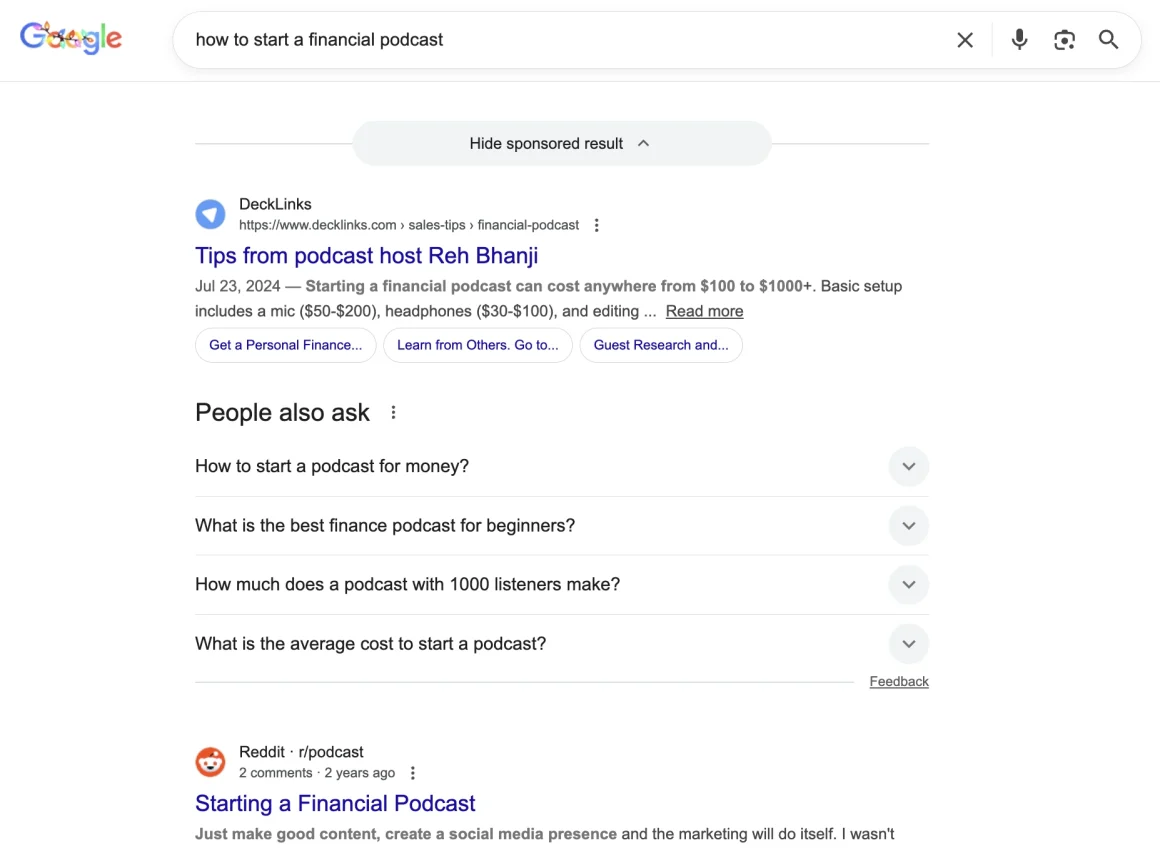
The lesson here is simple: depth beats volume.
Where Founders Blow It
Many founders limit invitations to their existing network. That is comfortable, but it is also unproductive because you keep talking to the same people. Stretch past your comfort zone. Your ideal collaborator is two messages away.
Trend 2: Founder-Led Media
Logos do not build rapport. People do. Social algorithms also agree. LinkedIn gives personal profiles far more reach than company pages. When you, the founder, show up consistently, prospects understand your principles and see the human stakes behind the product. That transparency matters because the TrustRadius survey found that 58% of B2B buyers distrust vendor claims. Your unfiltered voice cuts through that skepticism.
My friend Adam from Linkus Group, a recruiting agency for startups, does a great job at this, especially on LinkedIn where he consistently shares short, insightful posts that reveal his perspective, not just his company’s polished message. Check out his profile and see exactly how he leverages that personal transparency.
How to Step in Front of the Camera Without Melting Down
Pick one channel where your buyers hang out. For B2B, LinkedIn still rules, but if you sell to designers maybe it is Twitter or even TikTok. Commit to one substantial piece of content per week. That could be a three-minute explainer video, a 300-word text post, or a short LinkedIn Live session. Start small but stay consistent.
Base topics on real questions that land in your inbox. If a prospect asks how your AI model handles data privacy, record a quick explainer. When you respond publicly, you educate that person and everyone else checking with the same concern.
Each post needs a gentle invitation. I like to end with, “If you want to see how we solve this problem, send me a DM.” Keep it conversational. You are inviting, not pitching.
Practical Benefits Beyond Awareness
Founder-led content doubles as user research. I once explained on LinkedIn how DeckLinks tracks slide-level analytics. Within hours six people commented asking for a HubSpot integration. We built it. Two of those commenters later became paying customers because they felt heard.
Common Mistakes
Founders often treat content as a side job that can be skipped during a hectic period. Block calendar time just like you would block time for investor calls. Building in public compounds.
Trend 3: Ungated, Snackable Product Education
Gartner reports that 61% of B2B buyers now prefer a rep-free journey. They want to research on their schedule, not ours. That shift means long forms and complicated sign-ups discourage more sales than they create.
Turning Aha! Moments Into Micro-Demos
Find the exact second a prospect understands your value. In DeckLinks that moment arrives when someone sees which PDF slides a recipient watch in real time. We translated that into a 90-second video, added call-outs, and posted it everywhere. No gate, no email wall.
Make your own version with a screen recorder. Narrate casually. Explain why each step matters, not just what you click. Then embed that clip on a landing page alongside a three-question FAQ and a “Book a Live Walkthrough” button. The page educates, filters, and qualifies, all while you are not working.
From Short Video to Closed Deal
One prospect binge-watched 10 minutes of my micro-demos at 11 p.m. I sent a personal note the next morning: “Saw you were looking at analytics features. Want to see how they connect to your CRM?” They answered yes, joined a call, and signed within a week. You cannot achieve that speed when every asset sits behind a gate.
Mistake to Avoid
Founders often insist on collecting emails to “build the list.” Early on, visibility and credibility outweigh list size. Let the product earn the opt-in by impressing them first.
Trend 4: Video-Infused Marketing Collateral
Given how much information exists and how quickly buyers lose focus, video-based sales materials are now the standard.

Why Static PDFs Are Invisible in 2025
91% of businesses now use video somewhere in their marketing stack according to Wyzowl’s 2024 survey. Buyers expect motion, voice, and personality. Static documents feel like dial-up internet in a 5G world. When you add a brief video narration to your documents, you bring back the human element to selling and get data on which pages keep attention.
Building a Video Deck in One Afternoon
Duplicate your current deck and cut ruthlessly until only 10 slides remain. Then attach a quick video narration to each slide. Speak as if the buyer sits across from you. Emphasize the “why” behind every feature. Keep the tone helpful, and not stagy.
When the deck is ready, host it on a platform that feeds back real-time analytics. DeckLinks lets you see when someone replays the pricing slide three times. That signal tells your sales rep exactly where to steer the next conversation.
The Deal That Started With a Video Content
You might not credit content marketing for landing enterprise deals, but we actually secured a massive client, a true ‘huge logo,’ through a simple video collaboration. It was a quick, rapid-fire interview format designed to capture raw human insights, and that genuine connection instantly translated into a real friendship and a substantial business opportunity.
See all the videos in our rapid fire series right here.

Trend 5: AI-Assisted Content Iteration
This is where a lot of people will debate, with some arguing for total reliance on AI generated content for scale and others taking a strong stance against its use entirely due to quality fears. But I believe you can achieve the effective middle ground, treating AI not as a content creator, but as a powerful iteration engine that speeds up the drafting process.
Amplify Your Human Insight, Do Not Replace It
AI finally lets two-person marketing teams act like they are 10. But there is a catch, of course. If you feed the model fluff, it returns polished fluff. Tools like ChatGPT, Gemini or Claude should polish your thinking, not supply it.
My Real-World Workflow
I start with raw material, usually a Zoom interview or an internal voice memo. I paste that raw transcript into Claude and prime it. The generative AI spits out a serviceable draft in seconds. My team then fact-checks, adds personal notes, and trims any wordy phrases.
For tasks I don’t enjoy, such as generating alt text or basic meta tags, I let the AI handle them. It saves my mental energy for strategy and connecting with others.
A Speed Record Worth Sharing
Last week BYVI transformed 30-minute founder interview into a full article and a workbook in under two hours. Before AI the same output would eat a week.
Trend 6: Distribution-First Mindset
Yes, distributing content is equally important as producing it. When resources are tight for new founders, the success of your content is entirely up to your distribution strategy.
Content That No One Sees Is Just Expensive Copy
I often joke that writing is the easy part. The grind starts at publish. My rule is simple: plan to spend triple the effort on distribution as on drafting. The numbers back the approach. The Inbox Insight survey shows that 88% of B2B buyers trust a vendor more when that vendor produces valuable content. But they cannot trust you if they never see it.
Building Reach Into the Content Brief
Before your team writes a single sentence, choose where the piece will live and how it will move. For example, your in-depth guide can get chopped into a newsletter snippet, a LinkedIn post, and a short YouTube clip. You can also identify relevant Slack or Discord channels and line up a speaking opportunity or AMA for the week after launch. If distribution is built into the brief, you will never panic on launch day looking for things to post.
Sales Enablement as Distribution
Sales reps love warm excuses to re-engage stalled deals. Hand them a fresh article and suggest a simple message: “Thought of you – especially the part about onboarding analytics. How are things on your side?” The outreach feels helpful because it is helpful, and prospects reply.
The Line Between Content Sharing and Pure Spam.
Founders sometimes confuse distribution with spam, thinking volume equals velocity. Genuine distribution, however, demands respect for the platform: it adds specific context, a tailored angle, or a fresh spin optimized for that channel’s culture. If you just share the same main title and a basic picture everywhere on social media, both the platform algorithms (which favor content made just for them) and tired users will quickly ignore you by showing your posts less or not at all.
Trend 7: Community Co-Creation
For founders with bootstrap mindset running lean, this is perhaps one of my favorite trends: leveraging your most engaged users to scale authentic content creation.

Turn Users Into Storytellers
Users crave recognition almost as much as they crave product improvements. When you feature their workflow in public, you elevate them and validate your solution at the same time. That authenticity beats any polished case study a freelance writer can deliver.
How We Built a Playbook in 2 Weeks
I posted a question inside our customer Slack: “What’s one creative way you used DeckLinks this month?” The offer was simple – share your tip and get a backlink. Over 20 replies arrived in 48 hours. We chose the best 10, designed each tip on a separate page with the founder’s headshot, and released the “Q2 DeckLinks Playbook.” Every contributor blasted the link to their network. Our newsletter list doubled over night without a single paid ad.
Hidden Benefit: Product Insight
Patterns jump out when you study how users hack your tool. One agency combined DeckLinks analytics with a spreadsheet to forecast win probability. We built that workflow natively and turned that agency into a beta partner. Co-creation breeds both marketing reach and product evolution.
Mistake to Avoid
Editing the contributor’s language until it sounds like sterile corporate copy. Leave their voice unaltered. The quirks and character make the content believable and sharable.
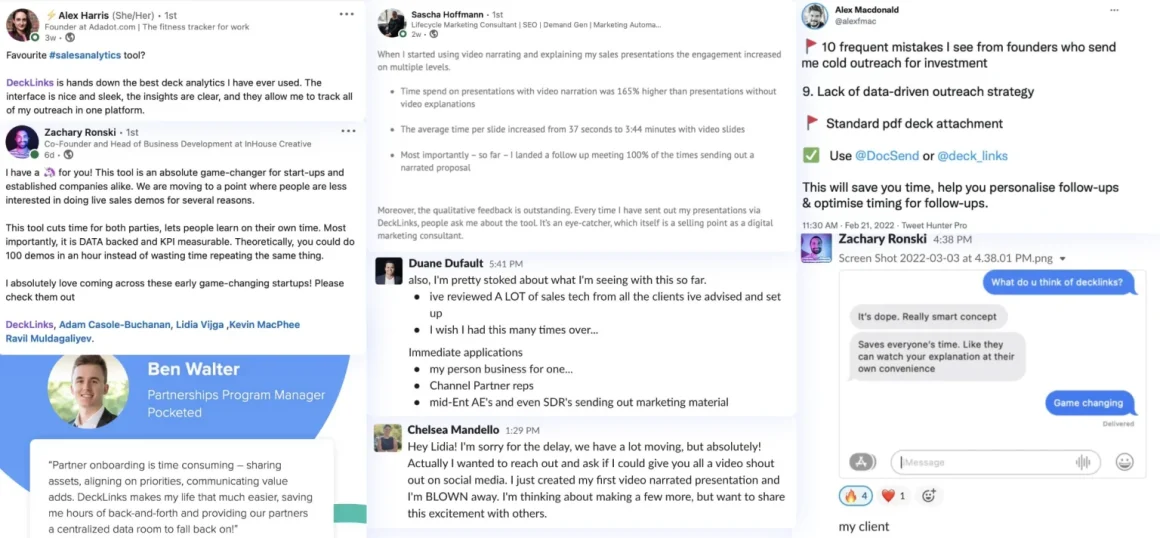
Trend 8: Intent-Based Micro-Offers
This is the new, smart way to boost conversions. It completely replaces the old idea of just offering generic freebies.
The New Lead Magnet: Quick Win, Zero Fluff
Old-school lead magnets were 12-page eBooks nobody read. Today’s buyers just want a quick, clear answer to one specific problem. When you deliver that win in under 15 minutes, you earn both gratitude and permission to follow up.
Building a Micro-Offer in 1 Day
Identify one bite-sized problem your product solves. For DeckLinks it was “How do I know which slide my prospect cares about?” We built a single-page template showing our analytics panel and shared the link ungated. At the bottom we invited readers to clone the template by entering their email. That tiny ask converted 16% of visitors, well above the typical 2% benchmark for gated eBooks.

From Download to Deal
Three days after the download we emailed a case study on how the template helped a real SDR cut follow-up time in half. The message included a Calendly link. Conversion felt natural because the prospect had already used the template and tasted value.
One Warning
Place micro-offers where intent spikes. Inside a high-traffic blog post, after you solve part of the problem, add a line: “Want the ready-to-use template? Grab it here.” Burying the offer three clicks deep kills momentum.
Conclusion: Pick Two Trends and Ship
Early-stage content marketing is not about pumping out 50 SEO articles or burning precious runway on ads you cannot track. It is about embeding trust into every buyer interaction.
The 8 trends you just read share a common theme: they hand control back to the audience.
Collaboration lets prospects hear from experts they already believe. Founder-led media shows the human behind the logo. Ungated demos honor self-service buying. Video decks combine story and analytics. AI frees you from grunt work. Intent-based offers deliver value before asking for anything.
Do you need to roll out all eight trends this quarter? No. Choose two that fit your immediate stage. Maybe you lack awareness – start with collaborations and distribution. Maybe your pipeline stalls – build a micro-offer and video collateral. Block time on the calendar, assign clear owners, and ship.
Remember the journalist who changed my trajectory with one article? Your next collaboration, video clip, or micro-offer can create that same spark. Keep iterating, stay visible, and never apologize for telling your story in public.
FAQs
How can startup founders measure ROI from b2b content marketing trends?
Focus on “consumption metrics” and qualitative feedback rather than just vanity views. Track how often prospects mention specific articles during sales calls or demos. While tools like Google Search Console are free, direct buyer feedback is the ultimate validator for early-stage strategies involving b2b content marketing trends.
Should startups hire freelancers to execute b2b content marketing trends?
Proceed with caution. While scaling requires help, the initial voice and narrative must come from the founder. Outsourcing too early often results in “generic fluff” that fails to convert. Establish your unique point of view and messaging pillars before handing off the pen to external writers.
How does sales-marketing alignment impact b2b content marketing trends?
It is critical for maintaining trust. A Gartner study reveals that 69% of B2B buyers report inconsistencies between a website and sales reps. Ensure your content assets and sales scripts share a single “source of truth” to prevent losing qualified deals due to mixed messaging.
What role do user reviews play in modern b2b content marketing trends?
Third-party validation is essential. Buyers often prefer user reviews over vendor-created collateral. Encourage happy customers to post on platforms like G2 or Capterra, then repurpose those authentic testimonials into social proof assets for your marketing funnel.
What is “zero-click” content and why does it matter for b2b content marketing trends?
Zero-click content delivers full value directly within a social feed (like LinkedIn) without forcing users to click a link. Algorithms favor this format, and it builds authority faster. Optimize for “feed consumption” rather than just trying to drive traffic to your blog, which aligns with current b2b content marketing trends.
Are interactive tools replacing static whitepapers in b2b content marketing trends?
Yes, tools like ROI calculators or maturity quizzes are gaining traction. Unlike static material, interactive content provides immediate, personalized value to the user while simultaneously qualifying leads based on their inputs. It is a higher-engagement alternative to traditional lead magnets.
How specific should my targeting be to leverage current b2b content marketing trends?
Extremely specific. Gartner data shows that 73% of B2B buyers actively avoid suppliers who send irrelevant outreach. Instead of casting a wide net, craft niche content that addresses the precise pain points of a narrow ideal customer profile (ICP). You can even build a dedicated landing page just for one specific client.
Is starting a newsletter still effective amidst shifting b2b content marketing trends?
Absolutely. An owned email list is insurance against algorithm changes on social platforms. Focus on a “value-first” newsletter that offers actionable insights rather than just company updates. This builds a direct line of communication with your most engaged prospects, independent of third-party platforms.
What is a realistic budget for executing these b2b content marketing trends?
For early-stage startups, invest time rather than money. You do not need expensive agencies to succeed. Focus on high-leverage activities like founder-led writing and video content. Your primary cost should be the founder’s focus and consistency, not ad spend or production perfection.