
Written by Lidia Vijga, co-founder at DeckLinks
Building without VC money? Your b2b brand personality is your greatest asset. When you’re bootstrapping, being authentic is the fastest way to get seen and secure market presence without burning through a massive marketing budget.
Brand personality in B2B means one thing: Trust
B2B buyers don’t buy “cool.” They buy safe.
When you’re bootstrapped, you don’t have a VC halo doing the trust-building for you. You earn trust with your voice, your content, and your follow-through.
Trust also has a real dollar value. A Forrester study reports that 83% of business buyers who trust a company would recommend it, and roughly two-thirds would pay a premium to work with that trusted supplier. That’s referrals. That’s pricing power.
I’m empathetic by nature. That matters for relationships. But I’m also unfiltered and practical, and I’m not going to lie to you: buyers reward competence first. Even Forrester’s own findings show empathy ranks much lower than expertise, as summarized by Digital Commerce 360.
So build a human brand. Just make sure it’s backed by proof.
Bootstrapped founders can win because you adapt faster

Bootstrapping forces you to face reality early. You can’t hide behind spend.
ChartMogul’s SaaS benchmarks found bootstrapped companies adapt more quickly to volatility and stabilize sooner than venture-backed peers. In the downturn, VC-funded SaaS under $1M ARR were hit the hardest, while revenue-funded companies stayed steadier.
And the speed gap is smaller than people think. Bootstrapped startups were only about 4 months slower to reach $1M ARR on the median. They still did it in around two years on average.
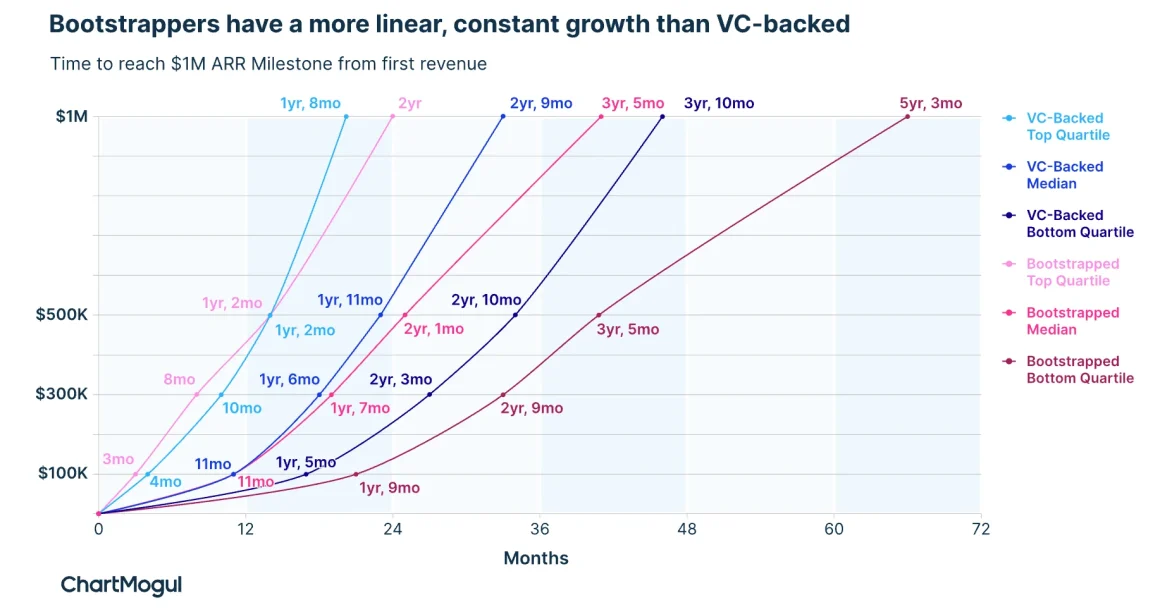
Even better: at the early stage, ChartMogul found the same retention rate whether a startup was bootstrapped or VC-backed.
Money doesn’t fix product-market fit. Your product and your messaging do.
Don’t invent a persona. Build from your real expertise.

One of the most supportive things you can do for yourself is stop trying to be someone else.
I had a founder tell me about a startup idea that had zero connection to his previous career. He was an outsider to that industry. I told him to leverage his 10 years of working experience and build in the space he knows.
Your brand personality gets stronger when it’s real. You speak with confidence because you know the problems, the buyers, and the language.
Solve one problem for one audience. Then show up in that lane every week until the right people recognize you.
The trust checklist of B2B branding: competence, dependability, consistency
If you want a clean framework, use what buyers already told us. Forrester found competence leads trust (30%), then dependability (19%), then consistency (17%). Your brand personality should prove all three.

Competence: show your work
Competence is your “how.” It’s the behind-the-scenes details.
At BYVI, “insights come first, always.” We don’t publish polished success theater. We publish what founders actually did when nobody was watching. The pivots. The frameworks. The steps.
Do the same with your product. Share real experiments. Share what failed and what you changed. People are tired of generic content, and they can feel when you’re speaking from first-hand experience.
Dependability: make it easy to say yes
Dependability is the boring stuff done well. Clear next steps. No disappearing after the demo. No vague timelines.
I care a lot about human-centered sales experiences. That’s why I co-founded DeckLinks. It helps teams enhance PDFs with video narrations and track engagement. Buyers always remember how supported they felt while evaluating you.
Consistency: repeat your point of view
Consistency is repetition over time. Same message. Same values. Same tone.
If your story changes every two weeks, buyers assume your product will too. They don’t have patience for that risk, especially in B2B.
Be real. Share the dark side. Then give the lesson.
I built BYVI because journalism and PR were heading in the wrong direction. Too many “overnight success” stories. Too much glamour.
Founders need a reality check. Startup life is hard. There’s a dark side of entrepreneurship. It breaks you as an individual, but only to make you better and stronger.
But don’t stop at the struggle. At BYVI, I always ask founders for actionable advice. Sharing pain helps emotionally. Sharing the lesson helps operationally.
Collaborations borrow trust faster than solo content
If you’re bootstrapped, you need distribution without paying for it. Content collaborations do that.
At DeckLinks, we collaborated with external experts because it makes content deeper and more credible. One collaboration – a financial podcast guide created with an expert – still ranks #1 on Google and brought clients.
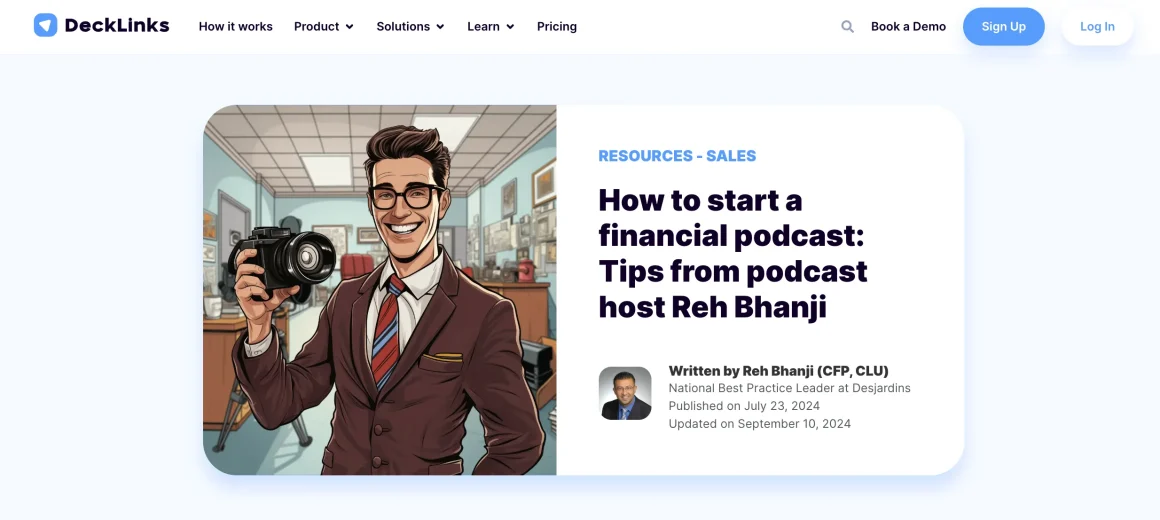
Collaboration can also be a sales move without feeling salesy. I worked with an insurance company on a piece about shared pain points, including the lack of trust in their industry. That collaboration led to them becoming a client.
My approach is straightforward:
Lead with curiosity. Make the other person look great. Make it low-lift for them. I’ll take bullet points or a voice memo any day. Then distribute together.
No one likes to be pitch slapped. A content collaboration opens a relationship in a way a cold pitch never will.
Distribution: don’t just post, bring it back to the mailbox
I spend 3 times more effort on distribution than writing. Posting without distributing is not advisable.
Repurpose your best piece into smaller assets. Send it to your newsletter. Use it in follow-ups. Hand it to your sales team. Turn it into a reason to re-engage prospects who went quiet.
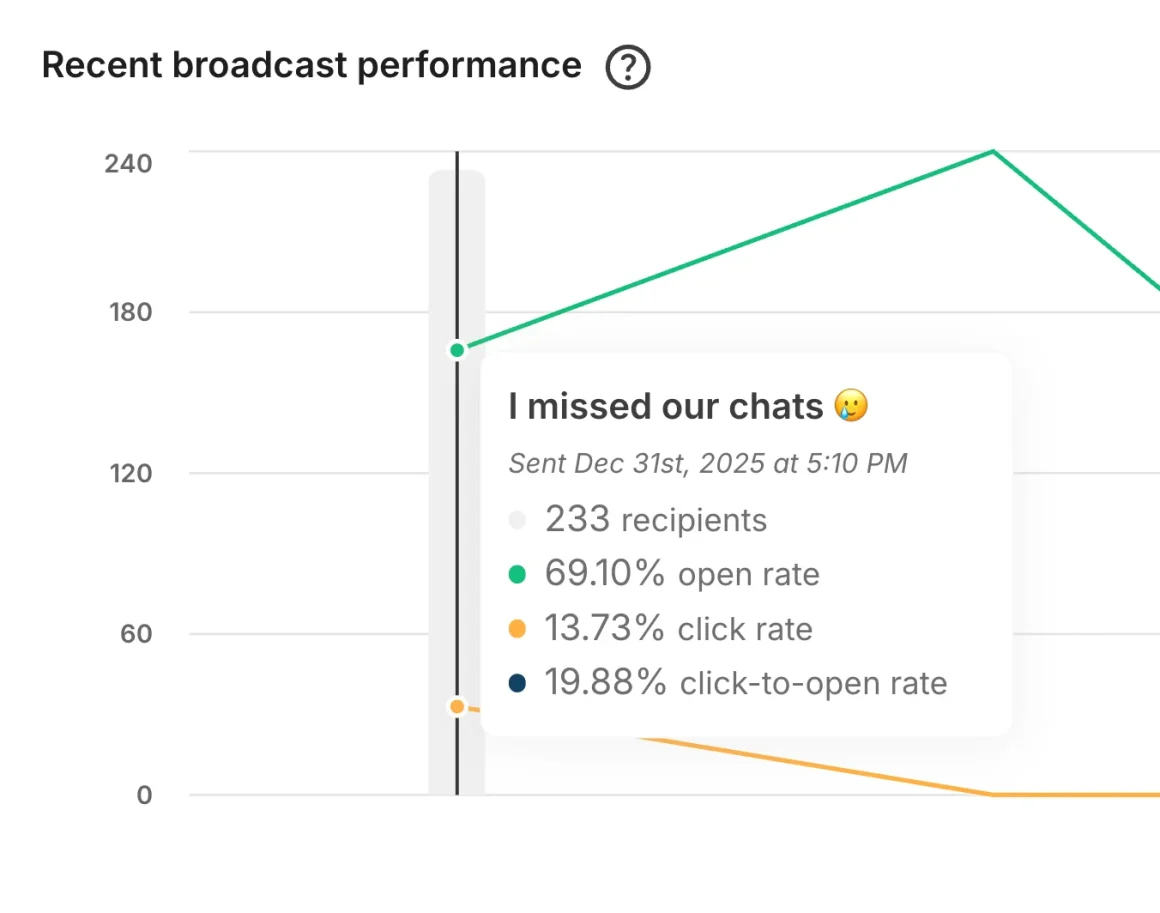
I’ve seen direct channels work unbelievably well. When I launched my personal newsletter to real contacts from LinkedIn and Slack, it got a 69% open rate and a 20% click-to-open rate. Personal and specific beats promotional.
The bottom line: win with a personality people can trust
You don’t need VC to be loud. You need to be clear. You need to be consistent. You need to be dependable.
And yes, you need to accept work-life blend in the early days. Turn your work into play, and you’ll last longer than the founder who treats building like chore.
If you want a brand that brings clients, partners, and the right kind of visibility, start with trust. Everything else compounds from there. And if you want a founder-to-founder platform that takes that seriously, that’s exactly what BYVI is built for.