Written by Lidia Vijga
I know what it feels like to build something real and still feel invisible. Visibility got harder. The internet is louder. AI content is everywhere. Everyone is “posting.” But most of it sounds the same.
So if you’re bootstrapped, you need a different approach. You need something that compounds. You need a content engine that feels human, earns trust, and actually brings you customers.
Founder-led content marketing is how you do it.
The headline trap: why big tech press rarely brings you customers

Let me say this as clearly as I can.
The readers who read and engage with TechCrunch and other big publications are most likely not your ideal clients. If you sell to startups, investors, or advisors, sure, you might get some value. But most bootstrapped B2B founders sell to operators. Real buyers. People who do not spend their day reading startup headlines.
That’s why chasing “a big headline” becomes a trap. It feels productive. It looks impressive. It rarely builds a relationship with your ideal clients.
Press can still matter, just for a different reason. Research shows media coverage can increase the probability of VC funding. So yes, visibility can help if you plan to raise later.
But if you’re bootstrapped, your main job is to get customers.
And for customers, you need to show up where they already are. You need to teach them. You need to be useful. You need to become familiar.
That’s why I tell founders to bring content marketing in-house.
When we realized publicity would land in places where our ideal clients don’t even go, we stopped treating press as the center of the strategy. We focused on publishing on our own blog. That way, when the right person finds us, they come back to our website. They don’t get lost in someone else’s media machine.
In 2026, building your own media is the safest visibility move you have.
Founder-led content in 2026: your unfair advantage

Content marketing isn’t optional anymore. It’s mainstream.
About 73% of B2B marketers already use it. Your competitors are writing. Your customers are reading. AI is summarizing everything.
So the question isn’t “Should I do content?” You already know the answer.
The real question is: how do you make content feel real in a world flooded with polished, generic advice?
You do it the founder way.
Founder-led content is not just “thought leadership.” It’s the real story of what you’re building, what you’re breaking, and what you learned this week that can save someone else a year or two of failure.
It’s also about quality. I’m obsessed with that. About higher-quality content less often beats pumping out low-effort posts. I’ve been saying a version of that forever: better to be thoughtful and insightful than post fluff every day.
Consistency still matters, though. Roughly 62% of marketers say content has to be “always on.” I agree with the spirit of that. Your market needs to feel you’re present. They need to feel you didn’t disappear.
That doesn’t mean daily posting. It means a steady system you can actually sustain while you’re building the product.
And in 2026, you also need to understand one more shift.
About 50% of consumers already use AI-powered search tools. Roughly half of Google queries now show an AI overview.
So your content has two jobs now. It has to work for humans, and it has to be easy for machines to understand and surface.
That’s why I care about structure, SEO, and “search AI” discoverability. But I never want it to sound like a textbook. You still need your voice.
The simple content engine you can run while you’re building

A lot of founders overcomplicate content. They build a massive plan, then they never start.
You don’t need a plan that looks good in Notion. You need a loop you can repeat.
I’ll give you the loop I’d use if I were starting from zero today.
Start with one audience and one painful problem

If you try to speak to everyone, you’ll feel invisible forever.
Pick one audience you can reach. Then pick one painful problem you can help them solve. Stick with it.
If you’re not sure what to choose, look at your own experience. I once gave a founder hard truth because his startup idea had no connection to his past work. He had 10 years of experience in a different industry. He was about to throw all of that away and become an outsider in a space he didn’t understand.
I told him to leverage his expertise. Solve a problem in the industry he already knows. That’s where his unfair advantage is.
This applies to your content too.
The fastest way to sound credible is to talk from lived experience. Your market can feel it. Your writing becomes sharper. You stop sounding like a generalist.
And you stop relying on “external validation” to look legit. You manufacture authority without external validation because your content shows the receipts.
Build a home base that compounds: your blog

Your blog is not a diary. It’s a library.
It’s also where visibility compounds the most, because search keeps working while you sleep.
There’s a reason I care so much about SEO. I’m so passionate about rankings that I used to rank keyword on Google for my friends as Christmas and birthday gifts.
In 2026, long-form still matters. Backlinko’s research shows the average first-page Google result is about 1,447 words. That doesn’t mean you should write fluff to hit a word count. It means depth wins.
One of my favorite examples of “depth that wins” is a collaboration I did with the founder of Advite. We created a guide on comment marketing that was very specific. That piece ranked on the first page of Google. It worked because it wasn’t vague. It was operational.
I’ve seen the same pattern with another collaboration too. At DeckLinks, we worked with an expert on a financial podcast guide. That content still ranks on first page and it attracted clients. The reason is simple: real experts bring real angles. They don’t write generic advice because they’ve actually done the thing.
So when you build your blog engine, focus on problems your ICP is actively Googling. Then answer them better than anyone else.
Where do you find topics that convert? Don’t guess. Pull them from your real conversations. Weekly deep-dive content should come from the repetitive questions you hear in sales calls, onboarding calls, and support messages.
If you keep answering the same question, write it once. Write it properly. Then ship it.
Use LinkedIn for relationships

LinkedIn is where B2B trust gets built in public.
But you need to be careful. Your audience on LinkedIn might not be the same audience that you’re trying to sell. A post can go viral with founders and still bring you zero customers. That’s why I look at traction differently. I care about engagement that leads to conversations and conversion, not just reach.
I’m also strict about outreach. No one likes to be pitch slapped. I strongly advise against asking for business directly in cold LinkedIn messages. The relationship never starts with a transaction. Start with curiosity. Start by giving first.
This is also where founder-led content has a huge advantage. You can blend your expertise with personal insights so people feel a human behind your brand. That work-life blend becomes fuel.
Comments are becoming a serious channel in 2026
A lot of founders treat comments like an afterthought. In 2026, comments are a visibility channel.
AI tools summarize what’s already getting engagement. So if you want to be discoverable, you need to show up inside existing conversations. You need to leave high-quality comments where your ICP is already asking questions.
This is where first-party data becomes gold. Share the numbers you’ve seen. Share the pattern you noticed. Share the mistake you made and the fix.
AI can copy your tone. It can’t copy your experience.
Bring it back to the mailbox with a founder newsletter

I’m blunt about this.
Many-to-many communities can waste your time. You end up repeating the same conversations you’d have at networking events. If you’re early-stage, that time is expensive.
A newsletter is different. It’s one-to-one.
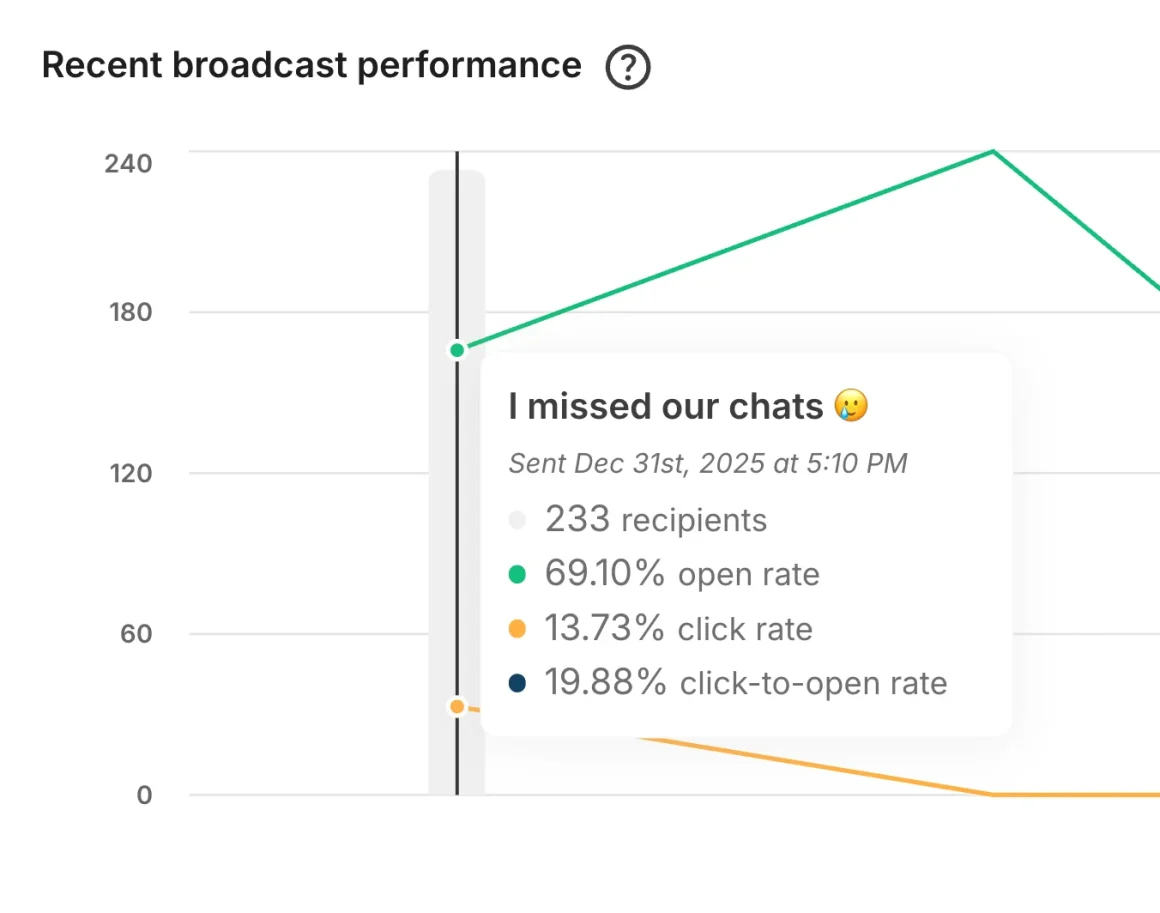
When I launched my personal newsletter, I didn’t do it to “build community.” I did it because people wanted direct connection. I sent it to real-life contacts from LinkedIn and Slack, and it hit a 69% open rate and 20% click-to-open rate because I kept it human. I shared personal things like playlists. Not business promotions.
The biggest mistake I see founders make with newsletters: they start from zero.
Don’t do that.
Aggregate your existing contacts. I literally pulled emails from my Slack admin panel to build my initial list because those were people already in my community.
If you want your newsletter to drive revenue, use your sales calls as a cheat code. Look at the pain points that came up in closed-lost deals. Then write a guide that addresses that exact fear. Segment ghosted prospects into a pool and send them that issue. It feels personal because it is personal.
Content collaborations: the most underrated visibility play for bootstrapped founders

I’ll keep repeating this until founders actually do it. Content collaborations are the most underrated trend.
If you’re bootstrapped, you can’t outspend competitors. You also can’t always out-post them. You win by borrowing distribution and trust from the right people.
When you collaborate with an industry expert, they share the content naturally with their audience. It doesn’t feel like an ad. It feels like help. And if you pair the collaboration correctly, their audience can become your clients.
This works better than asking your friends to share your posts. Your friends might support you emotionally. But they usually don’t have your buyers.
How I reach out to content collaborators (and why it works)

My outreach is simple.
I research first. I look at what the person is already sharing online. If they wrote something insightful, I start there. I compliment a specific post. Something real. Then I propose turning that idea into a long-form piece together.
I also make it easy.
I tell them they can send bullet points or a voice memo. I’ll do the writing. I’ll make them look great. I’ll give them backlinks. I’ll distribute the piece properly, with SEO and AI search in mind.
Most people genuinely want to help and share their expertise. They just don’t want extra work. When you remove the work, the “yes” rate goes up.
This approach has also helped me restart conversations that went cold. I’ve turned a ghosted hard-sales prospect into a relationship by proposing a joint article. We created something useful together, and it opened the door naturally.
That’s why I see collaboration as a sales technique, and not just a marketing initiative. It’s warm. It’s respectful. It shows your competence without a pitch.
Content distribution is where collaborations win or die

A collaboration that no one distributes is just a nice moment between two people.
I put distribution above writing. I spend 3 times more effort on distribution than on crafting the article itself.
After a piece goes live, I want multiple posts from both sides, spread out over time, each with a different angle. I want snippets repurposed into comments under existing high-traffic threads. I want it included in newsletters when possible. I also want it sent directly to the sales team so it can be used in active deals and to re-engage ghosted prospects.
Repurposing into a different format matters here. HubSpot reports 49.4% of teams reuse the same content across platforms. Only 39.5% tailor it per channel. You’ll get more out of your work if you adapt the format to the platform instead of copy-pasting.
One more thing I do that keeps collaborations alive: I share milestones with the collaborator. Rankings. Clicks. Replies. Shares. When you show someone the impact, they lean in more. The relationship grows without you forcing it.
AI is everywhere. Your voice is the moat.

A lot of founders ask me, “Should I use AI?”
Use it, but don’t let it erase you.
HubSpot found 55% of marketers use AI most commonly for content creation. HubSpot also found 74% of marketers say AI makes them more productive.
I believe that. AI can save you time.
But I don’t use AI to write my posts. I use it to refine my existing idea and check grammar. That’s it.
When AI writes for you, it gives you a format. That format is everywhere now. It makes everything sound polished and sterile. Even when the insight is good, your content loses its impact when it sounds just like everyone else’s AI-generated copy. It’s too polished and lacks a soul.
You cut through that by being specific and a little bit unfiltered. AI simply cannot replicate that raw honesty.
I’ve seen how powerful this is with founders who build in public. In my publication, I often featured my founder friend Charles through his multiple pivots. His transparency about failed pivots and timing issues didn’t make people judge him. It made people root for him. When you give people the real story, they bond with you.
If you want an easy “human proof” trick, add hyper-specific personal details. A tiny preference. A small observation. A real feeling about a platform. That’s the stuff AI never gets right.
Visibility that converts: content has to lead somewhere

Bootstrapped founders don’t have time for vanity.
Visibility that doesn’t convert becomes entertainment. You feel busy. Your bank account doesn’t.
I’m very strict about validation. The only true validation is a credit card payment. Not a waitlist. Not “sounds cool.” Not likes.
That’s why I love founder-led content that drives tangible outcomes. BYVI once published a story about a founder trying to validate their MVP, and it resulted in them getting emails from actual buyers. That’s what I want every time: one story leading to the next step.
Also, I’m going to say something that makes people uncomfortable.
Buying from bootstrapped founders is the highest form of empathy. Transactions and empathy go together. If someone tells you they “support founders” but they never buy from founders, it’s just words.
So your content should make buying easy. Clear CTA. Clear next step. Clear offer.
FAQs
How long does it actually take for a bootstrapped startup’s blog to generate inbound leads?
It rarely happens overnight. Trust compounds slowly, usually taking 3 to 6 months if you consistently publish high quality content. But don’t panic-publish. 83% of marketers agree that producing higher-quality content less often beats high-volume fluff. Write deep, operational guides answering the exact pain points from your sales calls, and those inbound leads will actually convert.
How do we compete on SEO/AIO with VC-funded competitors who publish daily?
You don’t out-publish VC-funded blogs, you out-insight them if they pump out generic, outsourced articles. About 50% of consumers now use AI-powered search tools, which surface unique, first-hand expertise over regurgitated fluff. Share raw, operational truths and lived experiences they literally cannot buy.
Should an early-stage founder outsource content creation to save time?
I strongly advise against outsourcing your voice. Freelancers don’t know your product’s dark side or your precise ICP. Instead of handing off writing entirely, leverage tech. 55% of marketers use AI for content creation – use it to outline and edit, but you must supply the raw insights.
Is a PR agency worth the investment before hitting $1M ARR?
No. Unless your immediate goal is raising capital – since media coverage increases the probability of VC funding – expensive PR is a trap for bootstrappers. Agencies land you in publications your actual buyers don’t read. Spend zero dollars on PR and invest your sweat equity into an in-house content engine.
What’s the best way to repurpose a single technical blog post without looking spammy?
Don’t just copy and paste links. Surprisingly, 49.4% of teams still reuse exact content across platforms, while only 39.5% tailor it. Extract one raw lesson for a LinkedIn post, drop a specific framework into a Reddit comment, and send the tactical teardown to your newsletter. Adapt to the platform’s native format.