Written by Lidia Vijga
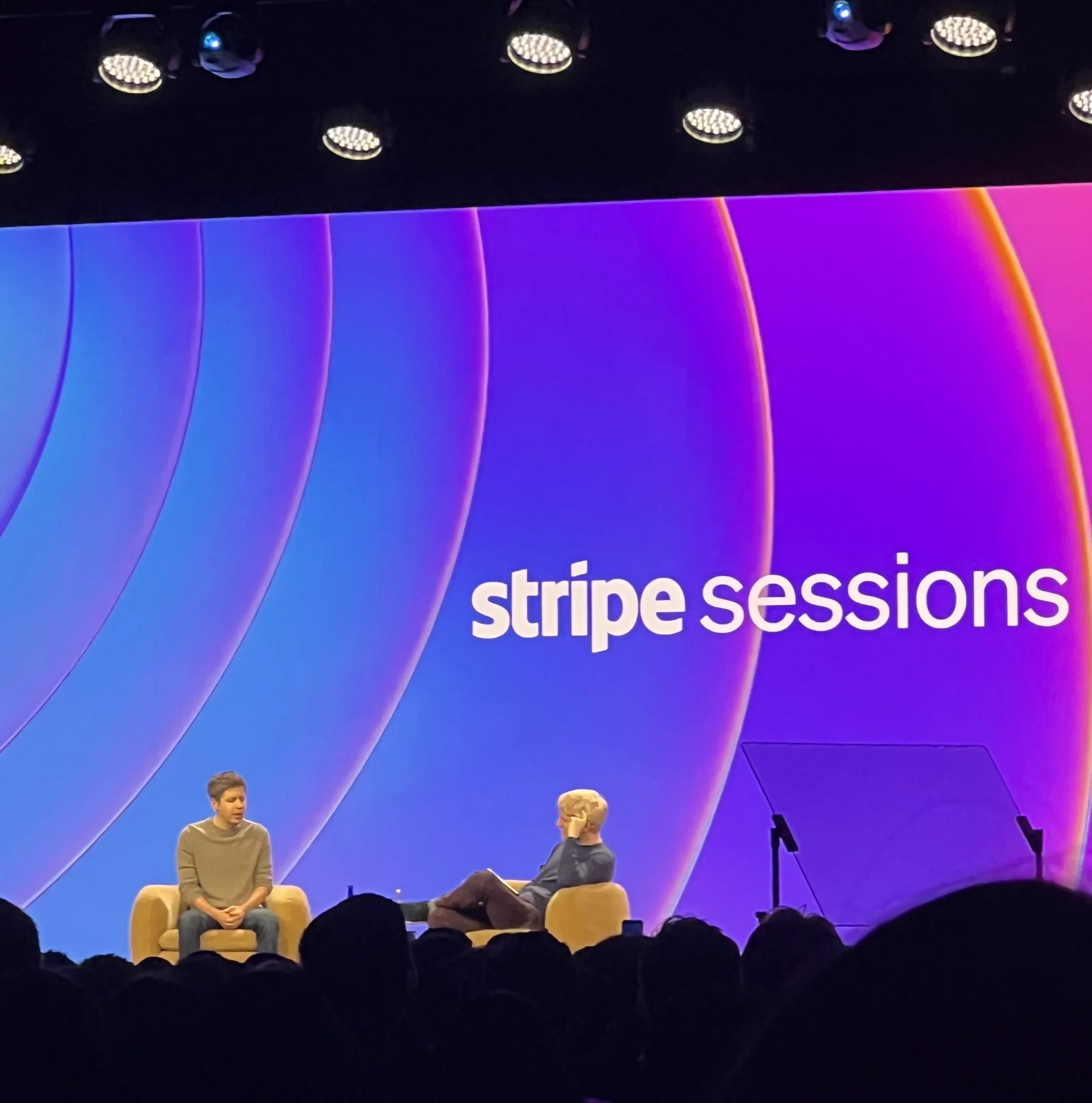
Sam Altman’s Startup Grind talk delivered something more useful than headlines: a handful of observations, for founders, about how to actually build a company in this moment. These are the notes from the room, and what’s stuck with me a few days later.
The “idea guys” are winning again
For years, “idea guy” was an insult. If you couldn’t ship, you didn’t matter. Altman flipped that. His read: non-technical founders who deeply understand a user and a problem now have an unusual advantage, because so much of the building part is becoming AI-assisted. Technical talent isn’t suddenly unimportant, but it’s no longer the only ticket in.
That clearly landed for me because I’ve lived the old version. In 2018, when I was building my first startup, we had to hire a CTO and two software engineers before we could put anything meaningful in front of a user. That was the table stakes. The product idea wasn’t unusually technical, and the user insight was solid, but the only way to translate it into something real was to assemble a team and a payroll first.
Now I keep meeting solo and two-person teams who, a few years ago, would have needed exactly that same setup – and they’re already shipping. They’re not doing it well because they’re great engineers, they’re doing it well because they have taste, judgment, and proximity to the user, and they’re letting AI fill in around that. The early validation that used to cost 3 hires now costs a weekend.
The implication: if you’ve been waiting on a technical co-founder before you start, that delay has gotten more expensive. You still need to build the real skills – product taste, user judgment, and enough technical fluency to direct AI tools well. But the threshold for getting something in front of users has dropped, and other founders are crossing it while you wait.
AI adoption is a CEO job, and a data-access decision
The clearest pattern Altman has seen in companies that successfully adopt AI: the CEO drives it personally. He cited Tobi Lütke’s mandate at Shopify as the archetype – leaders getting their hands dirty building with the tools, not just signing off on someone else’s pilot.
I’ve had very good results running autoresearch with local qwen 3.6 26b model as long as I had a simple vibed pi “advisor” extension that allowed it to periodically ask GPT 5.5 for ideas. I think this direction has a lot of merit.
— tobi lutke (@tobi) May 18, 2026
The other half of that pattern was less comfortable. The teams getting the most out of AI are giving their systems what he called “uncomfortably permissive” data access — codebase, Slack, email, recorded meetings, the works.
Two- and three-person startups are running everything through a single Slack channel: planning, coding, deploying, log analysis, customer support. It doesn’t scale to a Fortune 500 yet. But for small teams, the upside-to-risk ratio is currently very favorable.
I’m sitting with this one. There’s a real tension between “give the AI everything and move faster” and “this is sensitive data we said we’d handle carefully.” I don’t think it’s resolved. But pretending the tradeoff doesn’t exist is worse than picking a deliberate point on the spectrum.
OpenAI wants to be the utility, not the empire
This was the line that surprised me most. Altman was explicit: OpenAI does not want to gobble up the entire value chain. The aspirational analogy was Stripe, a piece of infrastructure that’s tightly aligned with its customers, runs on low margin and high volume, and wins when its customers win.
He doesn’t think huge AI margins will hold long-term anyway, because switching costs are staying low. Models keep getting substitutable. When one gets clearly better, customers move. That dynamic pushes toward utility economics, not lock-in economics.
What this means for founders: if the largest model provider is openly planning to be infrastructure, the application layer is more open than the bubble-talk would suggest. The advice that’s been floating around since GPT-4 — build something that gets better as the underlying intelligence gets better — landed differently when the person sitting on the underlying intelligence said it himself.
Shared convictions beat shared chemistry
The part of the talk I didn’t expect to find super practical was about managing brilliant, difficult people. Altman attributed a chunk of OpenAI’s early success to getting a room of people, each of whom believed they were the smartest person in it, to actually collaborate.
His read on why it worked: they didn’t need to like each other. They needed to share 3 convictions:
- that scale matters
- that concentrating resources matters
- that running one focused research program (rather than many small bets) mattered
Those shared beliefs let them tolerate personal friction that would have wrecked a team with less alignment.
I keep thinking about this in the context of small teams. Founders often optimize for “do we get along?” Altman’s framing suggests a sharper question: “do we agree on the few things that actually determine whether we win?” Those are different filters, and they produce different teams.
The founder-relationship signal
Quieter point, but worth flagging: he said one of the strongest predictors of a startup working is that the founders have known each other for a long time. Teams formed right before launch — co-founder dating, hackathon pairings, mutual-friend introductions made the week before incorporation — are statistically less reliable.
This isn’t a new observation, but it lands harder coming from someone who has watched thousands of teams. If you’re forming a company with someone you met last month, the bar to make it work isn’t impossible — but it’s higher than the founder-talk economy would have you believe.
The agent moment that everyone will remember
The lightest thread, and the one I’ll close on: Altman talked about how strange it still feels when agents do something unexpectedly human. He gave the example of an agent buying itself a novelty gift, and of asking a model how it wanted its own launch handled — and getting a surprisingly specific, slightly funny answer.
He wasn’t making a philosophical point. He was acknowledging that even people who built these systems still get briefly thrown when the systems act like they have preferences. I appreciated the honesty of it. Most of what’s said about AI in founder circles right now is either utopian or apocalyptic; almost none of it captures the actual texture of using these tools day-to-day, which is that they’re extraordinary and occasionally just weird.
Sam Altman’s closing advice
His closing advice for founders was anti-dramatic, but it has teeth: durable companies are the ones positioned so model improvements help them rather than erase their value. As he put it, you want to “be on the side of hoping that AI gets smarter.”
The flip side, in his telling: if your product’s value rests on papering over a current model weakness — a workflow that exists because the model can’t yet do something — the next model release will eat it. The same improvement that makes everyone else more productive quietly deletes your moat.
It’s good advice precisely because it’s actionable. Nobody who has to ship next week needs a worldview about AI. They need a heuristic, and that one holds up: build so smarter models make you more valuable, not less.