Written by Lidia Vijga
My team and I went through a period when traction felt painfully hard. We were building. We were trying. Very few people saw us. Then a journalist came out of nowhere and wrote about us. That one story brought partnerships and clients. It also gave us the push to keep going.
That experience changed how I think about visibility. It is one of the reasons I built BYVI. I wanted to make press coverage accessible to all startups regardless of their funding stage, especially the early-stage and bootstrapped founders who usually get ignored until they raise money.
Now I see a similar opening with AI search.
Your advantage as a bootstrapped founder is your deep, practical understanding of your niche. A lot of you built the solution for the problem you experienced firsthand. And that first hand expertise is a major asset for AI search.
AI Search Changed How B2B Buyers Ask for Help

B2B buyers do not search the way they used to. They are not typing one neat keyword and hoping for the best. They explain the whole situation.
They say who they are. They explain the stage of their company. They describe the problem in detail. They ask the question the same way they would ask it on a sales call. AI search is built around that behavior.
This was clear when I helped a friend who runs a recruiting agency write an article about hiring software developers. We targeted early-stage founders specifically, rather than general hiring managers, and I included a section dedicated entirely to hiring a founding engineer.
It reached the first page of Google in just a couple of days. Despite the search query being incredibly competitive, AI summaries picked it as a top source, putting us right next to YC and YouTube.
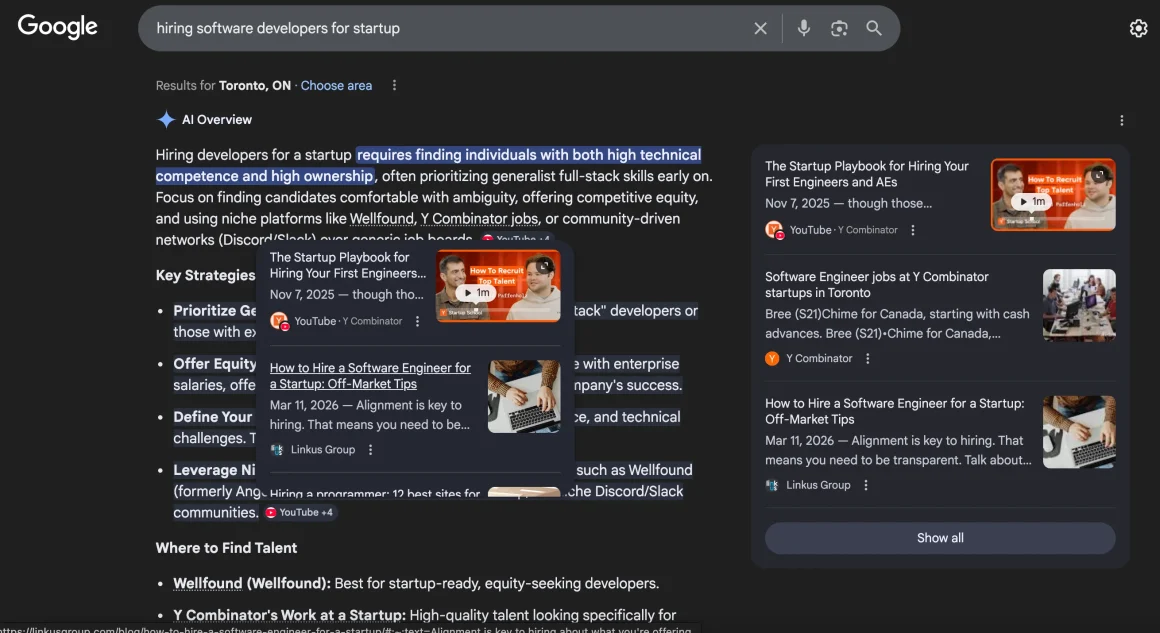
Soon after, my friend called to say a lead had come in referred directly by ChatGPT. The AI had suggested Linkus Group to someone looking for a founding engineer. This shows that when your content speaks directly to your ideal client, you can train AI to recognize your value and recommend you as the solution.
That is why old keyword thinking feels too small now. Winning content speaks to a real person in a real moment, reflecting the exact language of your ICP. It’s like sitting beside them and saying, ‘Hey, I get the mess you’re in – let me help.’
For bootstrappers, this matters even more because the upside of organic search is so big. Data-Mania reports B2B SEO can deliver around 748% ROI, while paid search sits around 36%. BrightEdge data points to 2× more revenue from organic SEO than any other channel for B2B companies. When cash is tight, that kind of return matters.
The Old SEO Playbook Is Quietly Hurting B2B Brands

A lot of founders are still getting old advice. Hire an SEO agency. Pick keywords. Publish as much as possible. Hope something ranks.
I think that playbook is breaking fast.
AI search wants depth, context, and proof. A keyword-heavy article written by someone far away from your customer will not carry much weight. Surface-level content fails to signal authority to AI, and your brand ends up invisible.
But the bigger problem is trust. Content is your reputation on the line. If a buyer lands on your site and reads AI slop of fluff, they will feel it right away. People can see through generic fluff. Buyers are tired of it, and AI search is getting better at filtering it out.
Google can also react badly when a site gets flooded with generic AI content. Pages can struggle to get indexed. That is a dangerous move for bootstrapped startups that cannot afford to have their domain flagged.
Velocity still matters, of course. Publishing 16 or more blog posts a month has been linked to 4.5× more leads. But quality decides whether that velocity helps you or hurts you. Better to be thoughtful and insightful than post fluff every day.
Bootstrappers Have the Raw Material and Speed AI Wants

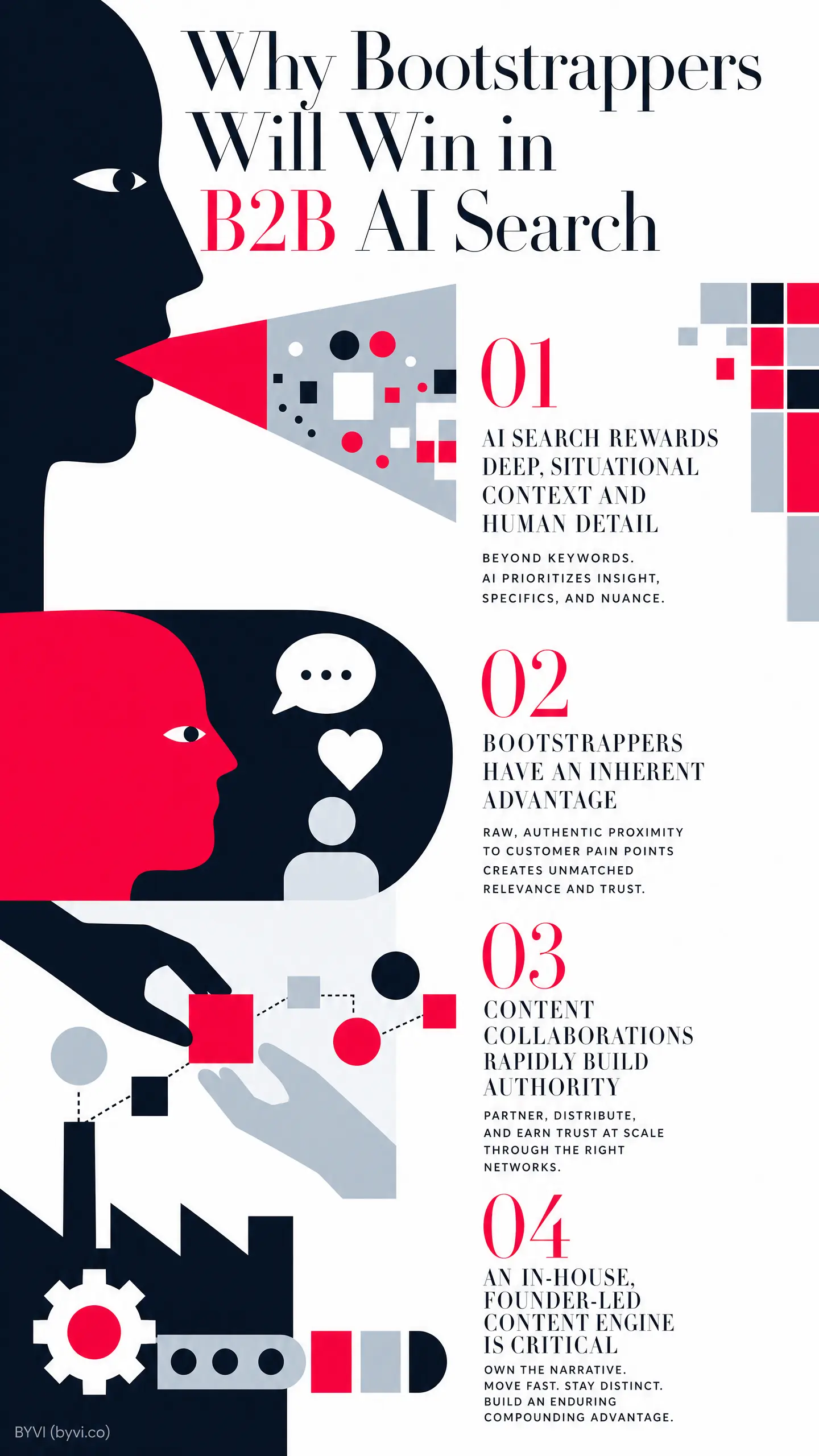
This is why I believe bootstrappers will win.
You are usually closer to the pain than a larger company is. You are on the sales calls. You are handling objections. You are reading support messages. You are hearing the same concerns again and again. You can hear what people are saying, and if you pay attention, you can hear what they’re not saying too. Reading between those lines often comes with experience.
The Power of Industry Vocabulary
Since AI looks for depth, founders should lead with their firsthand experience and niche expertise to signal authority. The founder with 10 years of real industry knowledge has a major edge. They use the right words, what’s often called industry vocabulary. They understand the real objections. And they can convert all this firsthand industry knowledge into very impactful content.
The Bootstrapper Speed Advantage
And then there is speed.
A big company often needs rounds of approval before a piece goes live. A bootstrap founder can publish while the pain is still fresh. If you live in a work-life blend, and most founders do, your brain is already connecting the dots all day. Use that.
- After a call, write down the objection.
- After a customer question, turn the answer into a page.
- After a demo, capture the explanation that made the buyer lean in.
AI search favors that kind of freshness when it is paired with real expertise. I have seen clean, focused content get picked up by LLMs within a couple of days when the formatting is simple and the answer is easy to find.
How to Format Content for AI Discoverability
When I say formatting, I don’t mean H2s and H3s.
To build content LLMs can easily cite, prioritize machine-readable structure. Be as direct as possible: prioritize clarity, lead with answers, strip away any unnecessary fluff, and ALWAYS anchor your brand. Because AI is a sophisticated pattern matching machine, and if you do not mention your brand, the AI will not link your expertise back to you.
AI Rewards Proof, Consistency, and Human Detail

AI Search Evaluates B2B Brands Beyond Your Website
One of the biggest mistakes I see is founders thinking AI search only looks at their website.
It pulls from much more than that.
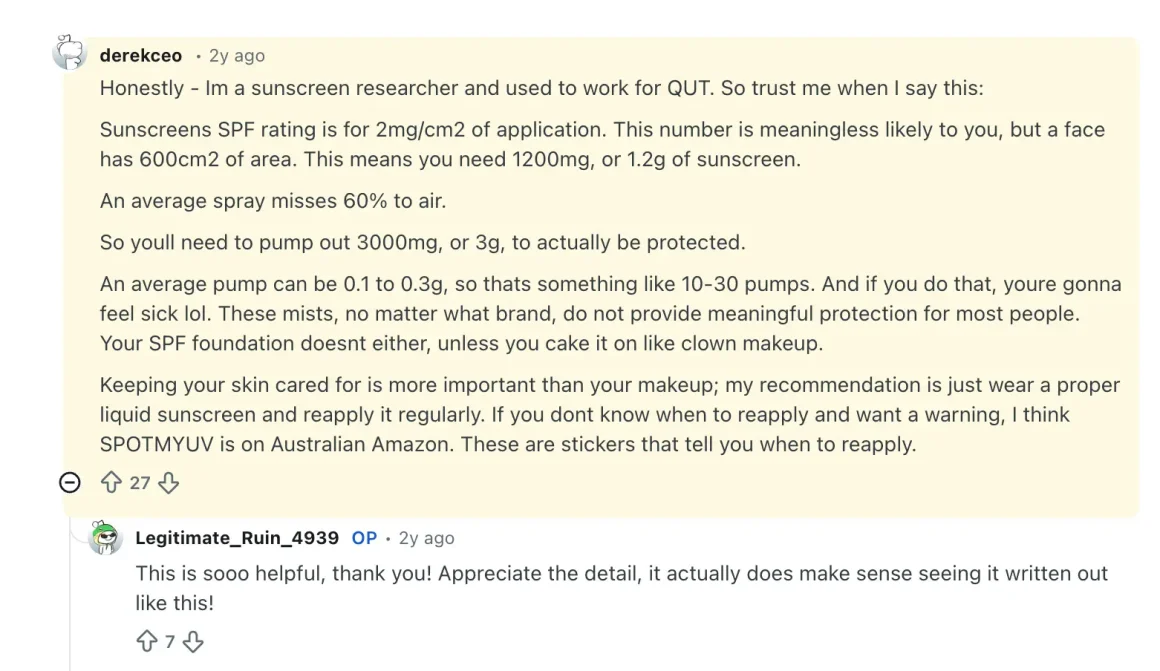
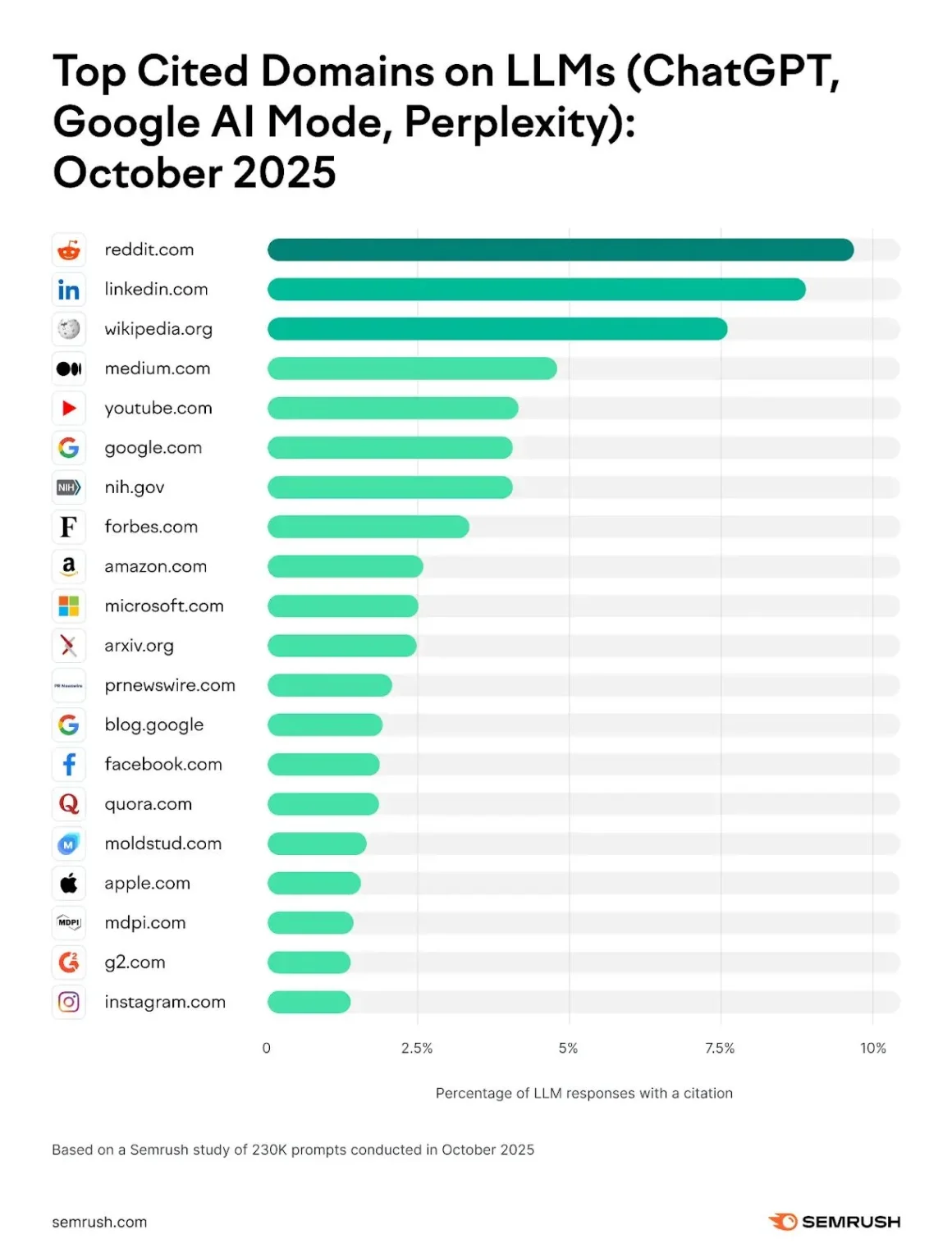
LLMs love Reddit. They crawl for community sentiment. They pull from G2, review platforms, testimonials, niche publications, product documentation, help centers, and public conversations around your category. They want proof. They want context. They want signs that real people trust you.
My founder friend acquired clients because AI search models cited his helpful Reddit comments. Those comments compared the solution to competitors in a neutral, useful way. That says a lot about where authority comes from now.
AI search then synthesizes all of these signals and forms its own view of your company. That is the important part. It is building a narrative about your brand from whatever it can find. And if you do not control that narrative, somebody else will.
Leveraging Case Studies to Influence AI Search Results
Your case studies matter here too. AI looks for proof, and case studies are a strong signal. When you write one, describe the client in detail. Talk about their stage, their problem, and the situation they were in. That context helps AI connect your solution with a similar buyer later.
Why Inconsistent Content Hurts AI Search Visibility
Because AI synthesizes your entire digital footprint, message consistency is non-negotiable.
If your product docs say one thing, your blog articles say another, and your executive posts tell a different story, AI starts losing trust. The brands that win are the ones where the message lines up everywhere.
This is another reason I like bootstrappers in this market. Smaller teams can stay aligned more easily. There are fewer layers. There is less polishing. There is more truth.
Build AI Search Authority Through Niche Publications
In traditional SEO, boosting your website’s authority is often as simple as securing backlinks from sites with a high Domain Rating (DR), and historically, search engine algorithms haven’t cared whether you earned that link organically or paid for it
AI search models, however, are fundamentally different. They prioritize genuine, contextual trust signals from independent publications rather than just looking at link metrics. Because of this, authentic earned editorial coverage is far more effective for boosting your AI search visibility than paid press releases or sponsored links.
However, not all earned media serves the same purpose. While mentions in mainstream outlets like TechCrunch are great for attracting investors, they aren’t always the best path to customer acquisition.
For B2B and more technical brands, building “niche authority” is much more important. You will get better results by targeting niche publications, industry newsletters, and podcasts that your Ideal Customer Profile (ICP) actually consumes. These hyper-relevant channels drive far better AI discoverability and customer acquisition.
Own Your Own Content Engine
If you are a B2B founder, regardless of whether you are bootstrapped, you should bring content writing in-house and own your own content engine.
You can absolutely get outside help with setting up the right process, this is where I’d come in. But the insights and knowledge source has to come from inside the company.
Pull from sales calls. Pull from closed-lost calls. Pull from support tickets. Pull from FAQ threads. Pull from onboarding friction. Pull from product docs. Pull from your co-founders and your internal experts. You get the idea.
This is where sales and marketing should finally work together. Lead with outcomes. Show the team how content attracts Marketing Qualified Leads (MQLs), how it helps reopen ghosted deals, answer objections faster, and warm up conversations. When people inside the company see that content moves pipeline, they start taking it seriously.
Publish Content Where AI Crawlers Already Are
While your website still matters, because traditional Google indexing acts as a major gateway into AI search, your strategy must extend to the the platforms that AI algorithms crawl.
I’m a huge fan of LinkedIn. I love that its long-form articles often surface in AI search results to reach decision-makers directly. Surprisingly, even articles with very few likes appear in AI overviews and get cited by LLMs, which means AI doesn’t prioritize virality.
And I also see YouTube appearing frequently in AI overviews. I believe now is the ideal time for founders and their teams to start creating video content to increase brand visibility and shape their own narrative.
Final Thoughts
This is one of the best times for bootstrapped B2B founders to win attention.
Bootstrapped startups rarely have the massive budgets needed to buy growth, hire expensive sales teams, or secure headlines in major publications. But AI search has opened an entirely new lane. Today, helpful, specific, and deeply human content can put you directly in front of buyers without a massive spend.
The key is staying consistent long enough for your efforts to compound, which is exactly where most founders give up. AI models are constantly learning from what they find. Every useful page, thoughtful comment, detailed case study, and niche collaboration adds another trust signal. Over time, those signals synthesize into your brand’s truth.
So keep going my dear bootstrapped fellows. Channel your frontline experience into content that offers real depth and proof. Share the exact details your buyers actually need. Always stay close to your customers and actively control your narrative before someone else does.
If you pair your real-world experience with authentic proof, you will become impossible for AI to ignore. And once that flywheel starts spinning, the exact right clients will find you at exactly the right time.
FAQs
How can a lean bootstrapped team maintain the content velocity required for AI search?
You do not need a massive team. You need a ruthless system. Repurpose everything you create. Publishing 16 or more content pieces monthly drives roughly 4.5x more leads. Hit that volume by slicing one deep founder insight into multiple formats to survive.
Should bootstrapped startups abandon paid search entirely in favor of AI-driven B2B SEO?
Yes, especially early on. Paid search is a brutal game against VC-funded giants. B2B SEO delivers a massive 748% ROI compared to just 36% for paid search. Build your organic engine first. Buying ads will burn through your cash too quickly.
How does LinkedIn factor into an AI search strategy for early-stage B2B brands?
AI models constantly scrape social platforms for brand sentiment. LinkedIn is a goldmine for this. With an impressive visitor-to-lead conversion rate of about 2.74%, your organic posts feed the crawlers while directly converting the actual decision-makers already in your network.
Does AI search make traditional B2B email marketing obsolete for bootstrapped founders?
Not at all. AI search brings them to your doorstep, but email keeps them in your ecosystem. Email remains highly efficient, delivering around 261% ROI. Capture high-intent traffic with search, then convert these leads into email subscribers for nurturing.