Written by Lidia Vijga
Amjad Masad spent nearly a decade pitching a vision investors didn’t believe in. Then, in roughly 12 months, Replit went from $2.5M to $250M ARR. At Startup Grind, he walked through what actually happened in between, and what founders building right now should take from it.
When Amjad Masad pitched Replit a decade ago, one VC delivered what would become his favorite rejection. The investor told him the company was “a great thing for the world” — and that it should exist. He added that the same investor told him, “But I’m a capitalist and I don’t think it’ll ever make any money.”
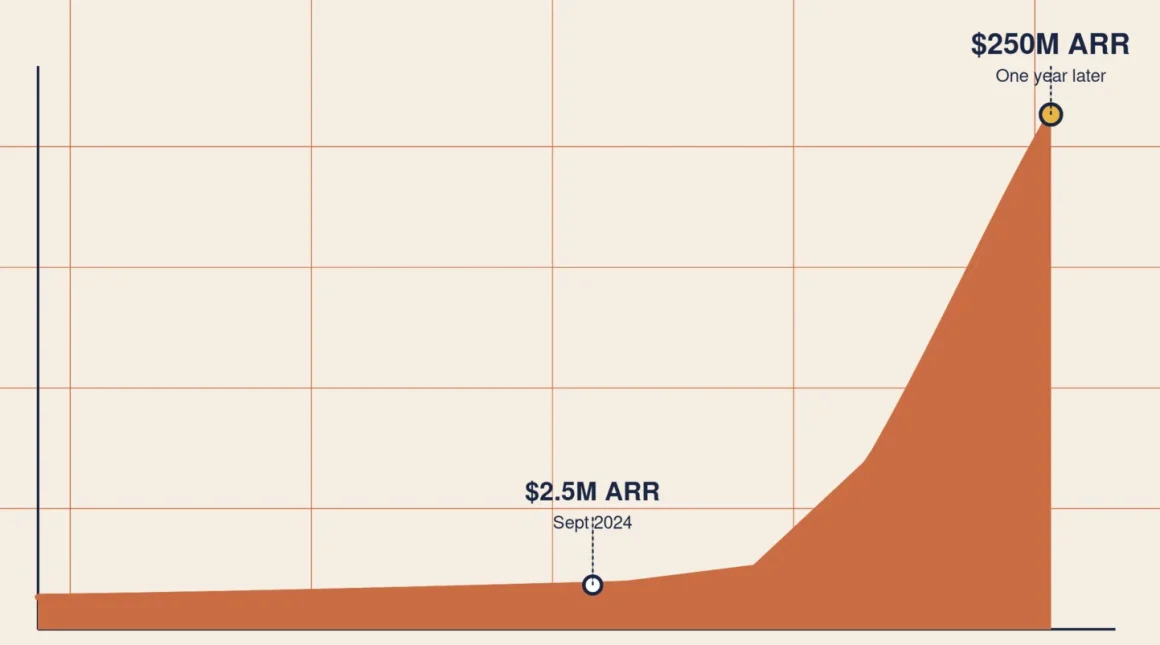
Most founders would file that meeting away as a bad day. Masad filed it away as a recurring pattern. For the next eight years, Replit pursued a vision — that coding should be accessible to anyone with a browser, and that someday a billion people would build software — without a clear business model to defend it. Then, in roughly 12 months, the company went from $2.5M in ARR to $250M.
Speaking recently at Startup Grind, Masad walked through the long, contrarian arc that led there. For founders building anything ambitious right now, the more interesting story isn’t the hockey stick, it’s everything that came before it.
The setup-friction kid from Amman
The vision started, like a lot of good products, with personal annoyance. Growing up in Jordan, Masad’s father bought what he describes as “the first computer I’ve seen in my life”, and the first one in his neighborhood.

As a teenager, he turned it into a small business, building an Internet cafe management system for the local gaming shops. “It took me like two years to build it,” he said.
But every time he wanted to actually program something, the friction nearly killed the urge. “I would have to spend a lot of time downloading gigabytes worth of IDEs and dependencies,” he recalled. The fix was obvious to him, even then:
“You gotta be able to just open a browser window and start coding.”
That instinct stayed with him. By the time Replit was founded in 2016, the goal had grown well beyond convenience. It had become a thesis about scale: make coding easier, get more people building, and eventually you’d produce “a billion software creators.”
The desert years

The problem with a billion-creator vision is that it doesn’t look anything like a business in year three. Or year five. Or year seven.
“The hardest thing about it is having a vision and being in the desert and not really finding a business model for eight years,” Masad said. “It requires a lot of selling internally — not just VCs, not just inside the company.”
What kept the team aligned during those years wasn’t a deck or a forecast. It was user stories. Every month or two, someone would write in about how Replit had changed what they could build, or even what they did for a living. “We always have these individual solutions stories that would come up,” he said. That was the fuel.
For any founder operating on a long thesis with no obvious monetization, the lesson sits right there: in the absence of revenue, you have to manufacture a steady drumbeat of evidence that the product matters to real people. Vision alone won’t carry a team for eight years. User stories might.
The bet that broke the company, and then made it
In 2023, Masad stood on a TED stage and made a prediction that, even by Silicon Valley standards, was bold. AI agents were coming, he said, and they would solve software engineering end-to-end. Not autocomplete. Not snippet generation. The whole stack — write code, debug code, provision databases, deploy.
Internally, he committed to that future hard. “I felt comfortable to do that pivot, shut down all the other distractions that we’ve had,” he said. That meant layoffs. It also meant a confidence crisis: not everyone on the team believed the thesis. “We actually lost the full half of our team,” Masad said.
It is difficult to overstate how risky that period was. Replit had cut staff, alienated part of its team, and reoriented around a bet that the rest of the industry still treated as speculation.
Then Replit Agent shipped in September 2024 — the first coding agent on the market. ARR went from $2.5M to $250M in a year.
The takeaway here is uncomfortable for founders who like to keep options open: sometimes a strategic bet only works if you actually commit to it. Half-pivoting would have left Replit shipping a slightly better IDE while competitors built the future. The painful version — narrow the focus, accept the attrition, ship the controversial thing — turned out to be the only version that worked.
Coding agents aren’t really for coders
Once Replit Agent was in users’ hands, Masad noticed something he didn’t expect. The biggest unlocks weren’t happening to engineers. “If you’re not a coder, coding agents have actually more impact on your work than it has on engineers,” he said.
The examples he cited are the kind founders should be paying close attention to. A product manager at Zillow used Replit to build internal tools that, by his account, “increased offline revenue by tens of millions, perhaps $100 million.” A recruiting lead at another company started generating personalized candidate websites in minutes; response rates “double doubled.”
“You can become a 10x marketer, a 10x sales, by using tools,” Masad said. The framing he kept returning to: coding agents are general-purpose work tools that happen to produce code.
This has a direct implication for how founders should think about hiring. Masad’s take is blunt: “I don’t think raw IQ matters.” What matters now is agency — the ability to get things done and be resourceful with the tools available. “We see a power law,” he said. “We don’t see everyone adopting them.” A handful of operators on any team will absorb these tools and become an order of magnitude more productive. The rest won’t. Hire accordingly.
Lessons from being early on agents
Being first means making the mistakes first. Masad said Replit has already lived through the security and isolation problems competitors are only starting to encounter. “We’ve learned everything that people are learning now,” he said. “Like a year ago.”
The clearest rule he offered was unambiguous:
“Never connect a coding agent to a production environment. Never do that.”
There’s a quiet competitive moat in that experience. Replit’s full-stack architecture — agent, runtime, deployment, security — lets the company enforce guardrails users would otherwise have to assemble themselves. As one example, Masad noted, “we don’t allow the code engagement to install packages that are like a week old.” It’s the kind of opinionated default only an integrated platform can make.
He framed this as a new kind of product advantage:

“In a world where anyone can create anything, it’s more important than ever to create something with opinions and taste, and user experience and user safety in mind.”
– Amjad Masad
What founders should actually take from this
Three threads from Masad’s talk are worth holding onto.
1. Vision and speed aren’t opposites.
His phrasing: “be incredibly patient but moving incredibly fast in the near term.” Anchor your roadmap in five- and ten-year bets, but ship to customers weekly. The patient part is about what you’re building toward; the fast part is how you learn whether you’re right.
2. Distinguish the timeless from the trendy.
“Think about the things that are really core to humanity that are not going to change,” Masad said. Build for those. Use AI to get there faster — don’t build only for the AI moment itself.
3. The org chart is changing under everyone’s feet.
About 85% of the Fortune 500 already has Replit users somewhere inside the building. What varies, Masad said, is whether leadership knows or cares. The founders who win the next few years won’t be the ones who hired the most engineers. They’ll be the ones who built teams where every role — recruiting, sales, ops, product — operates with leverage that used to require an engineering ticket.
What the desert was for
Replit spent 8 years in the desert betting on that future. And the desert now is over.
The clearest sign of that came this March, when Masad introduced Replit Agent 4 — the company’s latest bet on where this is all going. His framing:
“Software isn’t merely technical work anymore. It’s creative. Introducing Replit Agent 4. The first AI built for creative collaboration between humans and agents. Design on an infinite canvas, work with your team, run parallel agents, and ship working apps, sites, slides and more.”
Software isn’t merely technical work anymore. It’s creative.
— Amjad Masad (@amasad) March 11, 2026
Introducing Replit Agent 4. The first AI built for creative collaboration between humans and agents.
Design on an infinite canvas, work with your team, run parallel agents, and ship working apps, sites, slides & more. pic.twitter.com/VCucf86wX6
That sentence — “software isn’t merely technical work anymore, it’s creative” — is the natural endpoint of the journey he described from the stage. The same instinct that started in a kid’s room in Amman, the one that said coding should be as simple as opening a browser, has compounded into a tool that lets anyone with an idea ship it.
The desert years were spent making that possible. The next chapter is what people do with it.