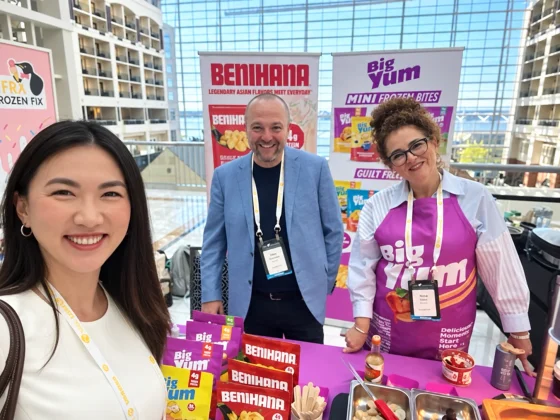
Every founder wants word of mouth from people their customers already trust. Hero Bread built a free program that puts its bread in the hands of registered dietitians, the people Americans trust most for food advice. I met the team on the expo floor in San Antonio to see how it works and what other founders can learn from it.
A lot of the registered dietitians at FNCE in San Antonio had never heard of Hero Bread. Christina Blaisdell Oyler, who leads e-commerce at Hero, told me that at the booth, and it’s a big gap for a brand that brought in $54 million in revenue last year and sits on shelves in about 10,000 stores.
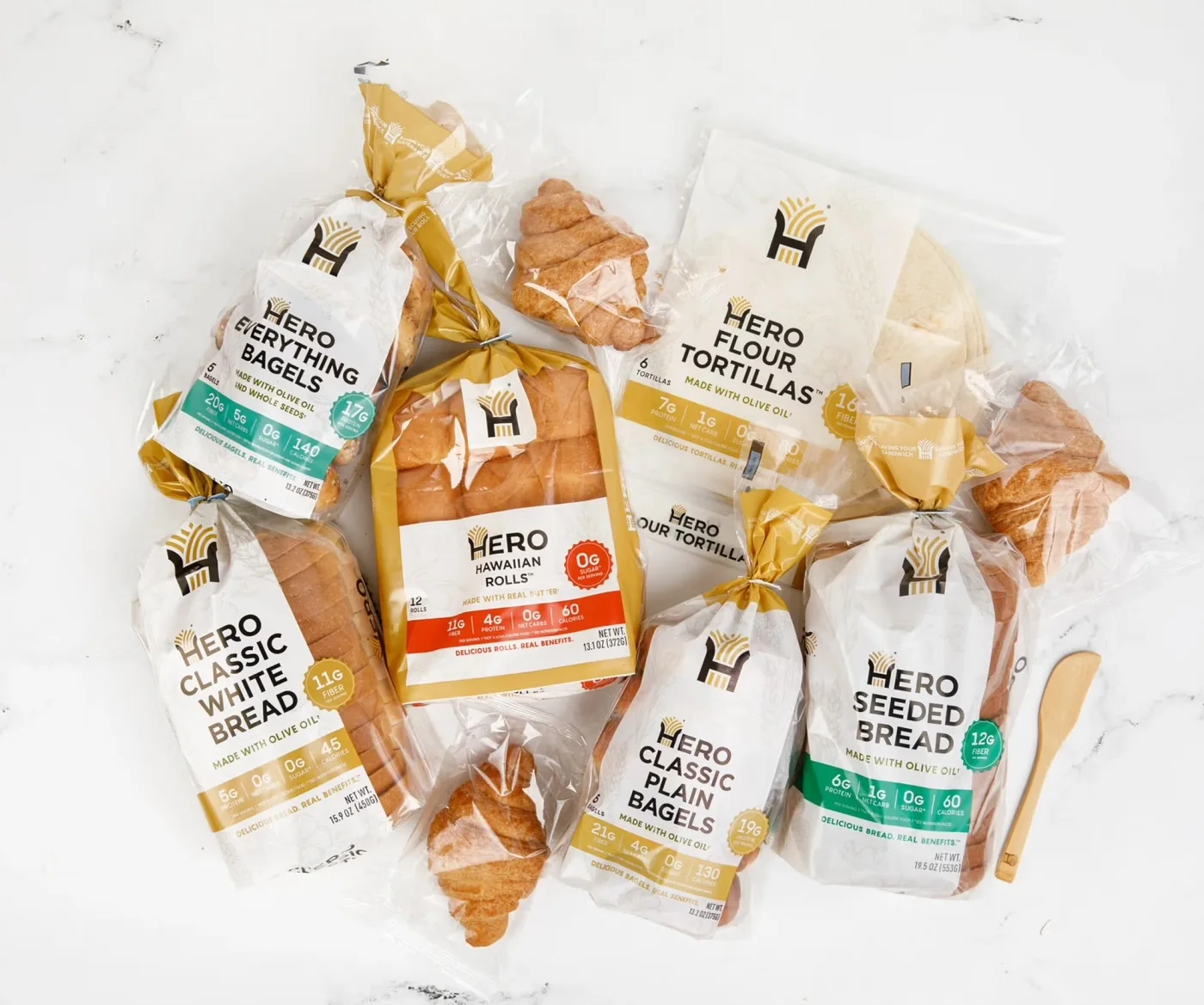
I tried the croissant first (super puffy, a little salty, delicious), then the Everything bagel, which I’d happily eat for breakfast. For Christina, the best moments came when dietitians reacted twice, first to the nutrition and then to the taste.
“It’s great to see their surprise and delight upon hearing about what we offer nutritionally, and then tasting it and putting those two together.”
Christina Blaisdell Oyler, VP of eCommerce at Hero Bread
FNCE is the Academy of Nutrition and Dietetics’ annual conference, held this year in Texas. For a food brand, the expo floor is a room full of people whose job is telling other people what to eat. Hero has been quietly turning that room into a growth channel.
Registered dietitians sit at the top of the trust ladder: a year earlier, 71% of Americans expressed high trust in RDNs, and in the 2026 survey dietitians still held some of the highest trust scores of any source, even after a dip.
A trusted advisor matters more when the product sounds too good to be true. Hero’s breads run 0 to 5g net carbs with 0g sugar and plenty of protein and fiber, which is the kind of claim shoppers are skeptical of.
A dietitian who has tasted it and read the ingredient list can close that gap in a single client session. Hero leans into this on its own site too, publishing dietitian-written posts like Is Hero Bread Healthy? by registered dietitian partner – Kristin Neusel, MS, RD, LD, CDCES.
The bread that survived its biggest customer
Cole Glass, Founder at Hero Bread | Image Credit: Courtesy of Hero Bread
Hero has had a messy, instructive run. Founder Cole Glass started the company in 2019 to deal with his own severe allergies, and an early Subway deal looked like the big break. It drained cash instead, and CEO YuChiang Cheng told Entrepreneur the company was too small at the time to service it.
Hero walked away, cut down to 5 everyday staples, and went direct to consumer. It has raised $68.5 million to date and landed at No. 122 on the 2026 Inc. 5000.
Christina joined before launch, after well over a decade at food and beverage brands, including a company that acquired startup brands. She said Hero was “a no brainer” for her.
Hero sold online before stores because rolling out nationally through retail is hard, and people were already asking for the product. Hero.co is still the only place to buy everything Hero bakes, including the handmade Crafted Collection items from Sonoma County.
Applicants must be practicing health practitioners, registered dietitians, or medical professionals in the US, with an engaged audience that wants their food recommendations.
The form asks for a certification or license number. Members get Hero products, a personal coupon code for clients with affiliate commission on sales, and access to Hero’s practitioner network, resources, and events.
One line stands out: the program offers no paid collaborations, and applicants have to tick a box confirming they understand that.
Christina filled in the parts a landing page can’t show. Members get samples each season, which include seasonal items and new launches, so they can try everything Hero is coming out with. Hero also asks for their feedback, something Christina said the team takes seriously.
The education piece is the cleverest part. Hero runs free webinars led by their partner Kristin Neusel, and each one awards 1.0 CPEU (continuing education credit) under the Commission on Dietetic Registration’s Prior Approval Program.
Past sessions include “Satiety Science in a GLP-1 Era,” “Smart Carbs 101: Glycemic Index vs Load,” and “Fiber Forward: Resistant Starch, TikTok Trends, & Insights for the Modern RD.”
145 dietitians and a 230% jump
Hero hasn’t published program metrics, but The RD Link (a marketplace connecting brands with more than 3,300 verified dietitians) wrote up a case study on Hero’s launch. Keep in mind The RD Link helped run the program, so the case study is also a pitch for its own services
Hero’s first goal was modest: grow the program 30% to 50% with each activation and 20% each month, while building one-on-one relationships with dietitians. Using 2 outreach posts, 1 email blast, and sample boxes, Hero grew the program 230%, connected directly with 145 dietitians, and generated user content and affiliate sales within a few months. Hero’s Shannon Long summed it up: “The response from the RDs has been phenomenal.”
145 dietitians sounds small until you count their clients. Each one advises a steady stream of people about what to eat, and every coupon code turns those conversations into sales Hero can track.
6 moves to build your own expert channel
Hero’s program works because each piece gives the dietitian something useful before it asks for anything. These 6 moves translate to almost any startup with a trusted expert standing between you and your customer.
Find who already answers your customer’s question. Hero’s customers want to know if they can still eat bread, and dietitians field that question daily. Christina called Hero a simple swap: no diet overhaul, no bad-tasting food, and the whole family can eat it.
Make joining free and the bar real. Hero charges nothing but asks for a license number and rules out paid deals, which keeps the network credible.
Teach before you sell. Hero offers free continuing education credits on timely topics like eating well on GLP-1 drugs, with its product as a practical example.
Give them something to hand to clients. A personal discount code makes recommending easy, the commission rewards the dietitian, and both make the channel measurable.
Treat them as your test kitchen. Seasonal sample boxes turn dietitians into an expert tasting panel. That suits how Hero launches: its bagels debuted online in small batches in December 2024 and hit store shelves within 6 months. Christina said more customer-requested products are coming in the next 6 to 12 months, once they meet Hero’s bar on nutrition, ingredients, taste, and texture.
Show up where they gather. Hero recruits online through The RD Link and in person at FNCE, where one bite beats any sales deck. Christina said the best part of FNCE was meeting dietitians who had never heard of Hero and watching them taste it.
Every category has its version of the dietitian. If you sell a recovery device, it’s the physical therapist. If you sell bookkeeping software, it’s the accountant your customers already pay. These experts are hard to reach with ads and easy to lose with a pushy pitch, which is exactly why they’re worth the effort.
Start small. Pick 20 experts, send them your product with no strings attached, teach them something they need, and give them a code to share. Then listen hard to what they tell you, because they hear what your customers won’t say to you directly.
The Subway deal taught Hero how risky it is to depend on one big partner. Its dietitian program works the other way: many trusted voices, treated well, can carry a brand further than any single deal.
Take care of the experts, and their clients will follow.
About the Author
Assel Beglinova writes about ecommerce and DTC trends, growth strategy for consumer brands, and how sellers fund their expansion and manage cash flow as they scale. Her work covers the financing questions every consumer brand founder runs into, from revenue-based financing to inventory planning to keeping enough working capital on hand to act on growth opportunities. Assel is the CEO and co-founder of Paperstack, a platform that provides working capital for consumer brands.