Written by Assel Beglinova
Tony Rabinovitch’s family started making perogies in a Toronto apartment for a single deli, 2 years after arriving from Ukraine. More than 30 years later, Pelmen Foods runs 3 brands, is launching new products for mainstream shoppers and turns down acquisition offers every week. His path is a clear playbook for any founder starting with little more than a recipe and the refusal to quit.
Tony Rabinovitch has worked in his family’s food business since he was a kid, so I asked him the obvious question: what’s it like spending 24 hours a day with your family?
“I say it wasn’t 24, it was 25, because I woke up an hour earlier.”

Tony Rabinovitch
The Rabinovitch family arrived in Toronto from Ukraine in 1993 and started making perogies 2 years later, for a single deli. Today Tony runs that business, Pelmen Foods, and it carries 3 brands: Pelmen in Canada, Holy Perogy! in the U.S. and Big Yum, which takes the family’s dumpling know-how into mainstream frozen snacks. Tony also gets 2 or 3 acquisition offers a week, and he deletes them.
“Fortunately or unfortunately, I don’t have any other experience,” he told me. “Everything that I know in this space, I learned on the job.”
How Pelmen Foods started with $300 and one deli
The business began as a favor to a friend. In January 1995, Tony’s father, Jeff, put down a $300 deposit on a pasta roller, a dough mixer and a small freezer chest. A family friend had been making perogies for a local deli and needed someone to cover the orders for a couple of months while she was away in Israel. She never came back for the business, Tony later told Canadian Packaging, so the family kept going, first with her recipes and then with their own.
Jeff was an electrical engineer who had spent years repairing bakery equipment, and he was between jobs. The first kitchen was a small apartment in Toronto’s north end, where Tony pinched dough next to his parents, his sister and his grandparents.
The family never wrote a business plan. They had one customer, a recipe and every reason to make it work.
“We joked about it the other day,” Tony said:
“The best business plan we ever had was not having a business plan, rather than actually just doing it, getting your hands dirty and actually doing the hard work.”
Over the years, Tony did every job in the company:
- making dough
- pinching perogies by hand
- deliveries, bookkeeping
- sourcing supplies
- packaging design
- marketing
He started college because that’s what immigrant parents expect, switched to night school, then dropped out. “I said, I have a real business career that I can grow.”
That apprenticeship paid off when the company scaled. In his 2012 interview with Canadian Packaging, Tony walks through the new production line machine by machine, down to the freezer times. Few founders know their operations that well, and it makes every hiring and buying decision sharper.
Working with family: the 25-hour day
Those 25-hour days came with an upside: focus. “When you’re in it together as a family, there’s kind of no way out, and you have to make it work,” he said. Everyone’s savings sit in the same basket, so nobody drifts off to a side project.
The hard part came when the company needed to grow. Tony took the lead on investing money the family had earned from the business, and that scared everyone, including him. He and his father disagreed about how things should be done. His advice to anyone building with family is this:
“If you feel that you’re at a breaking point where it’s either my way or the highway, the highway can be scary, because then you’re losing a family, not just a partner or a friend.”
The same weight also pushed him forward. “Your entire family, not just your staff and employees, but also your extended family, depends on you,” he said. “It doesn’t make it easy, but it definitely pushes you harder.”
Why Pelmen Foods left the deli shelf in 2010
For about 15 years, Pelmen sold mostly to Russian and Eastern European delis. In 2010, the family decided that shelf was too small. The company moved into a new 15,000-square-foot facility in Toronto’s west end, bought new equipment and went after national grocery chains, according to Canadian Packaging.
The boldest change was the bag. Frozen perogies traditionally came in clear plastic, and Tony wanted packaging that looked like a brand. Pelmen switched to a printed, resealable bag in 9 colors. Some long-time customers disliked the new look, and the company lost a few of them. Stores welcomed it, and Pelmen landed on the shelves of Pusateri’s Fine Foods, one of Toronto’s upscale grocers.
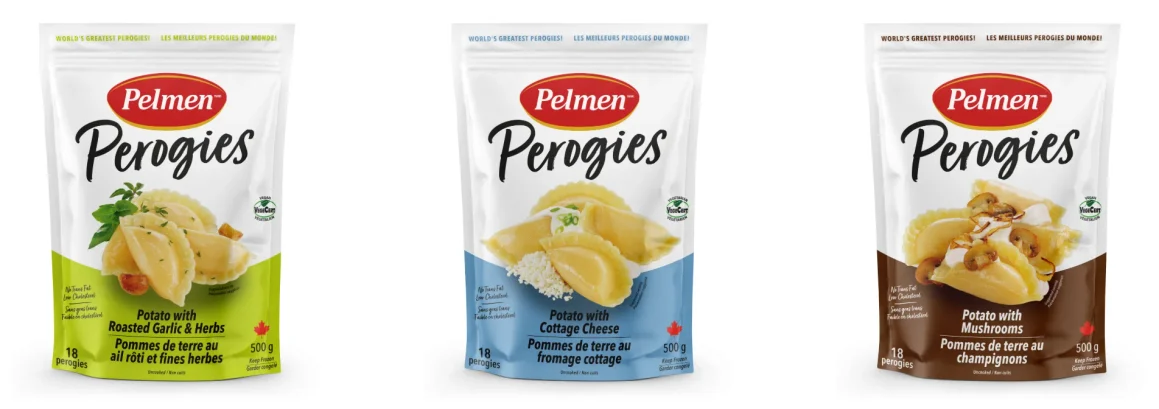
“It hurts to lose a few long-time customers,” Tony told Canadian Packaging in 2012. He made the trade anyway, and he priced for it. Pelmen’s perogies were 60% filling and 40% dough, which Tony said was the reverse of the industry average and supported a premium price.
How Holy Perogy! and Big Yum take one kitchen to new customers
Pelmen is the family’s Canadian legacy brand. For the U.S., Tony launched a separate brand with its own name and look: Holy Perogy!. The Nibble named it a Top Pick of the Week in 2022 and noted that the family chose the Ukrainian spelling, “perogy,” on purpose.
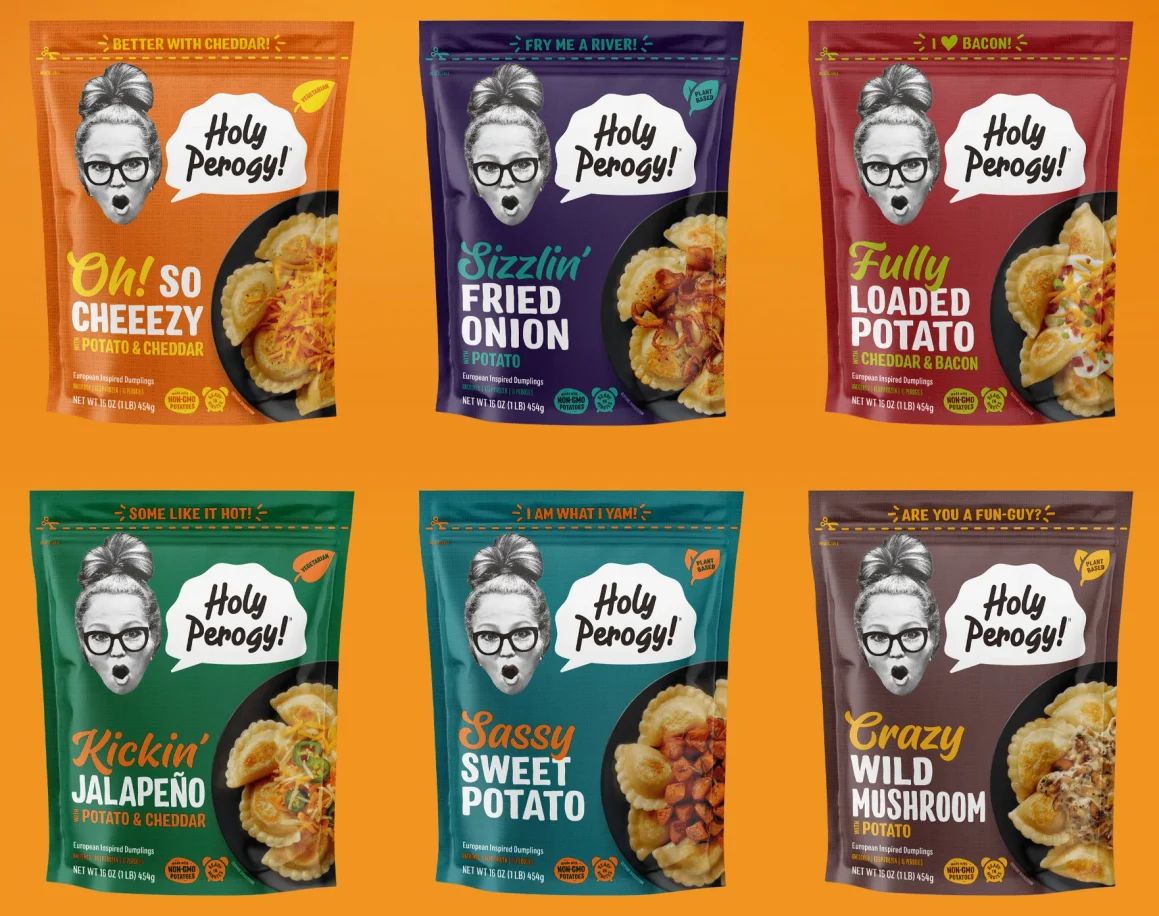
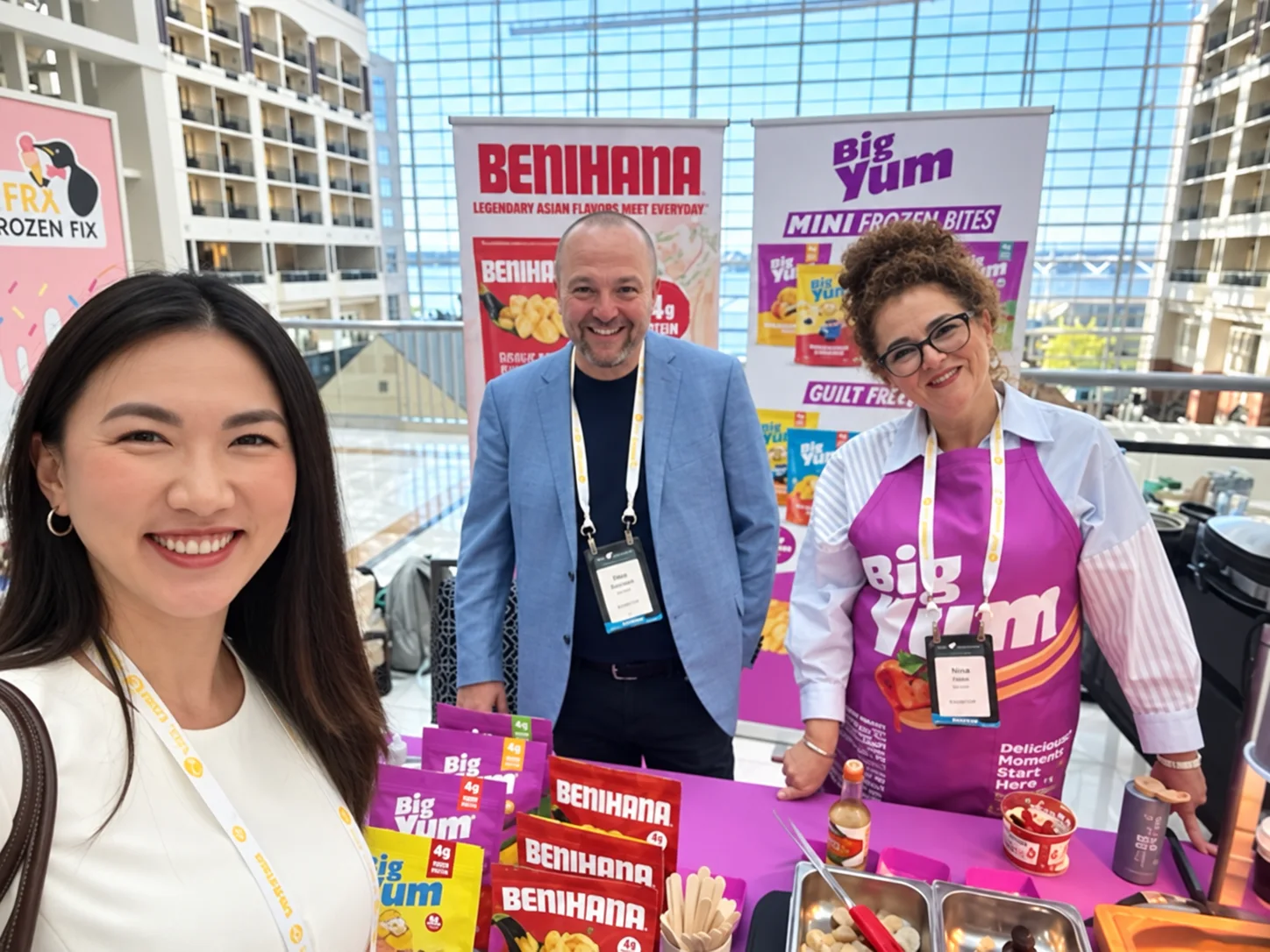
Next, Tony wanted to move beyond perogies, and that needed a brand of its own. He describes Big Yum as engineered from scratch. “It was meant to appeal to your typical all-American consumer,” he said.
Big Yum’s lineup includes Crispy Breakfast Bites (egg, cheddar and bacon in a crispy shell that goes into the air fryer for 8 to 10 minutes), Asian-inspired Mini Dumpling Bites and Crispy Pie Bites.
Tony described the dumplings to Frozen & Refrigerated Buyer as “ethnic for the masses, not the ethnic market.” The magazine noted that the 5 dumpling flavors, including Kimchi Pork and Sweet Miso Vegetable, don’t duplicate what’s already on shelves.
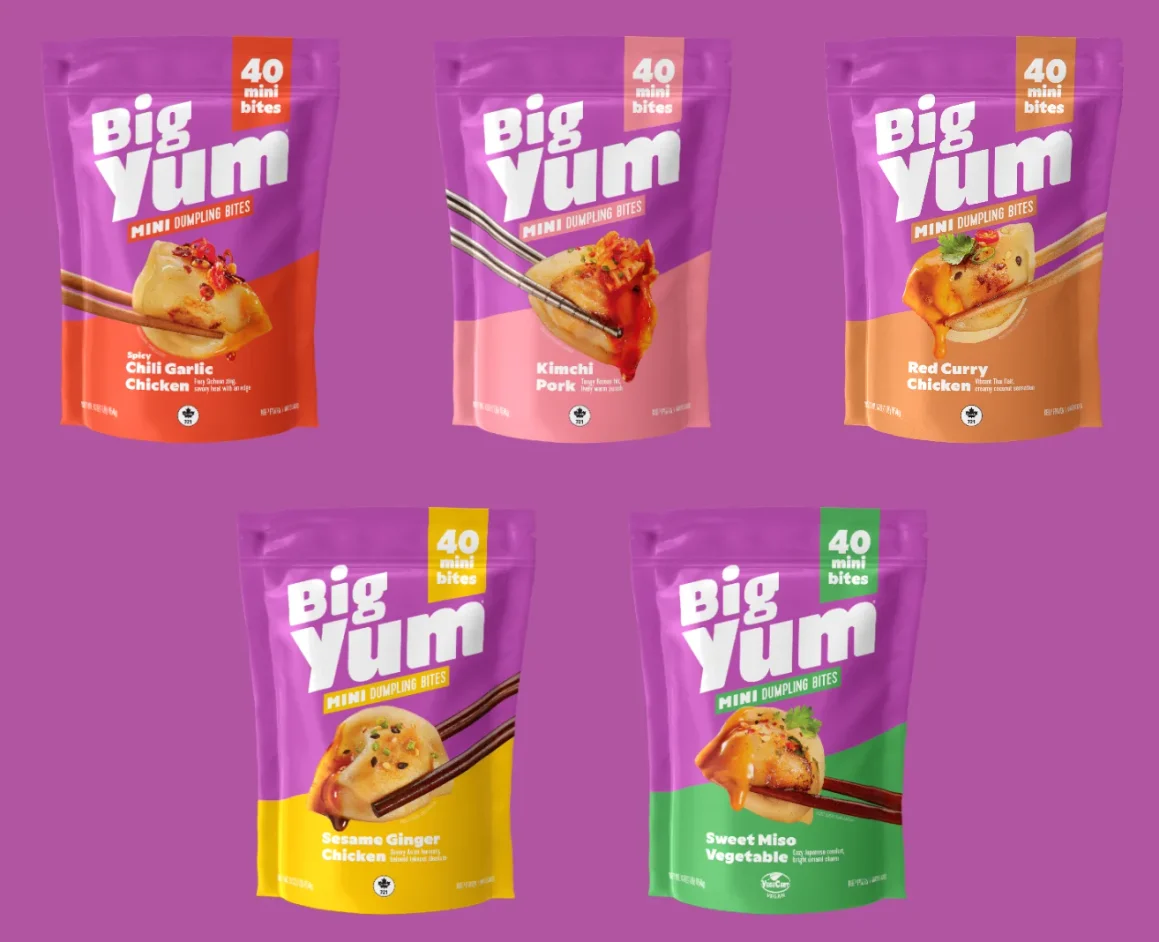
The plan is for Big Yum to keep growing as an umbrella brand. “At some point you might see Big Yum cookies,” Tony said, with more categories to follow.
He’s on a well-proven path. Hamdi Ulukaya grew up on a dairy farm in eastern Turkey and, in 2005, bought a 100-year-old yogurt factory in upstate New York with loans of less than $1 million. His goal, NBC News reported, was to bring the yogurt of his childhood to everyday shoppers. Chobani launched in 2007, and by Ulukaya’s count it was a $1 billion business 5 years later. Greek yogurt went from almost no U.S. sales to more than a third of the yogurt Americans eat.
The pattern for founders: keep making what you’re good at, and give each new customer a brand built for them. Holy Perogy! kept the family recipe but got a new name and packaging for American shoppers, and Big Yum takes the same dumpling know-how to the all-American snack aisle.
Why immigrant founders are built for this
Tony never had a backup plan. “It was just kind of an unspoken rule in our family,” he said. “I saw what they had to go through to make a good living for themselves, for us as kids. It was second nature. You don’t think about it, you just do it.”
I’m an immigrant too, and I recognized that instinct right away. Moving countries teaches you to be resourceful and to make decisions with limited information, which describes most of a founder’s week.
Why Tony deletes 2 to 3 acquisition offers a week
When I asked which company Tony looks up to, he said he doesn’t have one, since every company has its own story. His goals are concrete: make good-quality food, take care of his employees and the community, and provide for his family, including his future grandkids and great-grandkids.
That’s a healthy position for any founder: know an exit is possible, and run the company as if you’ll own it for decades.
6 lessons from 3 decades of building Pelmen Foods
- Start with one customer you can serve well. Pelmen’s first market was a single deli. Getting one buyer to reorder week after week taught the family more than a business plan would have.
- Do every job before you hire for it. Tony made dough, drove deliveries and kept the books. Knowing each job firsthand makes you a sharper buyer of equipment, people and advice.
- Agree on how your family decides before the stakes get big. The tension at Pelmen arrived with the expansion money. Settle roles and who has the final say while the numbers are still small.
- Outgrow your first market on purpose. The 2010 packaging change cost Pelmen a few loyal customers and opened the door to mainstream grocery. Some growth means letting early customers go.
- Give each new customer a brand built for them. Holy Perogy! serves the U.S., Big Yum serves mainstream snackers, and the same kitchen standards sit behind both. Chobani did the same with the yogurt Ulukaya grew up eating.
- Build a company worth buying, then decide whether to sell. Offers come to businesses with loyal customers and a strong product. Pelmen keeps earning them by staying focused on the food.
Most founders reading this start with more than the Rabinovitch family had in 1995: more money, more connections and a lot more software. What carried Pelmen was simpler: doing every job, making the hard calls together and reinvesting in the product.
Used equipment, a family that wouldn’t quit and 30 years of steady reinvestment add up to a company buyers email every week. Tony’s answer is to keep cooking.
About the Author

Assel Beglinova writes about ecommerce and DTC trends, growth strategy for consumer brands, and how sellers fund their expansion and manage cash flow as they scale. Her work covers the financing questions every consumer brand founder runs into, from revenue-based financing to inventory planning to keeping enough working capital on hand to act on growth opportunities. Assel is the CEO and co-founder of Paperstack, a platform that provides working capital for consumer brands.