Image Source: facebook.com/drinkwholesome
Drink Wholesome launched in January 2020, weeks before COVID shut the country down. In 2022, bird flu pushed egg prices up 500% while its first product was made from egg whites. Founder Jack Schrupp told me why he’s quick to let go of what’s not working and upfront about who his brand isn’t for.
Drink Wholesome’s first protein powder was made from egg whites. Then, in 2022, bird flu pushed the price of eggs up 500%. Founder Jack Schrupp titled that chapter of his company’s story “The Bird Flu Almost Put Me out of Business.”
When I asked Jack how a business makes it to year 7, his first answer was about letting go, and why founders find it so hard.
A lot of founders become married to their products. They see their products as children, and it’s really hard to kill your children. I know it sounds crazy, but sometimes you have to do it in order to evolve.
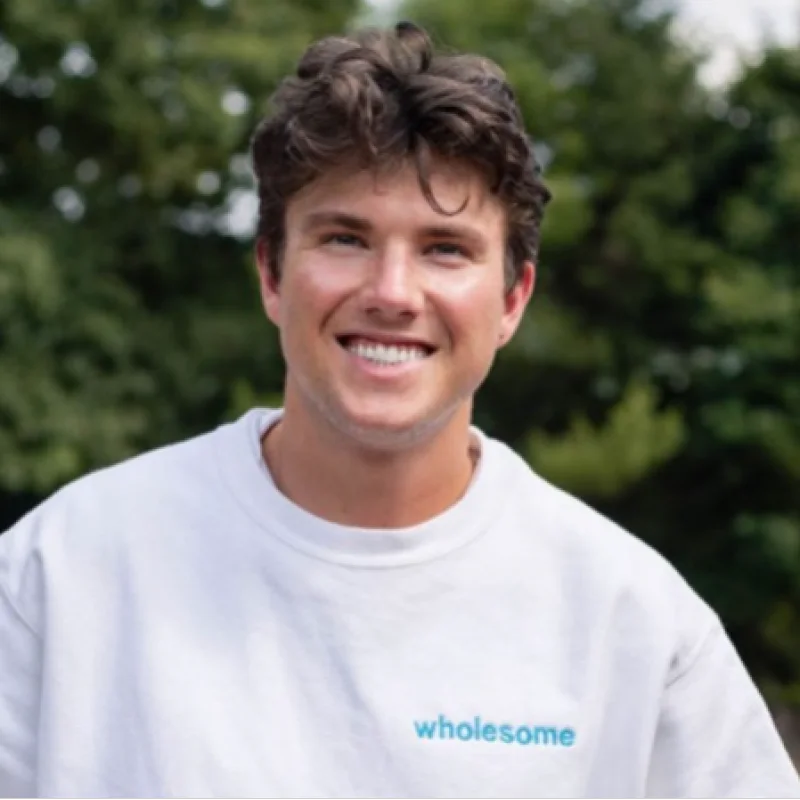
Jack Schrupp founder of Drink Wholesome
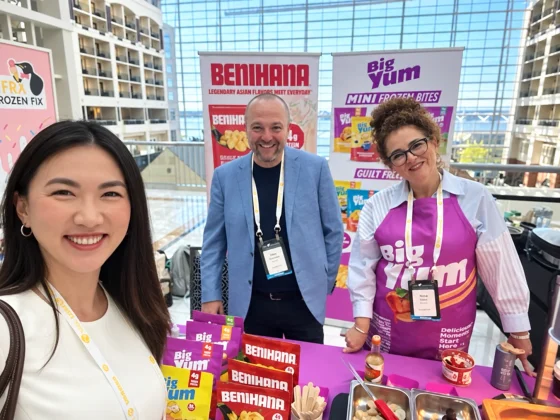
I met Jack at FNCE in San Antonio in October. FNCE is the Academy of Nutrition and Dietetics’ annual conference, and Drink Wholesome was on the expo floor to meet dietitians, nutritionists and physicians who already recommend the brand, or might start. The company is going on 7 years in business, which Jack admits is harder than it looks. “Building a brand is hard. Staying in the game is hard,” he said.
The Drink Wholesome founder story
Jack was a ski racer in college, training hard and drinking a lot of protein shakes. “I simply couldn’t find a protein powder that didn’t upset my stomach,” he told me. “So I created one for myself. And at some point in time I realized that other people might want the same thing.”
After graduating, he worked as a high school teacher and coach and built the business in his free time. He partnered with an organic granola company in Massachusetts to make the powder and launched in January 2020, weeks before the first US COVID case was detected.
His plan was to target athletes at in-person events. A few weeks later, the country shut down, the events were canceled and Jack was stuck at home with pallets of protein powder and no clear way to sell them. “I thought originally that I would go into retail, but that quickly wasn’t an option,” he said. “So I pivoted and went online. And that’s a great place to be.”
But it didn’t feel great at first. Jack had no e-commerce experience, and for months the only people buying were family and friends. He came close to quitting. Then in 2021, people with sensitive stomachs started finding Drink Wholesome online, and the business began to grow.
“A passion project turned into a side hustle, which turned into a full-time gig,” Jack said. “And now a family business.”
How bird flu almost put Drink Wholesome out of business
Egg white protein powder was Drink Wholesome’s first product, which meant Jack was buying a lot of eggs. When bird flu pushed egg prices up 500% in 2022, the cost of his main ingredient became a threat to the whole company.
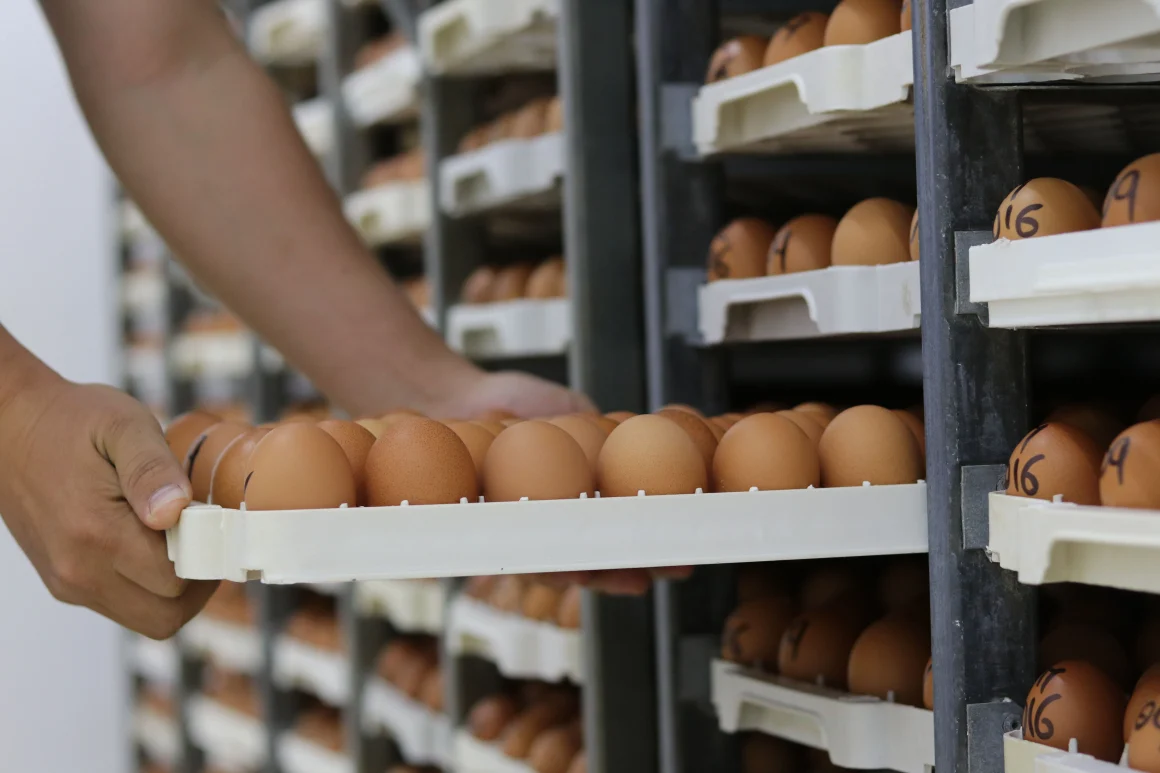
Jack responded by diversifying. He launched vegan almond protein powders and meal replacement powders in 2022. In 2024, with bird flu outbreaks still going, the company added collagen protein powders.
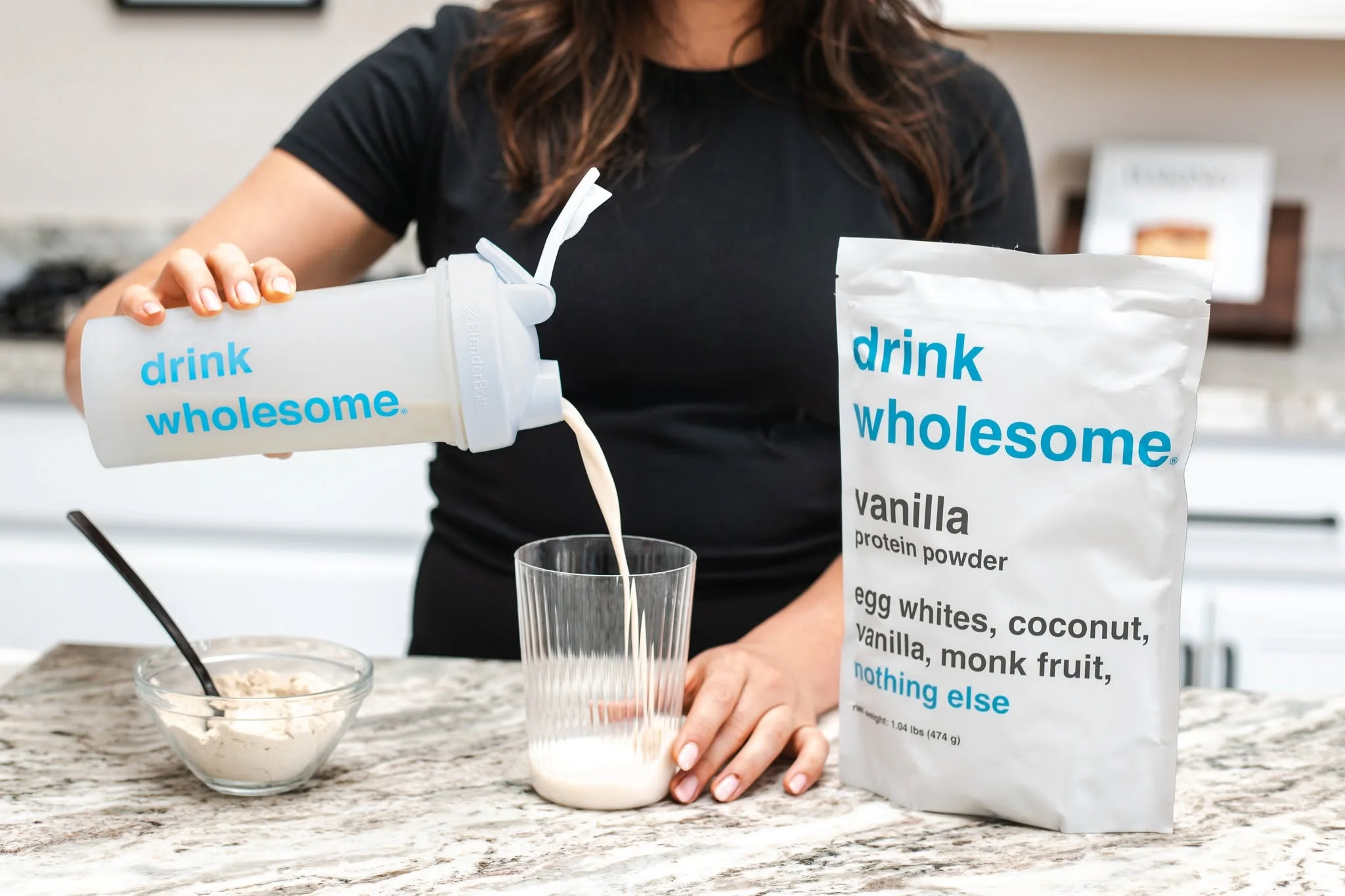
Drink Wholesome now makes protein powder from 3 sources: egg whites, almonds and collagen.
The ingredients changed. The customer (someone whose stomach can’t handle regular protein powder) and the promise (simple ingredients that won’t upset it) stayed the same.
How Drink Wholesome stands out in a saturated protein powder market
Jack doesn’t pretend his category is easy. “The protein powder space is objectively saturated, hyper competitive,” he told me. “It’s really expensive to build a brand, to acquire customers.”
His answer is to narrow the target. “We make protein powders and meal replacement powders for people with chronic digestive issues like acid reflux, IBS, Crohn’s, colitis,” he said. In his view, most protein powders don’t work for these customers because of how processed they are and the ingredients they use. “So we are a more stomach-friendly, more gut-friendly alternative to what’s already on the market.”
That means turning a lot of people away. “We’re not trying to be a protein powder for everyone or just anyone,” Jack said. “We have to be open about who we’re not for, which is, I guess, the customers that other brands are going after.”
A niche sounds small until you size it. A Rome Foundation study of more than 73,000 people in 33 countries found that 4 in 10 adults worldwide have functional gastrointestinal disorders (chronic gut problems such as heartburn, reflux and indigestion). Plenty of people read labels before they buy.
Drink Wholesome gives those customers 2 reasons to trust it.
The first is a guarantee aimed at the exact fear. “If it upsets your stomach, we’ll refund your money,” Jack said. The second is the experts its customers already listen to.
In 2025, the company started going to in-person events to meet dietitians, nutritionists, physicians and other healthcare professionals who help people with GERD (chronic acid reflux), IBS and other gut issues.
In June 2026, Jack and Tessa partnered with registered dietitian Molly Pelletier and her company FLORA Nutrition on a reflux-friendly Golden Milk Protein Powder.
Jack is clear-eyed about the cost. “You certainly leave opportunities and money on the table in doing so,” he said. “But you’ll build a better, stronger brand that can make it 7, 10, 15 years.”
6 lessons from Drink Wholesome for early-stage founders
- Let go of what isn’t working. Jack’s launch plan (sampling at events, then selling in stores) fell apart within weeks of launch, so he moved online.
- A single ingredient, supplier or customer you can’t control can sink you. Drink Wholesome now makes protein powder from 3 sources instead of 1.
- Make it obvious who your product is for. What stood out to me at the booth was the packaging: it tells you exactly what goes into the powder, so the right customer knows in seconds that it was made for them.
- Pick your channels and say no to the rest. Drink Wholesome sells in 2 places: its own website and Amazon. When I asked Jack about focusing on 2 channels instead of chasing 5 or 10, he kept it short: “I think it’s harder to say no than say yes.” Every channel you skip is one less thing pulling your attention from the customers you already have.
- Pace yourself for year 10. Jack calls himself biased to action, which he sees as an asset with a catch. “I wish I had known from the outset that I was in this for the long haul,” he said. “You don’t have to chase short term wins.” He recharges by skiing, mountain biking and trail running, completely unplugged.
- Don’t build alone. Jack tells Tessa, his sister and co-founder, everything that’s on his mind, and calls her a really good sounding board. “It’s very helpful to have someone else in the cockpit with you,” he said. “Entrepreneurship can be pretty lonely.” What makes their partnership work is trust, which he calls hard to come by in business.
What’s next for Drink Wholesome
Jack says the company is doubling down on helping people with sensitive stomachs meet their daily nutritional needs.
Tessa runs marketing and the company’s relationships with dietitians, nutritionists and physicians. At events like FNCE, the team meets practitioners who already recommend Drink Wholesome, plus new ones who might suggest it to clients with digestive issues.
In March 2026, Jack became a National Academy of Sports Medicine Certified Nutrition Coach. On the company’s site, he writes that the training has helped with recipe development and customer service.
A 500% jump in egg prices nearly ended Drink Wholesome. Jack diversified into almonds and collagen and is heading into year 7. The lesson I took from Jack: love your product, just don’t marry it. As he put it, “any good business should evolve.”
About the Author

Assel Beglinova writes about ecommerce and DTC trends, growth strategy for consumer brands, and how sellers fund their expansion and manage cash flow as they scale. Her work covers the financing questions every consumer brand founder runs into, from revenue-based financing to inventory planning to keeping enough working capital on hand to act on growth opportunities. Assel is the CEO and co-founder of Paperstack, a platform that provides working capital for consumer brands.