Written by Lidia Vijga
Funded founders keep buying 40 blog posts a month because volume feels like strategy when you can afford it. It quietly torches the one asset every future campaign sits on: your domain. One logo-swap test tells you if you’re already doing it.
You raised money, and the first thing the money wants to buy is content that makes you sound exactly like the companies you raised it to beat.
There’s a pitch sitting in my inbox right now. 40 blog posts a month, flat fee, “AI-assisted, human-edited.” Third one this month. They’re all addressed to founders who just announced a round, because of course they are. That’s who has budget, deadlines, and a board asking about the content engine.
I want to talk you out of signing it.
The swap-the-logo test for commodity content
Take any post on your blog. Swap your logo for your closest competitor’s. If nobody would notice, not your customers, not your own team, you have published commodity content.
“Top 10 Tips for SaaS Growth.” “The Ultimate Guide to Whatever.” The ultimate guide is never written by the person who knows the most. It’s written by the person who was assigned the keyword.
This is not new, by the way. Agencies produced this for years before ChatGPT, mostly through no fault of their own. A freelancer who has never sat in one of your sales calls physically cannot write anything except the average of the internet. And AI didn’t change the quality of that content, it removed every limit on how much of it you can produce.
What’s new is that you can buy it at volume now. 40 posts a month. 50. The number in the pitch changes, the promise doesn’t. And funded founders are the customers for this, almost always, because a bootstrapper looks at the invoice and feels it.
How AI search treats commodity content
Your buyers changed how they search and I don’t think most founders have absorbed it yet. They don’t type keywords. They open ChatGPT and describe their situation (the stage, the issue, the thing that broke) the same way they’d describe it to a salesperson on a call. Long, messy, but very specific.
And the model synthesizes one answer rather than ranking a page of links. It has read everything: your blog, your competitors’ blogs, your G2 reviews, the Reddit thread where someone complained about your onboarding (though as of this week, ChatGPT cites Reddit far less).
Then AI forms an opinion, and it hands that opinion to your buyer with total confidence. There’s no page 2. You’re either in the answer or you don’t exist.
Generic content is how you don’t exist. There is nothing in a swap-the-logo content for a pattern-matching machine to hold onto. No pattern that belongs to you.
Why depth gets cited and commodity content evaporates
Best proof I have is a story I’ve told so many times my clients can recite it, and I’m telling it again, sorry.
A recruiting agency came to us. And instead of “we place top talent” content, we wrote one genuinely in-depth article: a full walkthrough of how to hire a founding engineer, written for a founder doing it for the first time.
First page of Google within a couple of days.
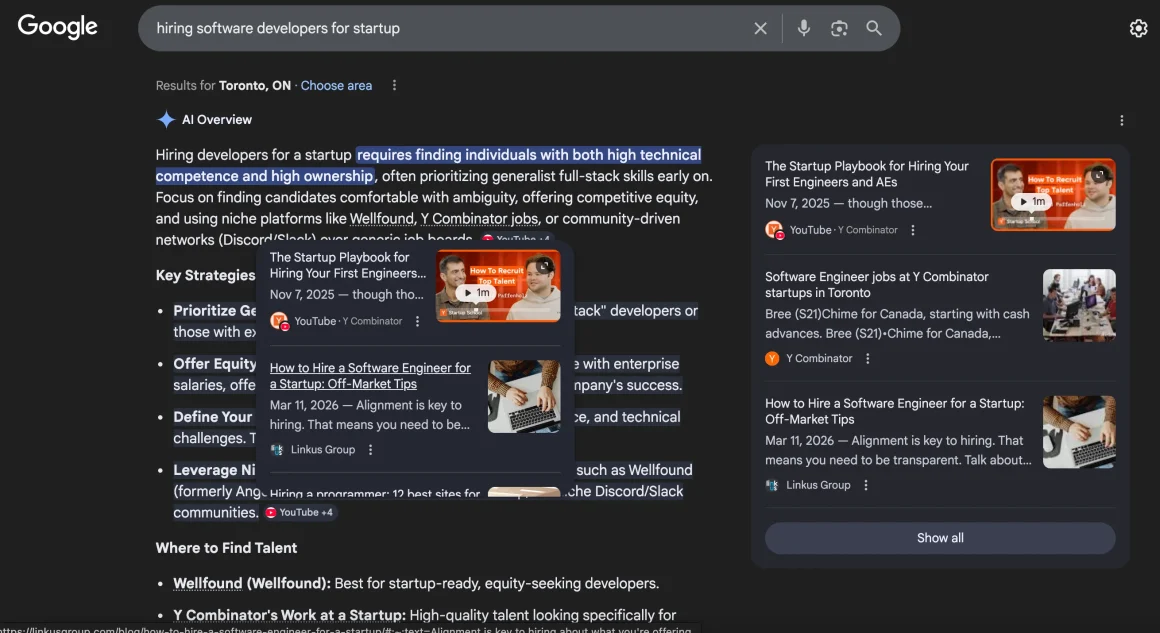
Then ChatGPT started recommending the agency by name to founders asking hiring questions. And it was all done with just one article. I checked with the client twice because I didn’t believe it either.
Would I promise you that result? No. The channel moves monthly and anyone promising you specific AI-visibility numbers is selling something. The direction I’ll promise: depth gets cited and fluff doesn’t get you anywhere.
One technical note because people push back here: yes, officially ChatGPT’s search runs on Bing. When I test side by side, the citations still track whatever ranks on Google’s first page. Make of that what you want. My conclusion is simple and not as exciting: classical SEO still matters, don’t skip it.
What Google does to commodity content now

Not going to dramatize this part. It doesn’t need it.
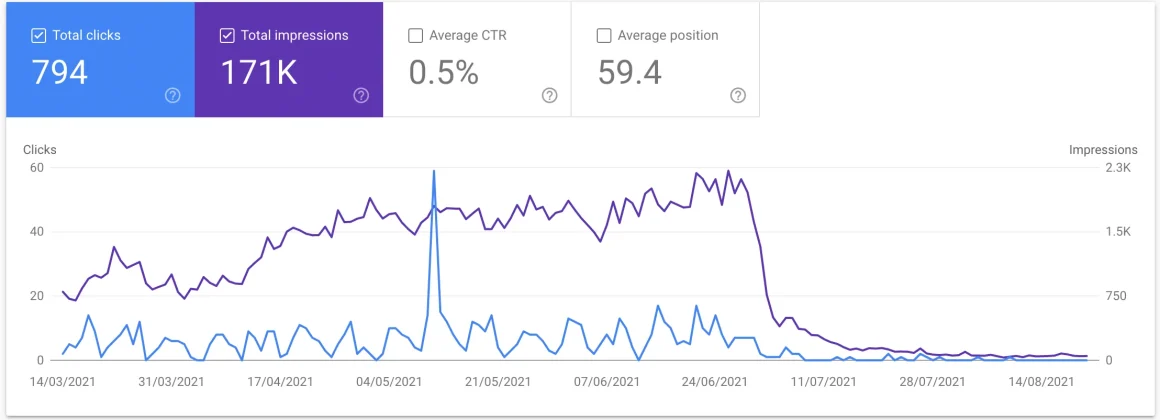
In March 2024, Google shipped an update targeting mass-produced content and reported afterward that searchers would see 45% less low-quality, unoriginal content in results.
Next to it sits a written policy, scaled content abuse, which says the value problem applies “no matter how it’s created,” whether the pages came from AI, humans, or both.
Consequence: sites can rank lower or drop out of results entirely. I’ve seen the screenshots founders post, the traffic line going up, then flat, then nothing. Whether every screenshot is exactly what it claims, I can’t verify. The policy is real either way.
So the worst case of the 40-posts-a-month plan is not “it underperforms.” The worst case is your domain (your history, your backlinks, the thing every future campaign sits on) becomes worthless, and you paid for that outcome with investor money.
The real cost of commodity content is trust
Edelman and LinkedIn run a thought-leadership study every year. Two figures from it live in my head rent-free: 73% of decision-makers say a company’s thought leadership is a more trustworthy basis for judging it than its marketing materials, and only 15% rate the quality of what they actually read as very good or excellent.
Both true at once. That gap is the entire opportunity and almost nobody takes it.
Gartner has the other one: buyers spend about 17% of the buying journey meeting with potential suppliers at all, and if they’re comparing three of you, your slice is maybe 5%.
Underneath the numbers, though, is something simpler. Commodity content costs you the same thing the “always crushing it” LinkedIn persona costs you, and it comes from the same instinct: hide the pivot, hide the quarter you lost, cut anything that sounds human, and publish the polished version instead. But the polished version is the one nobody trusts. Buyers, candidates, the AI models, all of them have worked out by now that when something reads this smoothly, there’s usually nothing real behind it.
How to create non-commodity content instead
Four ways to turn a commodity blog into something no competitor can copy, even with a bigger budget.

1. Pull your sales call transcripts
The lost deals especially. The exact words buyers use for their pain, the objection your champion couldn’t answer internally: that’s a year of content sitting in a tool you already pay for. And it’s already in the language buyers will type into ChatGPT.
2. Describe the client, not just the win
Industry, size, constraints, the mess they were in. “ROI up 30%” proves nothing. A detailed client is a pattern the model can match the next similar buyer against.
3. Get your actual experts talking
Founder, CTO, the support person who hears everything. Nobody wants to write, fine: 5 minutes a day of them answering a few sharp questions out loud is enough raw material. True authority can’t be outsourced. But you can outsource the typing part.
4. Create content together with your prospects and partners
A prospect ghosted me once after a hard pitch. Instead of follow-up email number 6, I proposed we write something together. It restarted the whole conversation, and eventually became business. We did a version of this with Advite too: we published a practical guide on comment marketing. It ranked, and it brought them customers.
How to measure whether AI is recommending you
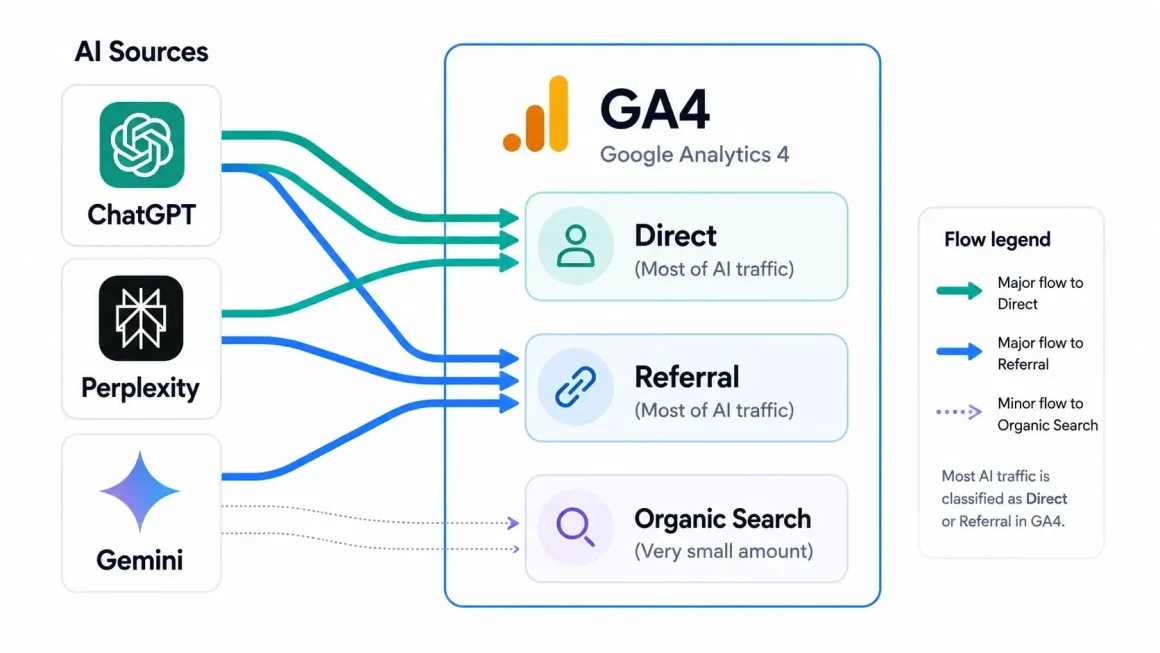
When a board asks how you’d ever measure any of this, the honest answer is that it’s easier than they think, and almost nobody bothers. Start with what’s already sitting in your analytics: referral traffic from ChatGPT shows up as its own source in GA4, and it’s been there for a while. Almost nobody looks. The same goes for perplexity.ai and Google’s AI surfaces. That’s your floor: people who read an AI answer, clicked through, and landed on you.
Then do the part that actually tells you something. Open ChatGPT logged out, so your own history doesn’t skew the results, and type the specific questions your buyers ask.
Note whether you get named or cited, and which of your pages it pulls from. Run the same prompts again every few weeks, and watch whether your company shows up in more of the answers than it did last time.
What I won’t hand you is a precise AI-visibility score. Anyone selling you one is selling something, the channel moves monthly. But “are we in the answer, yes or no” is a question you can check yourself this afternoon, for free.
My AI confession
I use AI for content too. Grammar, typos, polish: it’s good at that, and it touched this article for exactly that and nothing else. What I won’t do is let it think. Every time I’ve broken that rule as an experiment I get back the same recognizable smoothness I’ve spent this whole article complaining about.
Am I certain about all of this? Not all of it. The AI-search stuff shifts monthly and some of what I wrote here will age badly. I just don’t know which parts. Maybe volume comes back. I doubt it. When I picture the internet in 2 years I don’t see a shortage of content. I see a shortage of anyone worth listening to.
Go read your last 3 posts. If your competitor could have shipped them with the logo swapped, you already know what I’m going to say.
FAQs
Sometimes, for now, and less every quarter. Google’s own scaled content abuse policy says the problem applies “no matter how it’s created,” and after the March 2024 update it reported 45% less low-quality, unoriginal content in results.
No, and conflating them is how founders get this wrong. AI didn’t invent commodity content, agencies shipped it for years before ChatGPT. AI just removed the limit on how much you can produce. A page built from your CTO’s actual answers, cleaned up by AI for grammar, is not commodity content. A “10 Tips” post nobody at your company could distinguish from a competitor’s is, whether a human or a model typed it.
Fewer pieces than the pitch in your inbox suggests, and deeper ones. One article on how to hire a founding engineer got a recruiting agency I worked with cited by name inside ChatGPT. Volume is easy to buy and easy to ignore. Depth is the thing a pattern-matching machine can hold onto.
You can outsource the typing, not the authority. A freelancer who has never sat in your sales calls can only write the average of the internet. Pull the raw thinking out of your founder, CTO, or support lead, the people who actually know, and hand it to someone else to shape into a page.