Written by Lidia Vijga
Snap now blocks wholly AI-generated videos from Spotlight recommendations, and the number of people posting original content is climbing fast. For founders fighting for reach, that turns “made by a real person” into a distribution edge you can actually build a growth loop around. Here’s how to move on it before everyone else catches up.
What Snap actually changed

On July 31, 2026, Snap updated its Spotlight recommendation system so that, as the company put it, “wholly AI-generated videos will no longer be eligible for recommendation on Spotlight.” The reasoning is blunt: as low-quality, repetitive AI content floods the internet, Snap wants Spotlight to stay a place where people discover “original perspectives, personal storytelling, and the moments that people choose to create and share themselves.”
Two details matter for anyone building a company.
1. This isn’t Snap turning its back on AI.
Content that’s been enhanced or edited with Snapchat’s own AI creative tools stays eligible for recommendation, and it carries transparency indicators so viewers know what they’re looking at. The line Snap drew is between content that is wholly synthetic and content where a human is doing the creating, with AI as a tool in their hands.
2. The audience is already voting with their cameras.
Snap reports that the number of unique Spotlight contributors globally is up more than 120% compared to last year. Back in April, the company shared that daily US Spotlight creators grew more than 70% year over year in Q1 2026, and that creators who post daily grow their followers more than 10x faster than those who don’t. This is happening on a platform that reached 474 million daily active users in Q4 2025.
Put those together and you get a rare thing in distribution: a large, growing audience where the algorithm is now actively tilted toward exactly the kind of content a scrappy founder can make with a phone (if, of course, your buyers are actually on Snapchat).

One honest caveat before you commit: this audience skews young. Snapchat reaches 90% of 13- to 24-year-olds across 25+ countries, 18- to 24-year-olds are its single largest age group at 35.4%, and roughly 79% of the base is under 35.
If you sell to enterprise buyers, treat Spotlight as a brand and recruiting play rather than a demand channel. If your customers are Gen Z or younger Millennials, this is your front row.
This is a pattern, not a one-off
If Snap were alone here, I’d tell you to note it and move on. It isn’t.
YouTube got there first. In July 2025 it renamed its “repetitious content” rule to “inauthentic content” and made mass-produced, template-driven videos ineligible for monetization. YouTube was careful to say AI-assisted work still earns money, but content that’s “easily replicable at scale” with “little to no variation” doesn’t. Same line as Snap, drawn in a different place.
Pinterest went the transparency route. In April 2025 it rolled out “AI modified” labels globally and gave users a “see fewer” control for AI-generated Pins in categories like beauty and home decor. When a platform hands users a dial to turn down synthetic content, it’s telling you where demand actually sits.

TikTok built the plumbing for all of it. In 2024 it became the first video sharing platform to implement C2PA Content Credentials, the open standard that attaches provenance metadata so AI-generated uploads get labeled automatically.
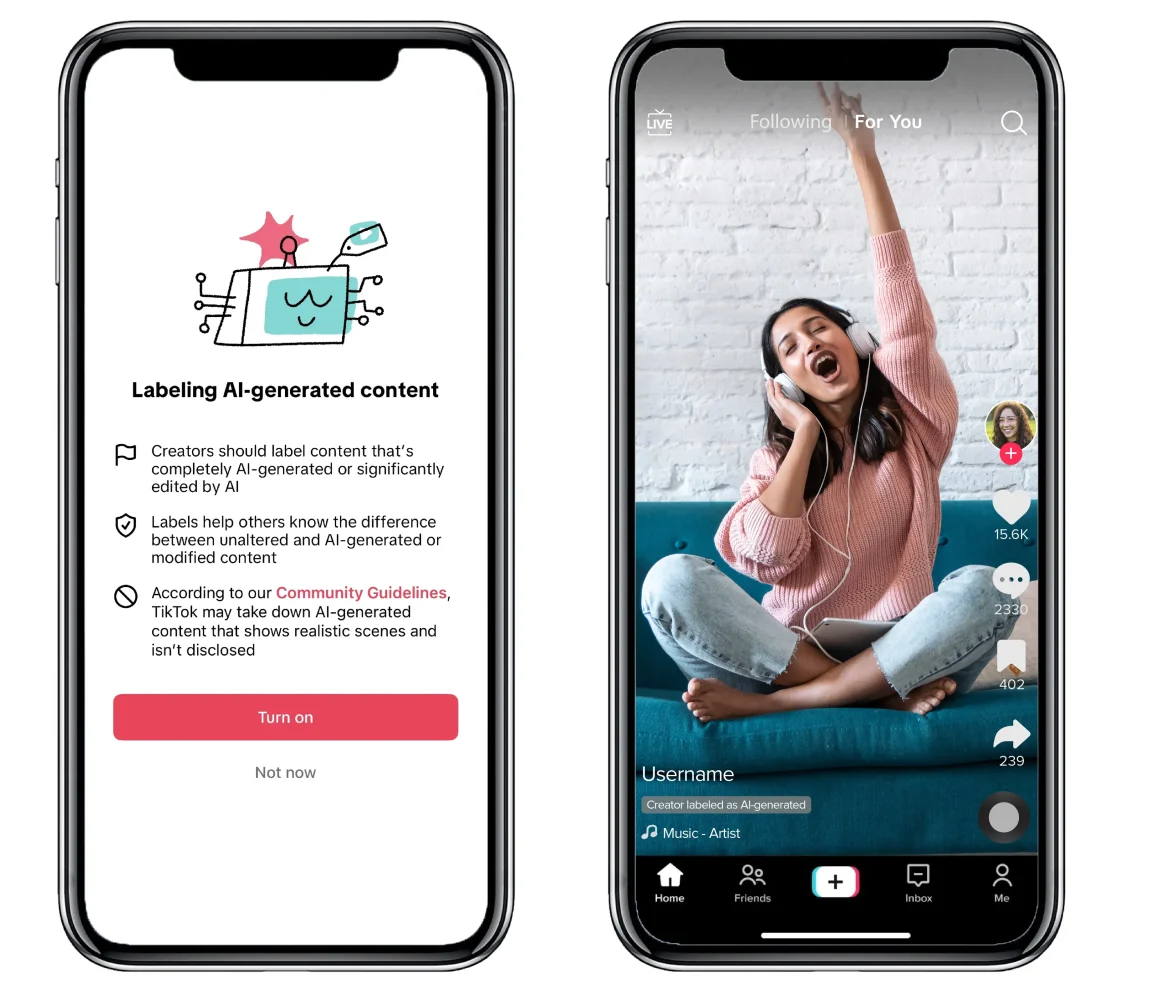
That standard is backed by Adobe, Google, Microsoft, OpenAI, and Sony, which tells you provenance labeling is becoming infrastructure, not a feature.
Why this is an opening for founders
Most coverage of these changes frames them as a crackdown. I’d flip it. Every one of these moves lowers the value of the thing your best-funded competitors can buy at scale (synthetic volume) and raises the value of the thing you already have (a real person with a real story and a real product).
That’s a redistribution of reach toward the small and the specific. And the buyers are primed for it: a Snap study with MAGNA found people respond most positively to creators who prioritize “keeping it real” over polished perfection, and 49% say they’re interested in buying from authentic creator content.
Here’s where I’d focus.
Founder-led content just got a bigger multiplier.
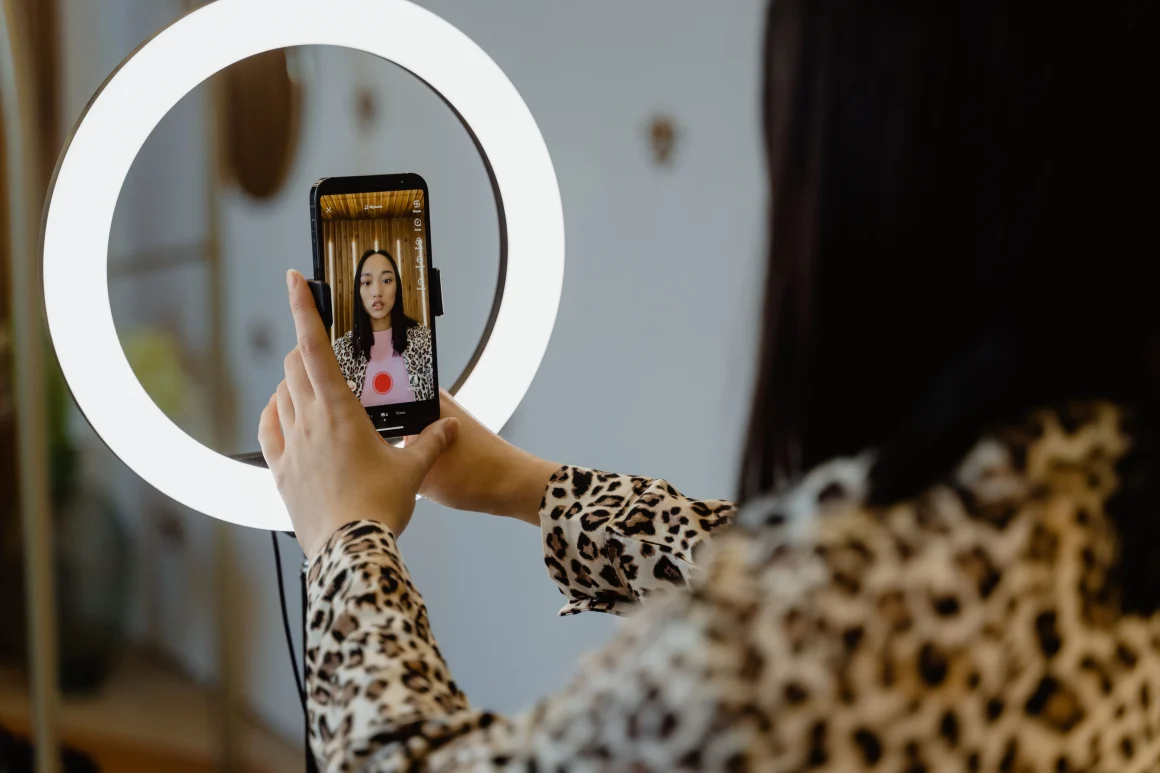
The platforms are rewarding a face, a voice, and a point of view, which is the one asset a solo founder can produce that a content farm can’t fake at scale. Scrub Daddy turned a founder and a smiling sponge into hundreds of millions of TikTok views by leaning entirely on personality and behind-the-scenes reality. You don’t need a studio. You need to show up as yourself, consistently, on a surface that’s now weighted in your favor.
“Boring” behind-the-scenes footage is now premium inventory.
The candid, unpolished, shot-on-a-phone moment is precisely what these algorithms are being tuned to surface. Duolingo built a following in the millions on unscripted, chaotic clips of its mascot filmed around the office, not on rendered ad spots. For a startup, the build itself (packing orders, debugging live, talking to your first customers) is the content, and it reads as authentic because it is.
Speed and reaction beat production value.
Authentic content wins on timeliness, and small teams are structurally faster than big ones. Ryanair runs one of the most-watched brand accounts in short-form by posting same-day, self-deprecating reactions that a large brand’s approval chain could never ship in time. A two-person startup can react to a trend before lunch. That’s a genuine edge now that the feed favors native, of-the-moment posts.
Distribution is getting cheaper exactly where paid is getting more expensive.
As synthetic volume gets throttled, organic reach for real creators becomes more valuable, and Snap’s own numbers (daily posters growing followers 10x faster) show the compounding is real. Gymshark built a nine-figure brand largely on athlete and customer content rather than ad spend, and that playbook gets stronger every time a platform tilts toward human-made posts. If your CAC is climbing, an authenticity-weighted feed is a discount you can go claim.
@charles__johnson OG Gymshark Addict #gymshark #fyp #davidlaid #OGGymshark #gym ♬ original sound – c0nd1nh0
Provenance becomes a trust signal you can market with.
With C2PA labels spreading, “made by a human” is turning into a verifiable badge rather than a vibe. Liquid Death built a billion-dollar brand on real people and a real point of view, and in a labeled-content world that kind of provenance stops being a nice-to-have and starts being a filter customers use to decide who to trust. Being demonstrably human is becoming a moat.
Where this goes
The last decade of social taught founders that reach was something you rented from an algorithm you couldn’t influence and mostly had to pay. What’s happening now is quieter and better: the algorithms are re-pricing reach toward the one thing money can’t manufacture, which is a real person making something real. And that’s a market correction in your favor.