Written by Assel Beglinova, Co-founder & CEO at Paperstack
A shopper opens ChatGPT and types “best standing desk under $400 that ships in two days.” Thirty seconds later they have 3 recommendations, a comparison, and a checkout button. They never visited a search results page. They never saw your ad. The agent already decided, and if your product wasn’t in its consideration set, you lost a sale you never knew existed.
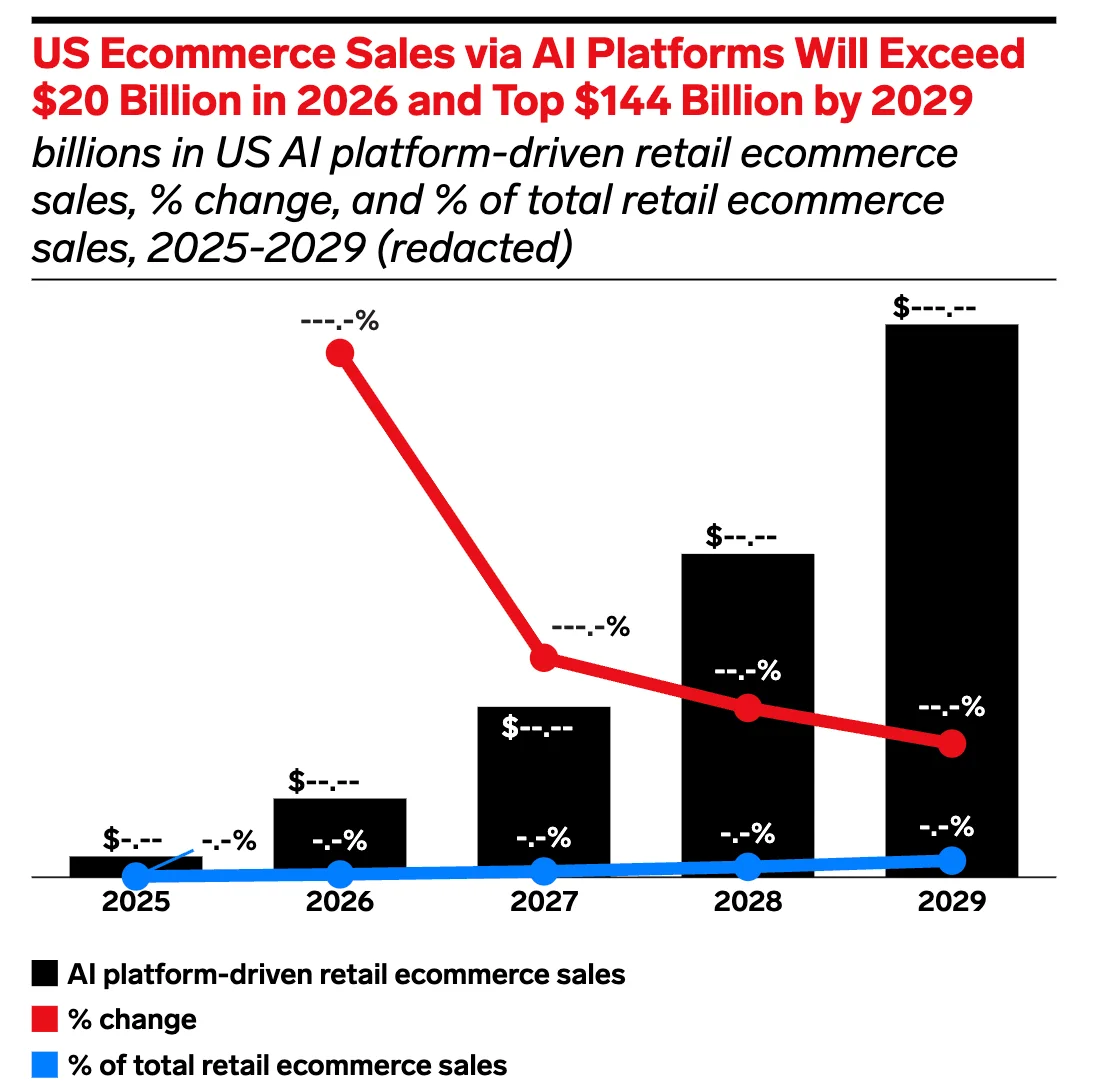
This is agentic commerce, and in 2026 it stopped being just a demo. AI agents are completing real purchases inside ChatGPT, Perplexity, Google’s AI Mode, Microsoft Copilot and Amazon Rufus. AI platforms are projected to drive roughly $20.9 billion in retail spending this year, nearly quadrupling 2025.
The funnel is collapsing into a single conversation, and the new question for founders is brutally simple:
Does the agent recommend you, or your competitor?
The part that’s good news for small teams is that agents don’t reward ad budgets. What they do reward is clean data, trust signals, and being present in the right feeds.
First, understand how an agent actually picks

AI shopping agents don’t “rank” pages the way Google’s blue links did. They assign confidence scores, every product gets scored on how well it matches the shopper’s stated criteria, and the agent recommends what it can stand behind.
To score you confidently, the agent needs 3 things:
- Structured data it can easily read
- Trust signals that prove you’re legitimate
- Validation from sources it already trusts
One more thing to keep in mind: AI discovery is still downstream of classic search. A March 2026 study of 43,000 carousel products found that 83% of ChatGPT’s product recommendations matched Google Shopping’s top 40 organic listings, and 60% came from the top 10.
Your Google Merchant Center feed and your organic SEO are still load-bearing. AI commerce is a new layer on top, not a replacement.
Step 1: Get into the feeds, all of them
You can’t be recommended if you’re not in the pipe. There are several entry points, and they’re cheaper to set up than most founders assume.
| Entry point | What it powers / feeds | How to set it up | Key requirement |
|---|---|---|---|
| Google Merchant Center Google’s core product-data feed. The non-negotiable first move. | Google AI Mode, Google Shopping, the new Universal Cart (launched at I/O 2026), and a surprising amount of ChatGPT’s selection (83% of ChatGPT carousel products match Google Shopping’s top 40). | Create a Merchant Center account, upload/sync your product feed, verify your store. Shopify and most platforms sync automatically. | A clean, complete feed is everything — it’s the on-ramp to Universal Cart visibility. Downstream of classic SEO, so organic ranking still matters. |
| Shopify Agentic Storefronts A Shopify sales channel that syndicates your catalog across every major AI channel automatically. | ChatGPT, Google AI Mode, Perplexity, Microsoft Copilot — all at once, managed from Shopify Admin. Shopify handles the ACP/UCP protocol work. | In Shopify Admin: Settings → Sales Channels → Agentic Storefronts, then toggle on the AI channels you want. No apps or custom integrations. Free to activate — standard processing fees only, no extra transaction fees. | Shopify-only. Includes built-in attribution tracking. The single highest-leverage hour of work if you’re on Shopify. |
| ChatGPT Product Feed OpenAI’s dedicated merchant feed spec for appearing in ChatGPT shopping + Instant Checkout. | Product results and Instant Checkout inside ChatGPT. Runs on the Agentic Commerce Protocol (ACP). | Sign up at chatgpt.com/merchants, submit business details for verification; after approval OpenAI issues a secure SFTP endpoint for feed delivery. Free to submit; feeds can update every ~15 min. | Accepts high-value fields most sellers skip — review counts, video, and 3D models. Restricted categories (alcohol, gambling, weapons, prescriptions) aren’t allowed. US-first, expanding through 2026. |
| Perplexity Merchant Program Perplexity’s own merchant channel with in-chat product recommendations and checkout. | Product recommendations and “Buy with Pro” in-chat checkout inside Perplexity. | Complete a short 5-step online form (brand name, website, name, email, vertical). Manual review. Free — no signup fees or commissions. Shopify stores can share catalog data automatically. | Must sell and ship to the US. “Buy with Pro” free shipping is funded by Perplexity, not you. Favors third-party citations (Reddit, expert blogs) over your own copy. |
Underneath them, 2 open standards now move the money and the data.
- The Agentic Commerce Protocol (ACP): co-developed by OpenAI and Stripe, now with 25+ partners — standardizes agentic checkout and powers Instant Checkout in ChatGPT.
- The Universal Commerce Protocol (UCP): from Shopify and Google, with a Tech Council that now includes Amazon, Meta, Microsoft, Salesforce and Stripe — covers the broader journey from product discovery through post-purchase.
You don’t need to implement either by hand; your platform increasingly does it for you. But knowing they exist tells you where the rails are going.
Step 2: Make your product data machine-perfect
This is where most stores quietly lose. Agents read fields in a specific priority order, and gaps get filled with guesses, or with a competitor who left no gaps. Stores with 99.9% attribute completion are seeing 3–4x higher visibility than stores with sparse data.

Work the fields in order of impact:
- Title is the single most important element. Pack in brand + product type + key feature + one distinguishing characteristic. Not “Aluminum Desk” but “FlexDesk Pro Electric Standing Desk, 48″, Dual-Motor, 2-Day Shipping.”
- GTINs (barcodes/UPCs) — agents use these to match and deduplicate products across the web. Missing GTINs make you invisible to comparison logic.
- Explicit attributes — material, size, color, compatibility, weight. Spell out every spec a shopper might filter on. Don’t make the agent infer.
- Shipping time and return policy as parseable data, not marketing claims. “Fast shipping” is noise; “ships in 2 business days” is a signal the agent can score. 91% of shoppers say free shipping influences their buying decisions, and agents now surface it directly.
- Real-time inventory and synchronized pricing — your feed price and your storefront price must match. A mismatch erodes the agent’s confidence and can get you dropped.
Step 3: Use JSON-LD schema on every product page
The feed is one layer; your live product pages are the open-web layer that AI crawlers read directly.
Implement Product, Offer, and Review schema in JSON-LD, it’s the preferred format because it keeps structured data separate from your HTML, so AI parsers extract it cleanly without inference.
This is the difference between an agent reading your specs and an agent guessing them. Validate it, and make sure every product has it. This is a one-time engineering task with compounding payoff.
Step 4: Win on trust signals, reviews are now ranking fuel

Reviews stopped being social proof for humans and became input data for machines. The ChatGPT feed spec explicitly accepts review count and average rating fields, and agents weight them heavily when deciding who to recommend. Amazon Rufus synthesizes review sentiment and Q&A directly. Fresh, plentiful reviews give the LLM the recent, specific evidence it needs to recommend you with confidence.
Tactically: turn on post-purchase review requests, make leaving a review frictionless, and feed your review count and rating into your product feed. A product with 400 reviews at 4.7 stars beats an identical product with 12 reviews every time an agent has to choose.
Step 5: Build third-party citations (this is your Perplexity edge)
Perplexity in particular prioritizes citations from Reddit, expert blogs, and editorial sources over your own marketing copy. Agents trust what other credible sources say about you more than what you say about yourself.
This is where bootstrapped and founder-led brands have an unfair advantage. You can get mentioned in niche communities, founder newsletters, and subreddit threads in ways big brands can’t fake.
Get your product into legitimate “best X for Y” roundups, answer honestly in relevant Reddit threads, earn reviews on independent blogs. Every credible third-party mention is a citation an agent can lean on.
Step 6: Exploit the rich-media gap before everyone else does
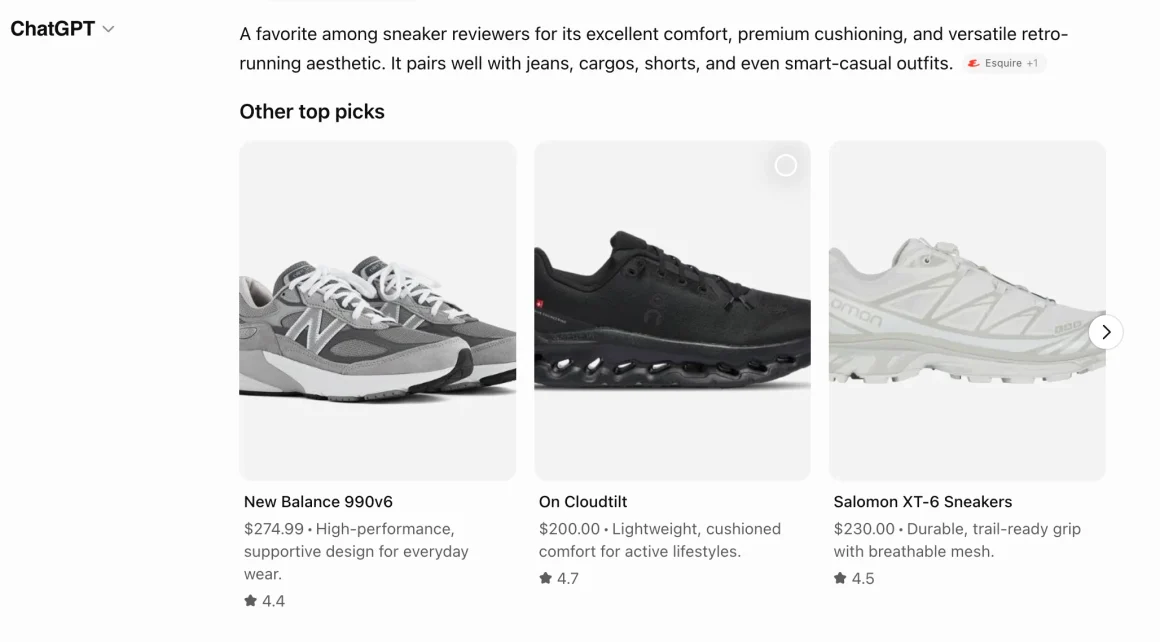
The ChatGPT feed spec accepts video and 3D model links, and almost nobody is using them yet. That’s a textbook early-adopter window. Richer media gives the agent more to understand and more confidence to recommend, and right now adding a product video or 3D asset is a near-free way to stand out in a field of plain image feeds.
Step 7: Write conversational content that matches how people actually ask
Agents answer questions, so publish content shaped like the questions buyers ask:
- “Is X good for small apartments?”,
- “What’s the difference between X and Y?”
- “Best X for beginners on a budget?”
Clear, factual, comparison-friendly pages give agents quotable, citable material. Agents reward specificity, not adjectives, so skip all the fluff.
Step 8: Measure what’s working
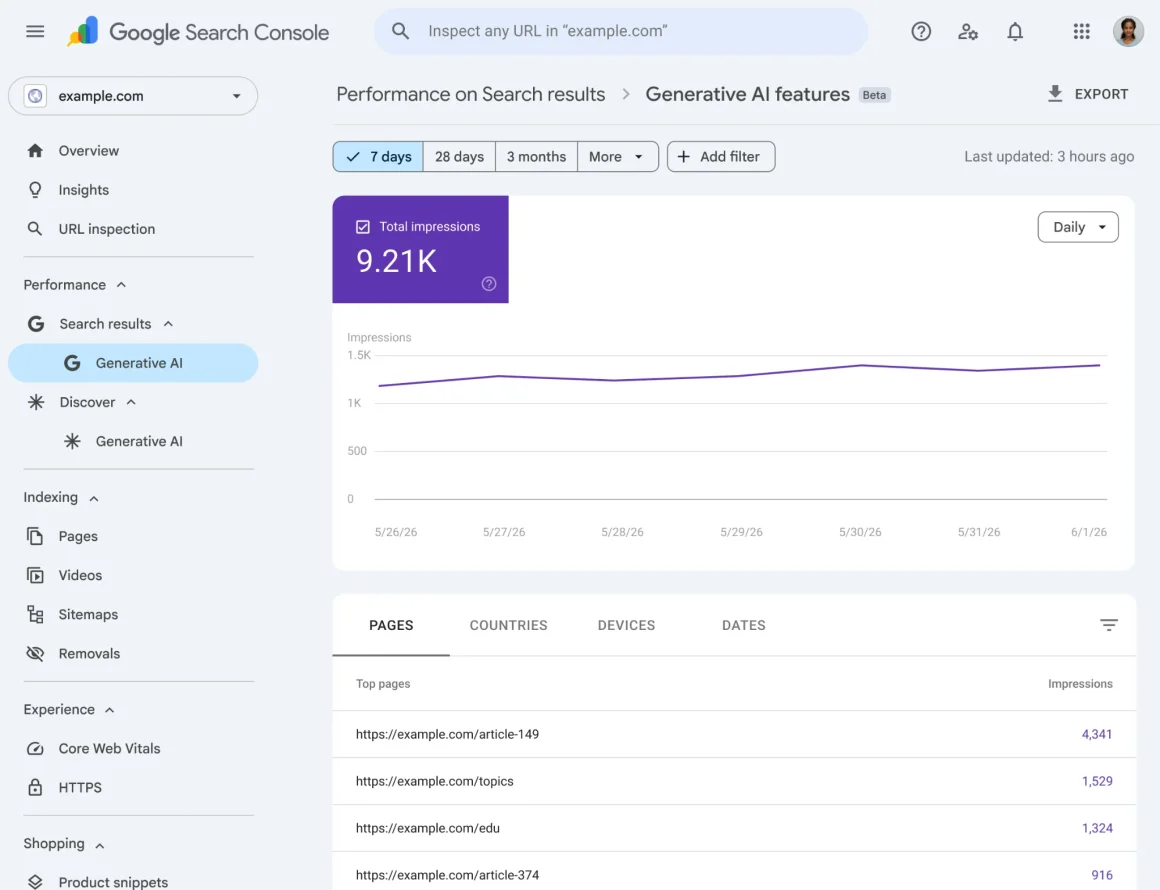
You finally have instruments. Google launched Search Console’s Search Generative AI performance reports in June 2026 (initially to a limited set of sites) surfacing impressions and pages appearing in AI experiences like AI Overviews and AI Mode. Watch which products show up, test feed changes, and double down on what lifts your presence. Treat it like any other channel: instrument, iterate, compound.
The 10-Minute Checklist to Get Recommended by AI Shopping Agents
Pin this somewhere visible:
- Google Merchant Center feed live and clean
- Shopify Agentic Storefronts (or your platform’s equivalent) enabled
- ChatGPT feed + Perplexity Merchant Program submitted
- Titles loaded with brand + type + feature + differentiator
- GTINs and full attributes on every product (aim for ~100% completion)
- Shipping time and returns as structured, parseable data
- Product + Offer + Review JSON-LD schema on every page
- Review count and rating flowing into the feed; review requests automated
- Third-party citations seeded (Reddit, roundups, expert blogs)
- Video/3D media added where the spec allows
- Feed price = storefront price, inventory synced
- Search Console AI report monitored monthly
The takeaway
Agentic commerce rewards the unglamorous work: complete data, real reviews, clean feeds, honest third-party presence. None of it requires a brand budget, which is exactly why disciplined small teams can out-rank incumbents in the agent’s consideration set.
Over the next few years, the brands that win will be the ones the machine can read most clearly, and that’s the opportunity in front of you. You don’t need a bigger budget, just better data than the competitor sitting one row away in the results.
So start today. Clean the feed, sharpen your titles, turn on reviews. Every field you complete gives the agent another reason to choose you.
The AI agents are already shopping. Make sure they find you first.
About the Author

Assel Beglinova is a CEO and Co-founder at Paperstack, a platform that provides working capital for e-commerce sellers. With her expertise in revenue-based financing, Assel helps merchants achieve their growth goals and thrive in the competitive world of e-commerce.