Written by Lidia Vijga
Google just added a line item to Search Console called the AI contribution pilot, which pays some publishers when their pages feed an AI answer.
Key takeaways:
- Google is finally paying for AI content. Barely. Its new “AI contribution pilot” pays a small, invited group of publishers when their pages feed AI Overviews, AI Mode, or Gemini answers, and one insider called the payout formula “quite black box.”
- This isn’t a plan you can build a business around. Google itself calls it “an early-stage learning pilot,” only dozens of publishers have been invited so far, and it can be shrunk or killed the moment Google stops learning from it.
- Real AI licensing money goes to whoever owns unique data, not whoever waits patiently. Reddit earns a reported $60 million a year from Google and around $70 million from OpenAI because it holds a monopoly on human conversation data, not because a pilot program came along.
- Stable rankings, falling traffic is the real warning sign for founders. AI answers can cite a competitor instead of you even when your Google ranking hasn’t dropped an inch, so tracking citations now matters as much as tracking rankings.
- The 4 levers founders control without an invitation. Refresh your top 10 pages monthly, publish expert-led content no one else can write, own an audience that doesn’t route through search, and track your AI citations weekly.
Does Google pay for AI Overviews now?
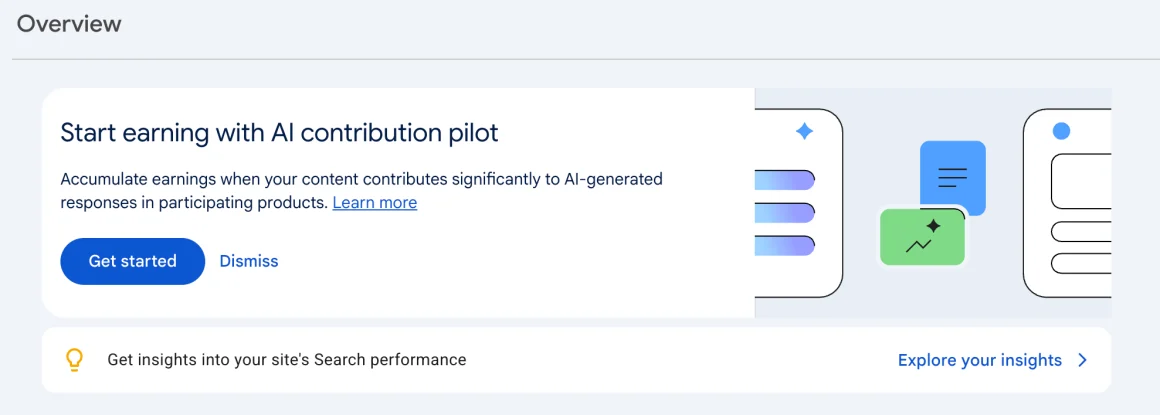
Sort of, and only if it decides your page mattered enough. This month Google confirmed it’s running what it calls the “AI contribution pilot,” a Search Console feature that shows eligible publishers a running tally of earnings tied to how often their content shapes an answer inside AI Overviews, AI Mode, and Gemini.
The interface line reads: “Accumulate earnings when your content contributes significantly to AI-generated responses in participating products,” as first reported by Digiday and confirmed the same week by Search Engine Land.
Google’s own framing of the program is careful and small. A spokesperson called it “an early-stage learning pilot to test how best to reward high-quality content, on top of the traffic and tools it already provides,” according to Digiday’s reporting.
So basically it’s a test of a test. This isn’t Google’s first move here either. It teased the concept in a June blog post about paying sites that keep its AI answers “fresh and accurate,” and announced a separate “commercial partnership program” with major news publishers back in late 2025.
The Search Console rollout is the small, quiet, unglamorous version of that promise, and dozens of publishers have reportedly been invited in already, skewed toward small and midsize sites, not the large publishers Google would rather cut a real deal with.
The rollout itself tells you how much weight to put on it. Search Engine Land contributor Barry Schwartz first spotted the “AI contribution” report inside Search Console back in April, months before anyone outside Google understood there was a payment attached to it. It took until this week, and a Digiday report, for the payment mechanism to surface publicly at all.
A program this quiet, aimed at a handful of invited publishers, isn’t a policy shift you can plan a business around. It’s a pilot Google can shrink, pause, or quietly kill the moment it stops learning what it wants to learn.
If you run a bootstrapped content business and you’re wondering whether to hold out for a Google check before you change anything about your content strategy, the honest answer is: don’t.
The reasons why get clearer the closer you look at how the money actually works.
What AI Mode publisher payments actually look like from the inside
One publishing executive with early access to the program described the payout math directly to Digiday: “It’s quite black box.” Nobody outside Google can see the formula that decides which page “contributed significantly” to which answer, or how many cents that contribution is worth.
Another participant, more hopeful, said they’re “super excited to participate” because the open dialogue with Google “feels like a true partner.”
Both things can be true. A collaborative pilot and an opaque, unaccountable payout are not mutually exclusive, and for a small publisher with no seat at that table, the second part is what matters the most.
Luke Stillman, managing director at the media consultancy Madison and Wall, put the power imbalance:
“Publishers have relatively little leverage over how AI changes content discovery and distribution.”
David Buttle, founder of the publisher coalition Spur, went further, calling the whole pilot “a kind of hedge” on Google’s part, “a bit of experimentation in the event that that world comes to pass and they do actually have to pay” real money for real usage.
None of that makes the pilot worthless. It makes it a signal, not a plan. Google acknowledging it owes something for the content powering its AI answers is a real shift after two years of publishers shouting into the void about traffic collapsing under AI Overviews.
But a signal doesn’t pay your AWS bill, and independent publishers who builds a content strategy around waiting for Google to decide what your work is worth has handed away the one thing they actually control.
Why Reddit can cash this check and you can’t

Look at who actually gets paid real money for AI training content, and the pattern is obvious. Reddit signed a licensing deal with Google in February 2024 worth a reported $60 million a year, for access to what Google called “real-time content from Reddit’s vast user-authored forums.”
A separate deal with OpenAI followed months later, reportedly worth around $70 million annually. Reddit could ask that price because it owns something no other site has: millions of unscripted human conversations that AI models need and can’t fully replicate anywhere else.
Between August 2024 and June 2025, Reddit became the single most-cited domain across both Google AI Overviews and Perplexity.
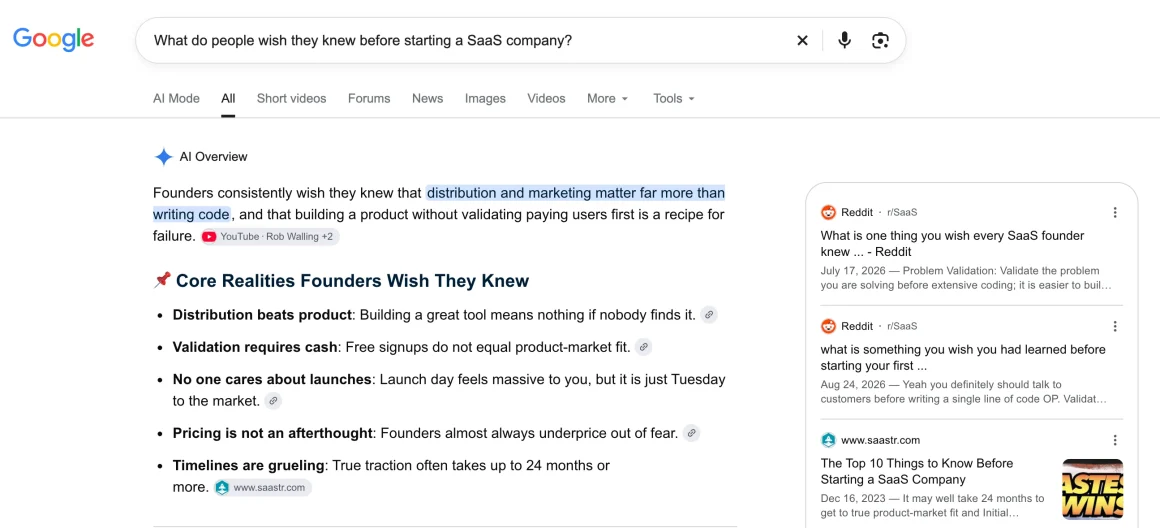
That’s the model. Reddit didn’t get paid because it waited patiently for a fair pilot program. It got paid because it holds a monopoly on a specific kind of data, and it negotiated from that position of strength, before Google or OpenAI ever offered a Search Console widget to anyone.
Your blog or publication does not have that leverage, and neither does mine.
The real opportunity for a startup founder who runs a blog isn’t in the payout column. It’s in building the kind of content that AI systems have to cite because nobody else has said the thing you said, the way you said it, with the specificity and firsthand experience you brought to it. That’s a moat a small publication or a solo founder can actually build. A seat at Google’s negotiating table isn’t.
The moat is the citation
Founders keep reporting the same strange pattern this year: rankings holding steady while traffic quietly drains away. The data backs them up. Ahrefs compared Search Console data across 300,000 keywords and found that AI Overviews cut click-through rates for top-ranking pages by 58%, up from 34.5% in their earlier 2025 study.
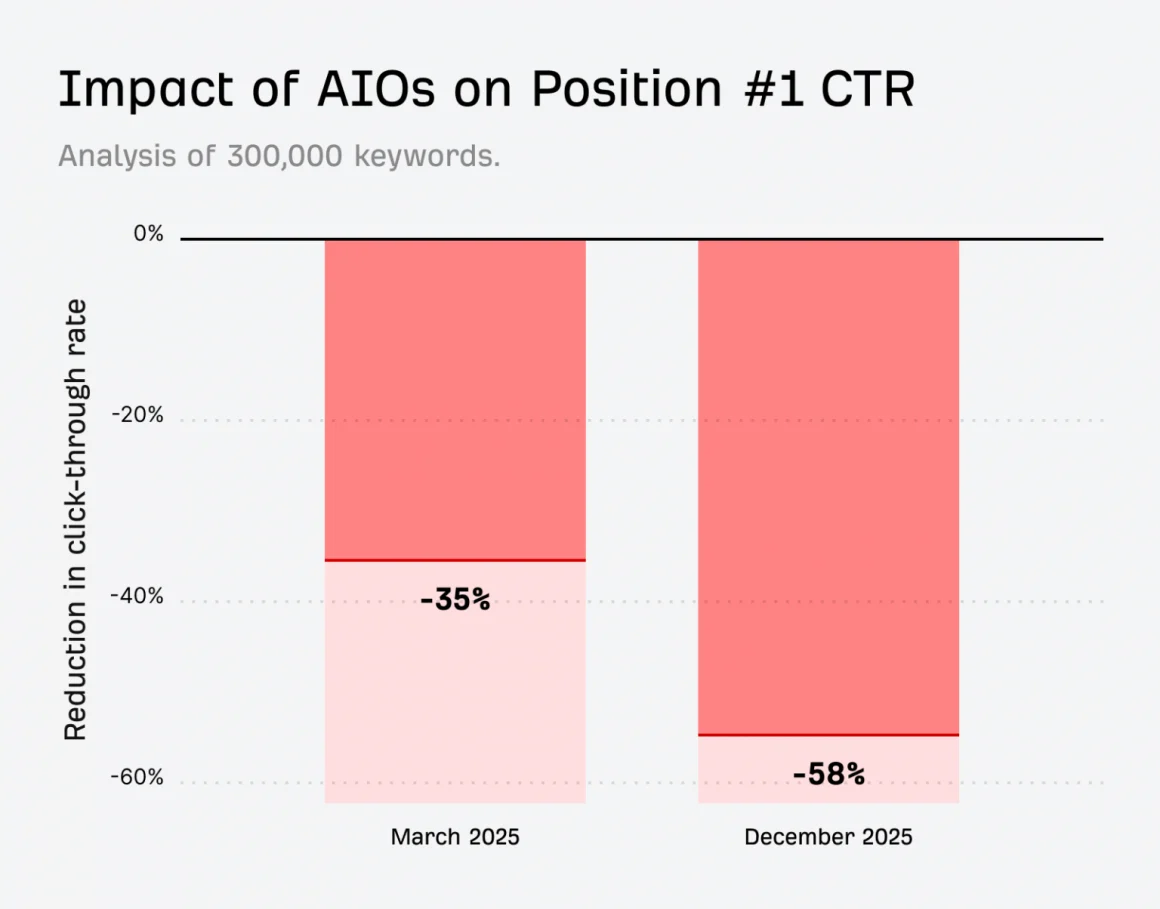
As they put it: “For every 100 clicks you could historically earn for a top-ranking page, Google now keeps 58.” That’s the mechanism behind every founder post wondering why months of stable positions produced falling visits.
Stable rankings, falling traffic.
That gap is the whole AI-search story in one sentence, and it’s happening to founders who’ve never heard of the AI contribution pilot and never will.
The fix is making your content the one an AI model has no better option than to cite, and that’s entirely a founder’s job, not a platform’s.
Research from Ahrefs, analyzing nearly 17 million citations across ChatGPT, Perplexity, Gemini, and AI Overviews, found that AI assistants cite meaningfully fresher content than traditional Google search results do, roughly 25.7% fresher on average.
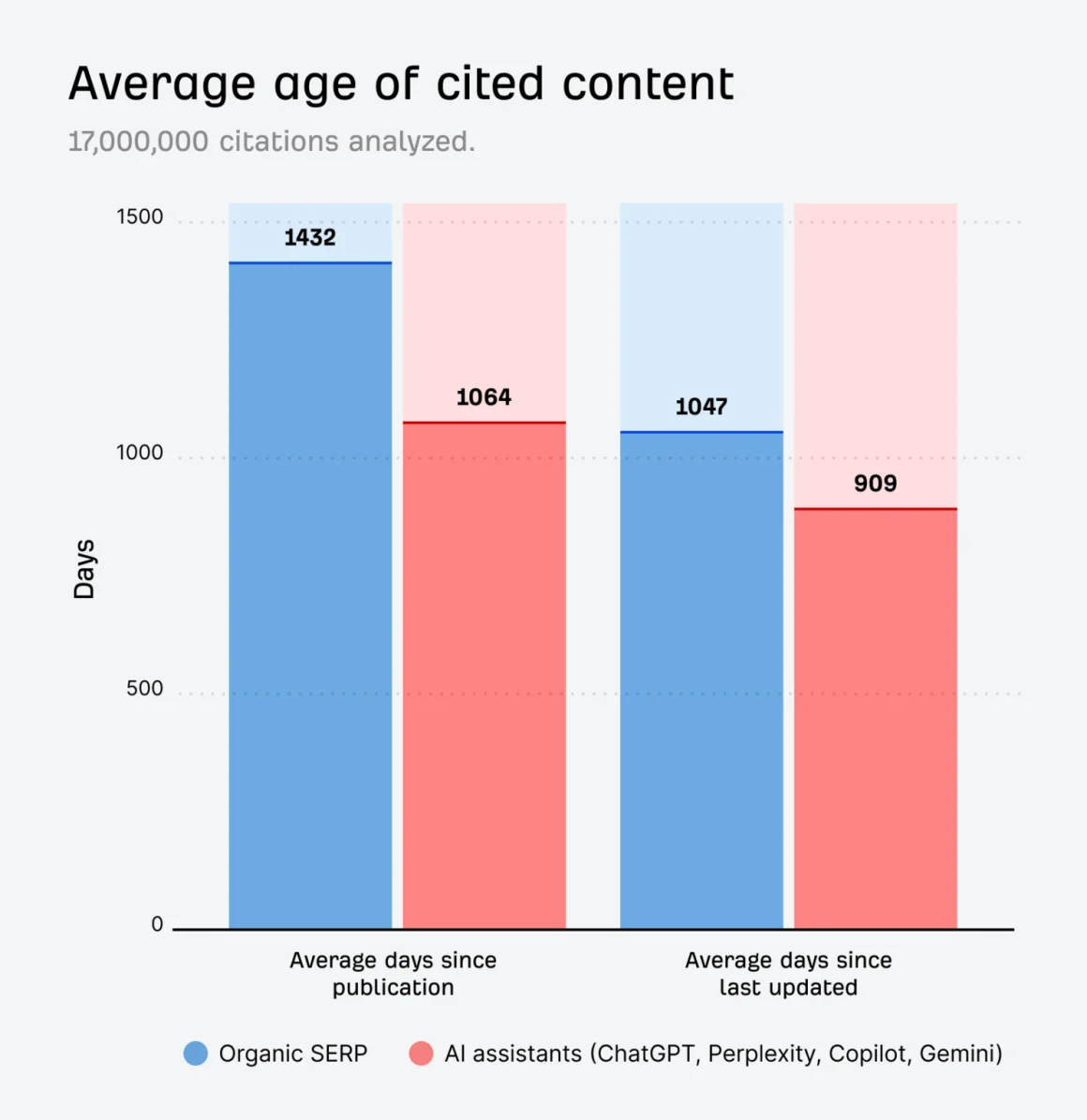
ChatGPT showed the strongest bias toward recency of any platform tested. That’s a concrete, actionable lever available to any founder today, no pilot invitation required.
Update your best pages instead of letting them fossilize, and you improve your odds of being the one cited when someone asks an AI the question you already answered better than anyone else.
How to get cited by AI without waiting on Google
What actually moves the needle, while Google figures out its own math, is more boring than a licensing deal and far more useful to a founder with no leverage to negotiate with in the first place.
- Update your best content on a real schedule. Pick your 10 highest-value pages and refresh them monthly, not yearly.
- Publish expert-led content no one else can write. Generic advice gets summarized and skipped. A sharp, named opinion, a real number from your own business, a mistake you made and what it cost you, gives an AI model a reason to quote you directly instead of paraphrasing a dozen similar posts into mush.
- Own a distribution channel Google can’t touch. A newsletter, a community, a following on a platform where people come back on purpose. Every founder I know who stopped worrying about AI Overviews traffic had already built an audience that doesn’t route through search at all.
- Track your citations like you track your rankings. You can’t improve what you don’t measure. Tools built for AI visibility exist now for exactly this reason, and checking whether you’re showing up in AI answers should be a weekly habit.
Where this leaves founders
Google’s AI contribution pilot is worth watching, and it’s worth opting into if you’re invited, since free money is still money. But build your business as if that check never clears. The founders who’ll matter most in this next stretch of AI search are the ones who made themselves the source worth citing long before any platform decided to pay for the privilege, and who never stopped building the parts of their business no algorithm gets to price.