Written by Lidia Vijga
OpenAI’s new image ads look great, but advertisers can’t see whether the person on the other end ever switched on ad personalization. I’d hold your ad budget for now and put it into content that gets your brand recommended in ChatGPT’s answers.
OpenAI is putting images into ChatGPT ads. On October 5, 2026, it announced a visual ad format that shows up while ChatGPT generates an image. But the targeting that would make those ads worth a bootstrapper’s money depends on a setting most advertisers never think about.
Until they reliably reach the right buyer, I’d put that budget into creating content that you own and that compounds over time.
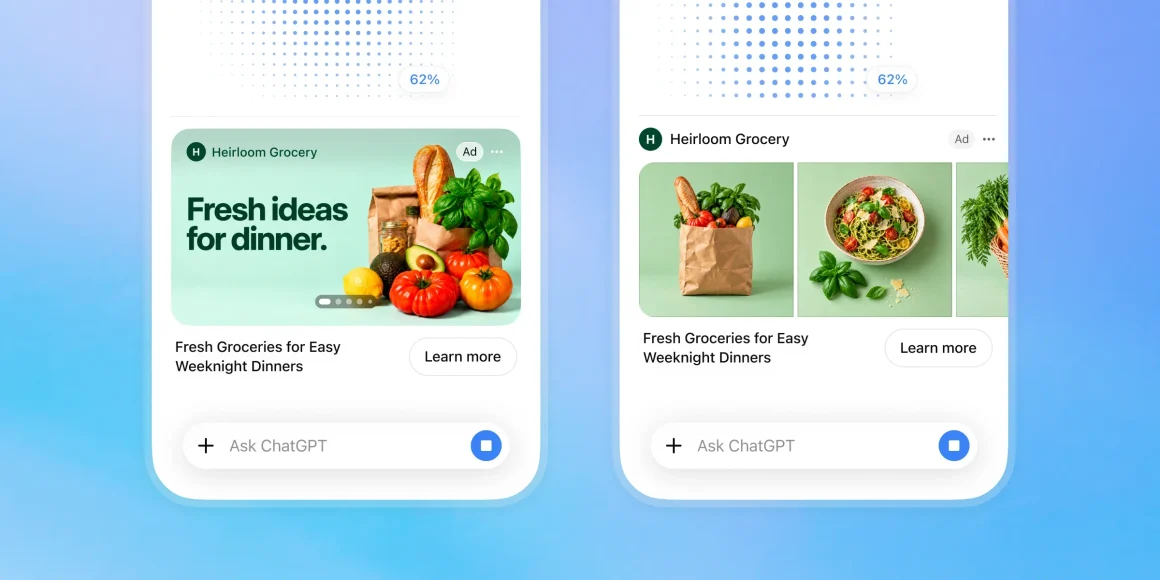
OpenAI also expanded its measurement integrations, said it’s developing brand-suitability pilots with DoubleVerify and Integral Ad Science, and shared early advertiser results.
Most of that is about formats, measurement and brand safety. I think OpenAI should fix targeting before it starts adding new ad formats. ChatGPT can already use past chats and memory to match an ad to the right buyer, but only for users who’ve switched on ad personalization, and advertisers have no way to know how many have. Until that changes, I’d tell bootstrapped founders, and anyone advising them, to wait before putting their limited budgets into ChatGPT ads.
How ChatGPT ads use your past chats and memory
Bootstrapped founders have very limited budgets, and they can’t waste them on ads that reach a broad audience waiting for their images to be generated. Every dollar has to get to their ICP: the person who fits and is ready to buy.
With its huge context window and memory, ChatGPT knows a lot about whoever it’s chatting with. Buyers explain their situation to it at length, the way they would to a salesperson on a call. It could personalize ads better than anyone right now.
OpenAI’s help page even says personalized ads can draw on past chats and memory, through a toggle called Past chats and memory.
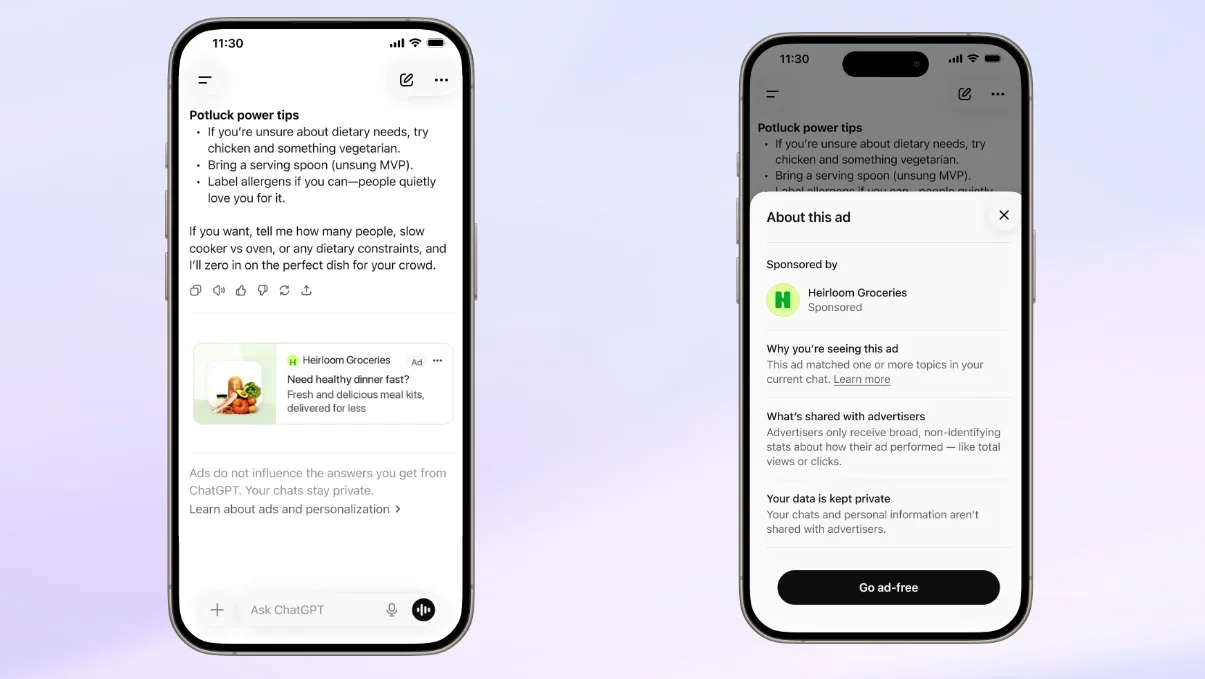
If it’s on, past chats and memory can contribute to ad relevance. If it’s off, ads rely more on your current chat thread, and past chats and memory won’t be used to inform the ads you see.
The ChatGPT ad personalization toggle advertisers can’t control
When you buy a ChatGPT ad, you pick the copy, the landing page, the bid and your targeting. The one thing you can’t pick is whether the person seeing it has switched on ad personalization. That’s their call, made in Settings > Ad Controls, and it decides how much ChatGPT can use to match your ad to them.
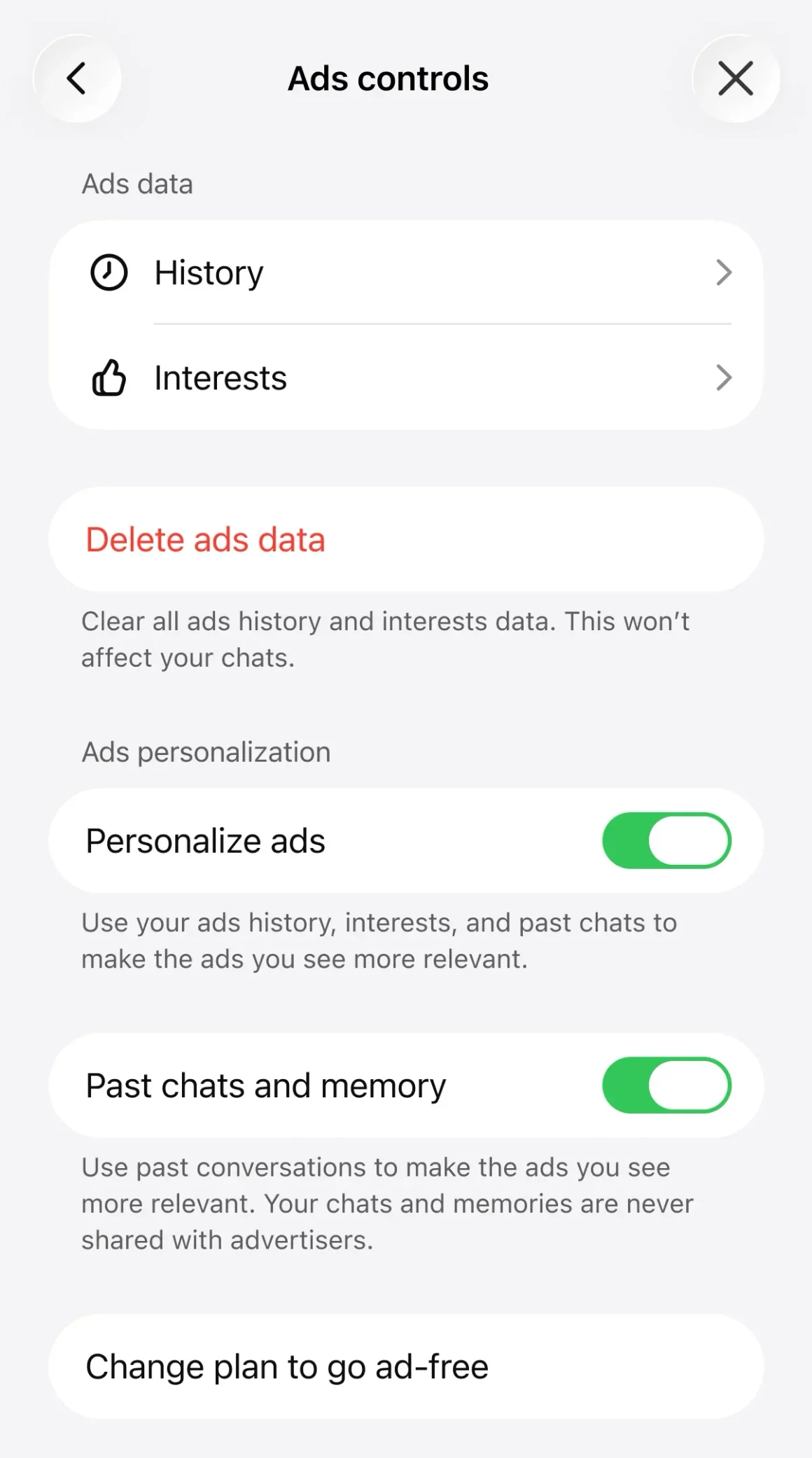
ChatGPT only uses past chats, memory and ad history to pick ads when ads personalization is enabled. With it off, ChatGPT picks ads from the current chat thread plus basic context like general location and language. That’s plain contextual matching: one conversation, one guess.
It also changes by market. OpenAI says personalized ads aren’t initially available in the European Economic Area or Switzerland at all, and Help Net Security reported in August that OpenAI asks users for a choice before personalized ads begin.
You pay for the impression whether the toggle is on or off, and I couldn’t find any number from OpenAI on how many users have personalization switched on. Advertisers only get aggregated numbers like views and clicks, so you can’t tell how much of your budget reached someone ChatGPT actually knows and how much went to someone it’s guessing about from a single prompt.
Asking people for permission rarely goes well for advertisers, either. When Apple started asking iPhone users whether apps could track them, just 4% of US users opted in in the first 2 weeks, according to Flurry data. I’d bet most ChatGPT users have never even opened Ad Controls.
Digiday reported that advertisers keep raising the same complaints about ChatGPT ads: weak measurement, too few formats and not enough inventory. It quoted Zeno Group’s Shamsul Chowdhury, who said ChatGPT’s smaller prompt volume and single ad placement create a disconnect between supply and demand. The new format and measurement tools take aim at the first 2 complaints. With inventory that tight, I’d want every impression reaching the right buyer first, and right now nobody can promise that.
Do ChatGPT ads work? Early results aren’t a pattern yet
OpenAI backed the announcement with partner-measured results for WeightWatchers, Dose and Portland Leather. For Dose, WorkMagic reported a statistically significant lift, with 67% of incremental purchases coming from net-new customers.
If it works for Dose, it doesn’t mean it’s going to be the same percentage for everyone else, and a handful of results published by OpenAI itself isn’t a pattern yet. OpenAI also says its work on incrementality is still in its early stages.
And I want to see more under the hood, especially how ChatGPT actually decides whether to serve an ad to someone at all, and how many of the people who saw those ads had personalization on.
I judge new AI ad channels by what founders I know actually spend and what comes back. A friend of mine, an award-winning interior designer for residential and commercial projects, put quite a big budget into a ChatGPT ads test, and unfortunately, absolutely nothing came back.
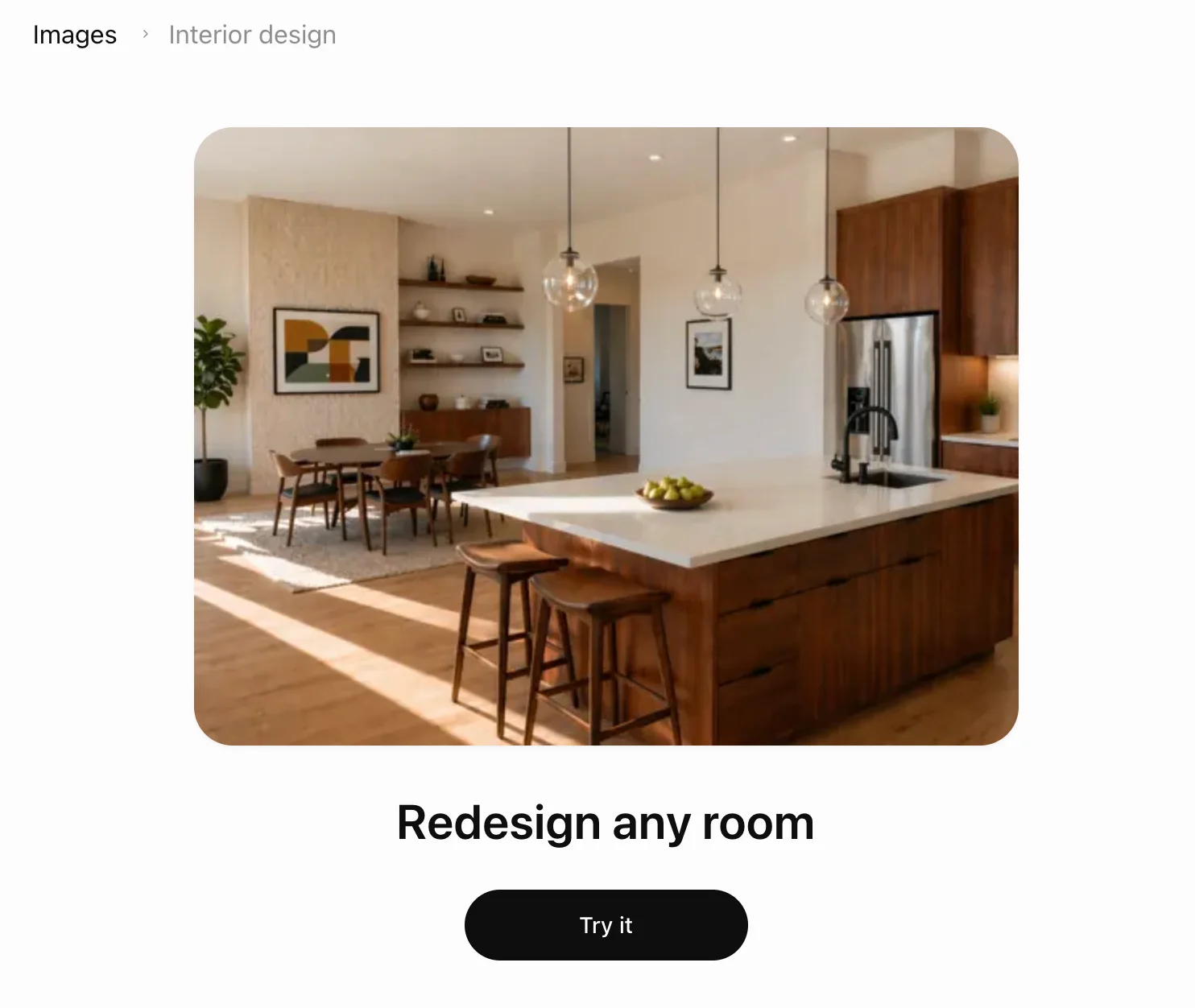
That surprised me even more because ChatGPT now has its own interior design option in the Images tab, called “Redesign any room.” People thinking about a renovation are already showing ChatGPT exactly what kind of room they want, which should make it easier than ever to match them with a designer. Even with that, her ads brought nothing in.
How to get recommended by ChatGPT without paying for ads
Until ChatGPT gets there, I’d put a bootstrapper’s limited time and money into organic content. Content keeps working for you, while paid ads are rented visibility that keeps you in bidding wars. ChatGPT is no exception: when more than one ad is eligible, OpenAI says it ranks them on a mix of relevance and advertiser bids.
- Write for one buyer’s problem at a time. OpenAI says ads don’t influence ChatGPT’s answers, so getting into those answers still takes organic content.
- Double down on what already brings customers in. That same interior designer gets most of her customers from referrals, and nothing she’s tried on Facebook, Google or ChatGPT ads comes close to that organic reach.
- Set your own signal for when to test. Switch on personalization and memory in your own Ad Controls and watch the ads you get. When they start matching your conversations and what ChatGPT knows about you, test with a small budget.
ChatGPT already uses memory to personalize its answers, down to refining a restaurant search with your location or dietary preferences. That’s exactly what I want it doing with its ads, for every user who sees them. When it gets there, ChatGPT could be the best-targeted ad channel bootstrappers have ever had.
And the founders who spent the wait building organic content will walk in with an audience that already trusts them, so when they finally pay for ads, they’ll be amplifying something that already works.