
PHOTO: COURTESY OF AGE-WELL
Tuktu just won the 2026 AGE-WELL National Impact Challenge with an app that sends vetted local helpers to older adults at home. Its path from 8 volunteers and a spreadsheet to more than 10,000 families is a playbook for any founder building a marketplace.
During the pandemic, Rustam Sengupta could do very little for his father. Sengupta lived in Canada. His father, who has dementia, lived in Singapore, and Sengupta watched from afar as his mother struggled to support him. What the family needed was easy to describe and hard to find: someone nearby, vetted and kind, who could show up for an hour.
So he built it, arriving from a career in renewable energy. Tuktu (the Inuktitut word for caribou) began with a spreadsheet and 8 volunteers. Four years after launching in British Columbia, it has served more than 10,000 families through a network of about 300 providers. This month it won the 2026 AGE-WELL National Impact Challenge, the national AgeTech pitch competition held during the AGE-WELL Annual Conference in Ottawa. The prize: a $20,000 grant, in-kind prizes and access to the AGE-WELL Innovation Studio.
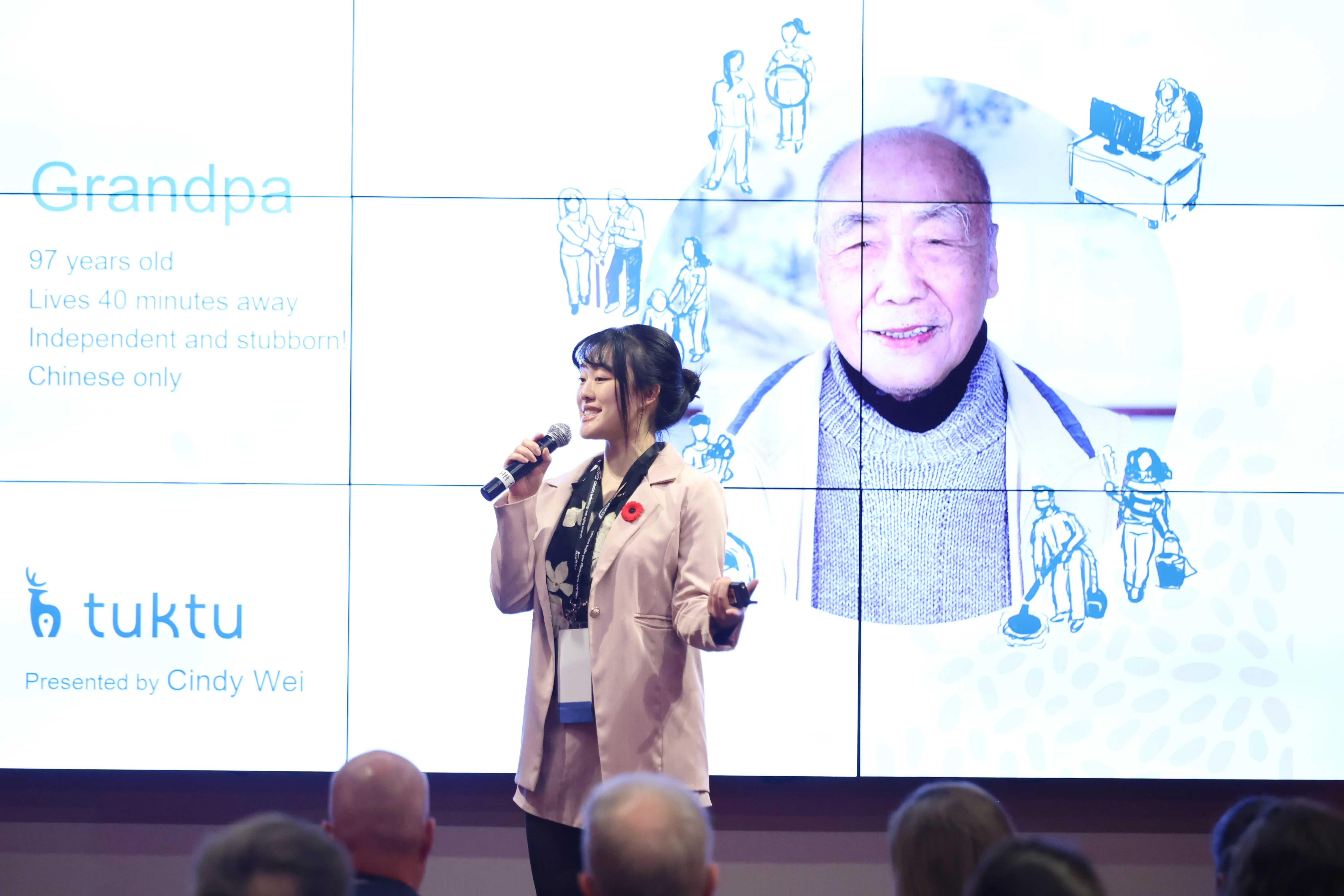
Cindy Wei, Tuktu’s business development lead, gave the winning pitch, and she led with the human side. The platform runs on AI behind the scenes, but she described what families actually get as “front-facing, neighbourly support.” The app is the easy part. The hard part is getting a daughter 2 provinces away to trust a stranger alone in her dad’s kitchen.
Why Canada needs flexible senior care at home
The demand is already here. On July 1, 2025, almost 1 in 5 Canadians (19.5%) were 65 or older, according to Statistics Canada.
The people arranging care are stretched thin too. In 2022, 6% of Canadians were “sandwich caregivers” looking after children and a care-dependent adult at the same time, and 86% of them said it affected their health or well-being.
Wei made the same point in her pitch: many family caregivers are raising kids and holding down full-time jobs while also looking after a parent.
Traditional home care agencies such as Home Instead are built around professional caregivers who work longer shifts and provide ongoing personal care. Plenty of families need something smaller: a ride to the eye doctor, a grocery run, an hour of company, a check-in after surgery.
Sengupta built Tuktu for that gap, and he sums up the model as “neighbors helping neighbors.”
6 lessons from Tuktu’s care marketplace
These apply well beyond AgeTech. If your marketplace sends people into homes, cars or kids’ lives, take notes.
1. Treat vetting as the product.
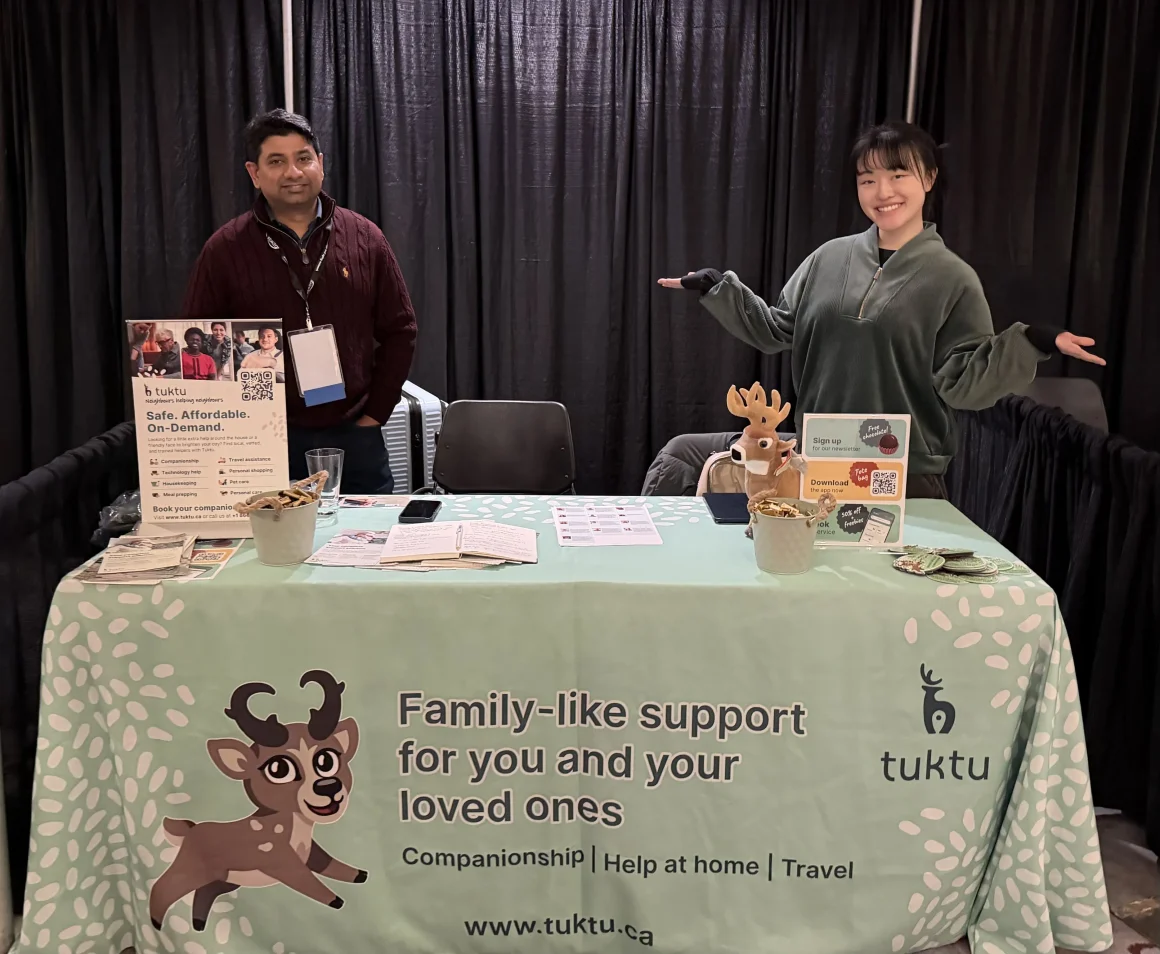
Every Tuktu helper goes through an interview, a criminal background check and reference checks, according to AGE-WELL’s release, and the app listing adds empathy-based training.
Compare that with Care.com in 2019. A Wall Street Journal investigation found 9 cases over 6 years where caregivers with police records were listed on the site and later accused of crimes while caring for children or older relatives, as The Daily Beast summarized. Care.com had positioned itself as a listings marketplace and charged families extra for deeper background checks. After the report, it pulled 46,594 daycare listings it couldn’t verify.
In care, screening is what the customer is paying for, so build its cost into your model from day 1.
2. Run it by hand before you code it.
The spreadsheet came first. A spreadsheet and 8 volunteers means a human decided who visited whom, and that’s how you learn what a good match looks like before you try to automate it.
By 2025, the same idea ran on an AI platform matching more than 3,000 community helpers with older adults across BC, Alberta and Ontario. The algorithm came after the team knew what it should do.
3. Match on what makes people comfortable.
Tuktu’s AI pairs families and helpers by language, cultural background, location and personal preferences. In a country where 1 in 4 Canadians has a mother tongue other than English or French, the highest share Statistics Canada has ever recorded, that matters.
An older parent who’s most at ease in Tamil or Farsi needs a different helper than one who wants to talk hockey. The details that make a match feel right are often the ones a generic marketplace never asks about.
4. Let families start with 1 hour
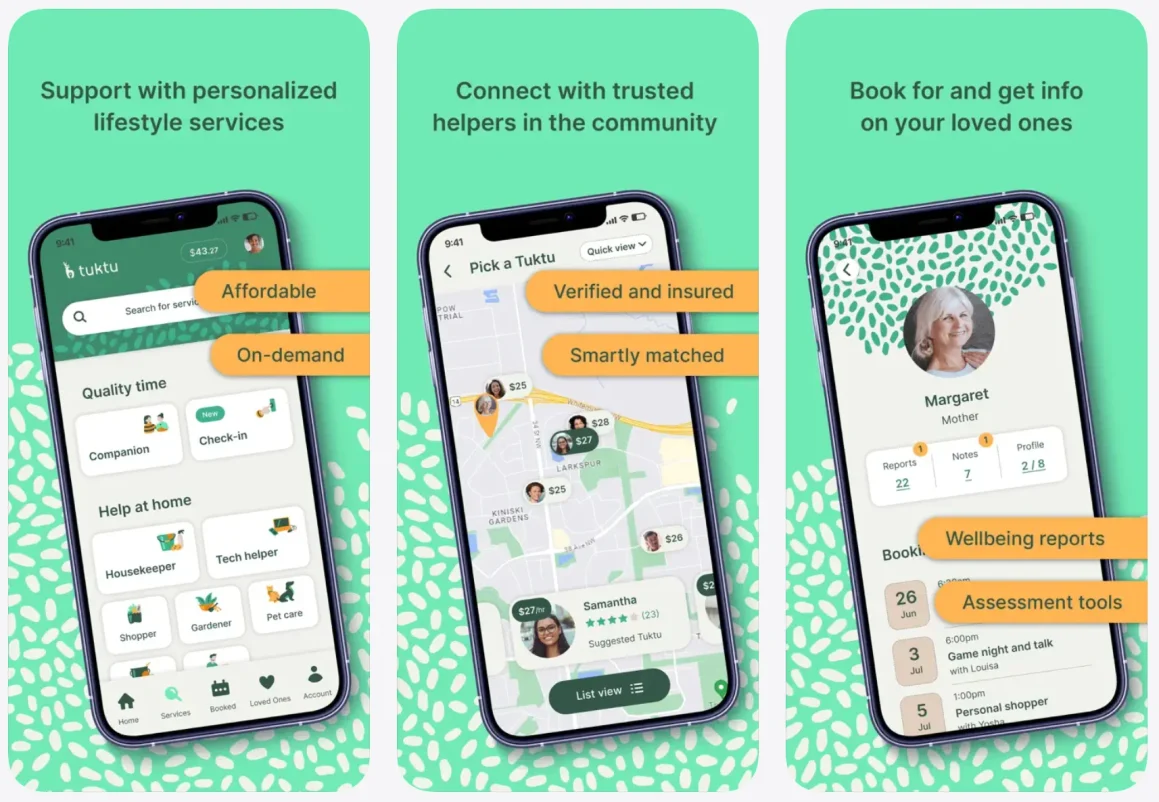
Tuktu requires no service contract, and families book by app, email or phone. The app bills a 1-hour minimum, then 15-minute increments.
In Vermont, families pay $25 to $40 an hour, and the company says it costs 30% to 40% less than hiring professionals for similar services. A small first purchase makes the first booking low-risk, and the phone line matters because the person booking may be 85 and done with apps.
It’s working: the company reported that more than 72% of users came back for more services within the same month.
5. Win trust with small jobs before taking on bigger ones

When CBC profiled Tuktu in 2022, it was an app for chores, errands or just hanging out. Today it offers overnight personal support worker (PSW) care and dementia care, and it serves people in care homes as well as at home.
One social worker at a seniors’ residence on Vancouver Island books Tuktu for about 25 of his residents, which turns one trusted professional into a steady sales channel. Moving into more intensive support raises the bar on training and oversight, which is normal growing-up work for any care company.
The order is the point: light help earned the trust that heavier care requires.
6. Build supply before you open a city.
In Ottawa, Tuktu has already vetted and trained 40 helpers while it builds its local network. Its first U.S. market followed the same pattern. Tuktu launched statewide in Vermont in March 2026 with 30 providers ready to book, backed by $100,000 from the Green Mountain Accelerator Fund as part of a $200,000 round.
By June, about 300 Vermonters had signed up, 30 had booked and about 25 had become providers. Those helpers are a mix of college students, recent retirees and people from fields like teaching and nursing, each giving 6 to 16 hours a week. Vermont made sense on demographics, too: about 23% of Vermonters are 65 or older.
Next up are southwestern Ontario and more of the U.S.
What a $20,000 prize really buys
$20,000 prize won’t change Tuktu’s runway much. The connections that come with it will.
Tochtech, the Vancouver company behind the Sleepsense bed sensor, won $20,000 in the 2020 National Impact Challenge. The win also brought membership in AGE-WELL’s Startup Affiliate Program, with connections to more than 400 partners. Later, Hamilton Village Care Centre in Richmond became the first long-term care home in Vancouver Coastal Health to install Sleepsense on residents’ beds.
Tuktu has been stacking rooms like this for years. It joined the Techstars Future of Longevity Accelerator in 2023, run with Melinda French Gates’s Pivotal Ventures, and pitched at LaunchVT before its Vermont launch. Each one put the team in front of buyers, partners and funders who already understand aging.
Pick competitions where the judges and the audience look like your future customers, and the cheque becomes the least valuable thing you take home.
Building a startup where trust is the product
If you’re building anything where a stranger gets access to someone vulnerable (care, childcare, home services, rides), start with the question a worried daughter asks: who is this person, and why should I let them in?
Your vetting, your matching and your pricing are the answer. Everything else is interface.
Tuktu’s formula is simple to say and hard to copy: careful screening plus a small first booking equals a family that books again. It’s how a spreadsheet and 8 volunteers grew into more than 10,000 families and a national award.
With almost 1 in 5 Canadians now over 65, the demand for that kind of help will only grow. Tuktu is already planning for it, with a new helper network taking shape in Ottawa and expansion into southwestern Ontario and more U.S. markets coming next.