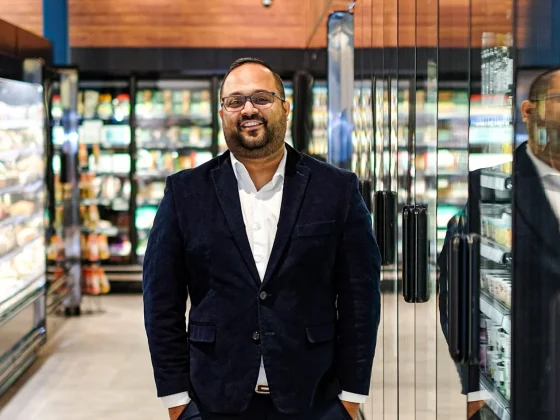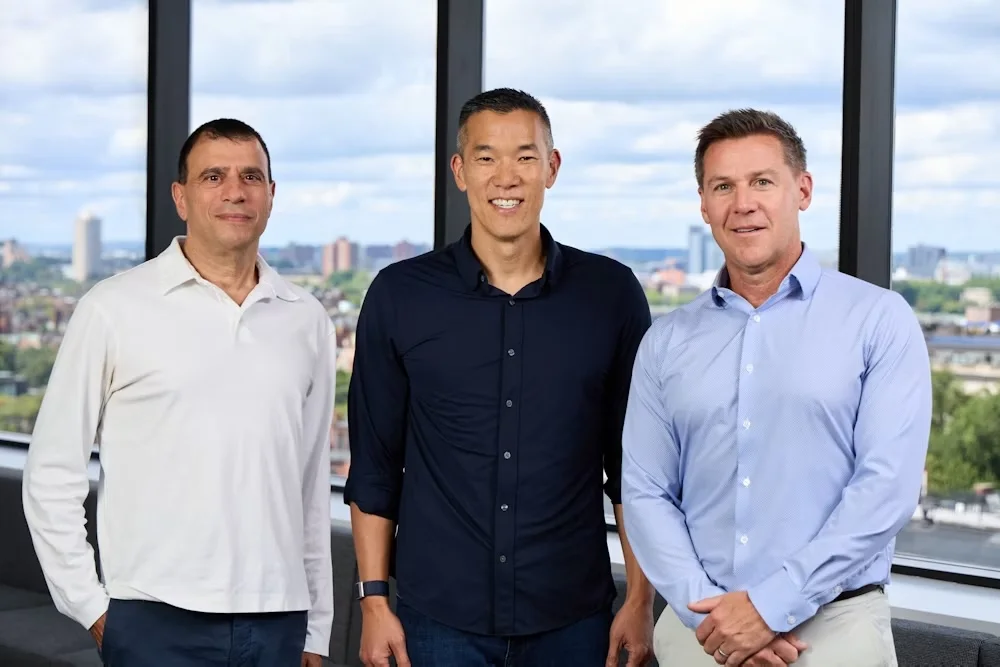
Volition Capital Managing Partners Roger Hurwitz, Larry Cheng, and Sean Cantwell | SOURCE: www.volitioncapital.com
A Boston growth equity firm closed its biggest fund ever on a simple rule: show us customers and revenue first. While half the industry chases pre-revenue AI, the bootstrapper’s playbook just got a very large vote of confidence (and a clear checklist for getting funded on your own terms).
Ryan Cohen pitched Chewy more than 100 times before anyone said yes. “Nobody wanted to give me money,” he later told the Wall Street Journal. The pitch was an online pet store that would out-service Amazon, and Silicon Valley kept passing (nobody wanted to fund the next Pets.com).
Then, in late 2013, a Boston firm called Volition Capital wrote a $15 million check. What convinced them was how often Chewy’s customers came back. Less than 4 years later, PetSmart bought Chewy for $3.35 billion, the largest e-commerce acquisition on record at the time.
That same firm just closed a $950 million fund to do more of exactly that.
Volition Fund VI at a glance
| Firm | Volition Capital, Boston growth equity firm founded in 2010 |
| Fund | Fund VI, $950 million (hard cap, oversubscribed), closed September 14, 2026 |
| Total AUM | $2.6 billion+ |
| Check size | Typically $25 to $50 million |
| Revenue you need | $5 million to $50 million+ a year |
| Growth you need | 25% to 100%+ a year |
| Prior funding | Little or no institutional capital (bootstrapped or lightly funded) |
| What you keep | Ownership and control; Volition wants founders holding 20%+ |
| What they take | A minority stake and a board seat |
| Sectors | B2B software, internet and consumer |
| Core bets | Creator economy, ad tech, compliance, security |
| New in Fund VI | AI application startups, consumer and physical AI (like wearables) |
| Track record | 60+ companies backed; exits include Chewy, Assent Compliance, Connatix and Rounds |
| Current portfolio | Black Kite, ButterflyMX, Creatio, Levanta, US Mobile |
| Good fit if | You have paying customers, strong retention and want fuel to scale without giving up control |
| Not a fit if | You’re pre-revenue, or you plan to run the company for cash flow and never sell |
| How to reach them | Submit your deck for feedback |
How Volition Capital’s $950 million fund works
On September 14, Volition announced the final close of Fund VI at its hard cap of $950 million. The fund was oversubscribed, it’s the firm’s largest ever, and it pushes Volition past $2.6 billion in assets under management. Since 2010, the firm has backed more than 60 companies, with exits including Chewy, Assent Compliance, Connatix and Rounds.
We're excited to announce the closing of Volition Fund VI with $950 million in limited partner capital commitments, bringing our total assets under management to over $2.6 billion.
— Volition Capital (@volitioncapital) September 14, 2026
With Fund VI, we'll continue to focus on investing in high-growth, founder-owned technology… pic.twitter.com/rshxpu7Pjp
For scale, the previous fund closed at $675 million in early 2023, so Fund VI is roughly 40% bigger.
Co-founder Larry Cheng gave The Information the inside view. Per Dealroom’s summary of that interview, typical checks run $25 to $50 million, Volition takes a board seat, and the sweet spot is companies doing $5 to $50 million in annual revenue that raised little or no institutional money. Cheng said Chewy returned the whole of Fund II, and the sale of Rounds returned about half of Fund IV.
The short version: this is a firm that gets paid when boring, profitable-ish growth compounds. They like founders who already did the hard part.
Why Volition is doubling down on bootstrapped founders
The timing is the interesting bit. The Information framed it against a VC rush to back the hottest startups before they’ve made any revenue at all. Meanwhile, limited partners (the pension funds and endowments that invest in VC funds) spent this spring and summer nervous about AI disrupting software. Volition raised a record fund into that anxiety anyway.
Cheng’s read on AI is the part founders should underline. He told The Information that AI is making products cheaper to launch, and that he’s seeing more companies hit roughly $10 million in annual recurring revenue in their first year with fewer than 10 employees, a pace he said he’d never seen before. His take in the Fund VI announcement:
“We have backed founders with aspirations for greatness, and we believe truly remarkable businesses are being built today in the new era of AI.”
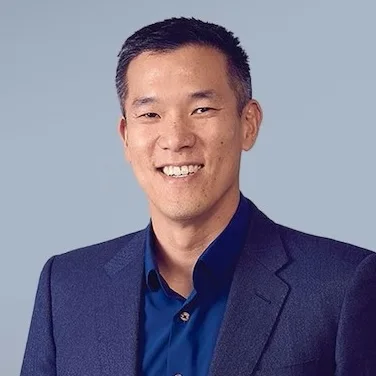
Larry Cheng, Founding Partner at Volition Capital
So let’s connect those dots. If a tiny team can reach real revenue without a seed round, the pool of “bootstrapped companies with traction” gets much bigger.
That’s Volition’s hunting ground, and it explains why its partners are leaning into AI rather than running from it.
According to Dealroom’s summary, Fund VI keeps its core bets (creator economy, ad tech, compliance, security) and adds AI application startups and consumer and physical AI such as wearables.
The promise: big outcomes, less founder risk
For all the AI talk, Volition’s promise to founders hasn’t changed since the firm was founded in 2010. Managing partner Roger Hurwitz said it best in the Fund VI announcement:
“Our mission to help founders achieve their dreams without risking them hasn’t changed. That north star has guided us through every market and technology cycle, and we believe it will continue setting us apart.”
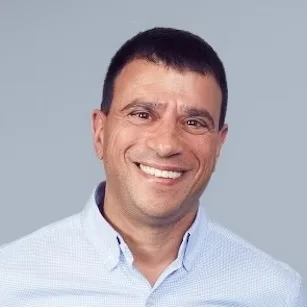
Roger Hurwitz, Founding Partner at Volition Capital
“Without risking them” is the part worth underlining. It’s a promise the firm has been testing since it raised its first fund in the aftermath of the financial crisis, and the release spells out what it means in practice:
- You stay in charge. Founders keep ownership and control of their companies. Volition takes a minority stake and a board seat, then supports from there.
- The money scales what already works. Volition invests after you’ve proven customer demand with little outside capital, so the check fuels growth.
- Every company gets full attention. The firm says it works with each company “as if it were a portfolio of one,” aiming to maximize the upside while reducing the risk.
For a bootstrapped founder, that’s the whole trade: you’ve already taken the early risk with your own time and money, and the right growth partner should help you scale it without giving up the company you built.
How to get on Volition Capital’s radar
Volition publishes its investment criteria openly, which is rarer than it should be. Read them as a checklist for becoming fundable without fundraising first.
- Real revenue, $5 million and up. Volition’s floor is a proven sales model with engaged customers. If you’re at $800K ARR, this is your 2 to 3 year target, and a useful one.
- Growth between 25% and 100%+ a year. Fast enough to prove demand, with the kind of growing pains (hiring, systems, new markets) that outside capital and a seasoned board can help solve.
- Customers who stick. Chewy won Volition over on repeat business, with retention Cheng described to the WSJ as among the best the firm had seen. Track your cohorts now, before anyone asks.
- Meaningful founder ownership, 20%+. Volition wants you to keep real skin in the game after it invests. Every round you skip early protects this number later.
- Capital efficiency you can prove. The firm says it wants businesses built on scrappy smarts and paying customers instead of venture money. Your burn multiple and payback periods are the evidence.
A recent example of the model in action: Volition led a $40 million minority investment in Keynes, a connected TV ad company, earlier this year. Minority means Volition doesn’t take the company over.
When Volition isn’t the right fit
Growth equity is a great deal for the right company and a poor fit for others. A $25 to $50 million check comes with a board seat and a partner who expects a large return, often through a sale (Chewy and Rounds were both exits). If you’d rather run a profitable company forever and pay yourself dividends, you may never need this money, and that’s a perfectly good outcome.
It’s also a small club. Volition calls itself “extremely selective,” and a fund this size still backs a limited number of companies.
The good news: the work that makes you fundable is the same work that keeps you independent. Paying customers, strong retention and healthy margins give you options, whether you take a $25 million check or never raise a dollar.