Written by Lidia Vijga
Falls, dementia and finding help at home are some of the hardest problems families face as parents get older. At the AGE-WELL Annual Conference in Ottawa, November 2 to 4, 10 tech companies are showing what they’ve built to solve them, from a smart clock for people living with dementia to a cane that alerts family when someone falls.
One of the fall detectors at AGE-WELL this year was first built to find children left in hot cars.
Pontosense started in the automotive industry, where a top safety rating depends on a car detecting a child left alone in the back seat. Cameras can’t see through a car seat, and weight sensors can’t tell a child from a backpack, so the company built radar that can. CEO Alex Qi told AARP’s AgeTech Collaborative that partners in the car industry kept nudging the team toward AgeTech. Today the same sensor sits in the corner of a bedroom and picks up movements smaller than half a grain of salt.
The problem it’s chasing is serious. In 2022, 7,621 Canadians aged 65 and older died from falls, and falls caused 89% of injury-related hospitalizations in that age group, according to the Public Health Agency of Canada.
That’s the backdrop for the 2026 AGE-WELL Annual Conference, where researchers, founders, care providers, older adults and caregivers will spend 3 days on one question: how technology can help people age well wherever they live.
Below are the tech exhibitors I’d make time for, grouped by the problem they solve.
AgeTech startups catching falls before they turn into emergencies
Half of the companies on this list are working on the same problem from different angles: knowing the moment someone falls or gets up when they shouldn’t.
Pontosense: radar that spots a fall without a camera
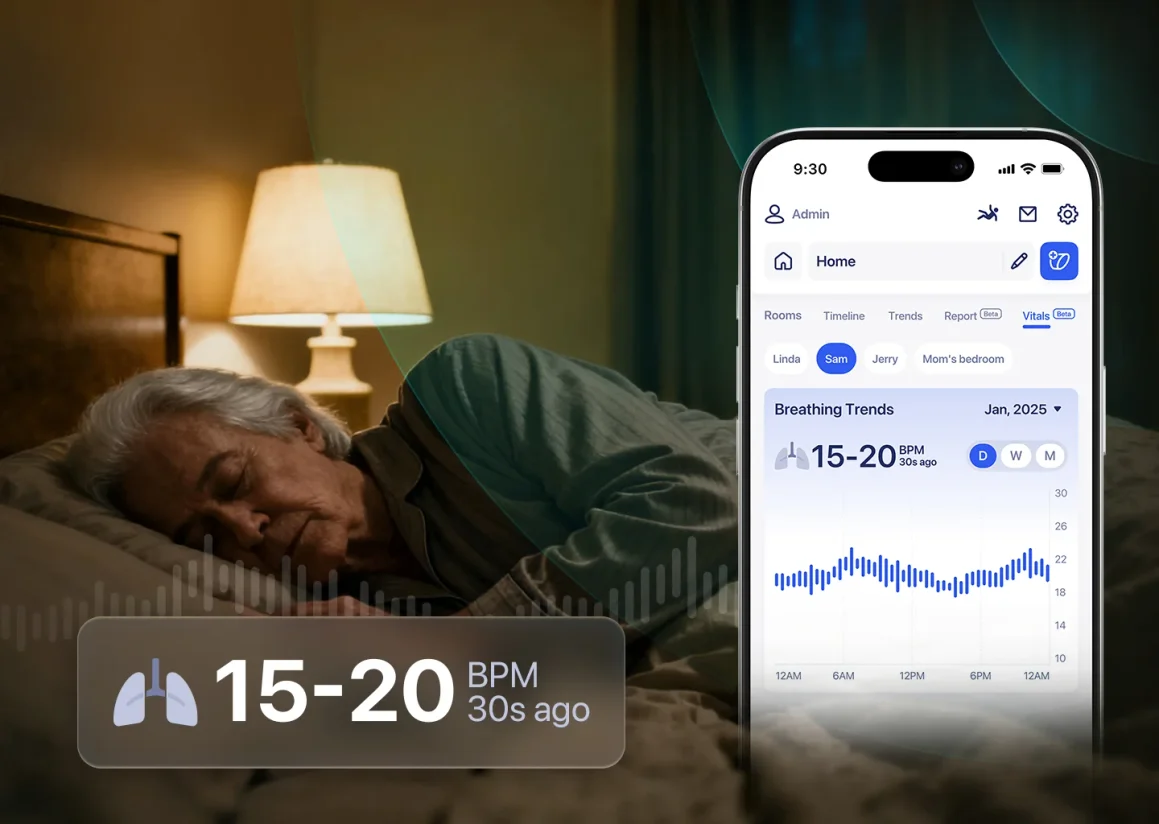
Pontosense mounts a small radar sensor on the wall and turns what it detects into what Qi calls an anonymized “hologram” of the person in the room. A family member can open the app and see that dad is in the kitchen or mom just got out of bed, and they get an automatic call if someone falls.
There are no cameras, microphones or wearables, which matters most in bathrooms and bedrooms, the rooms where people least want to be watched. VHA Home HealthCare piloted the system for clients aging at home in Toronto, and the product won a 2025 Red Dot Design Award, where the company reported 99% fall detection accuracy.
The company’s release names the stakes: the “long lie,” when a senior stays on the floor undetected for hours, is often what leads to hospitalization. Pontosense is also a National Impact Challenge finalist, so you can watch it pitch on November 4.
Tochtech Technologies: a bed sensor for the night shift
Vancouver’s Tochtech makes Sleepsense, a non-contact sensor that sits under the foot of a bed and alerts staff when a resident gets up. Nighttime is when disorientation can send people living with dementia wandering, and care homes need to reach that resident without waking everyone else on the floor. The traction is real: Trellis Seniors chose Sleepsense for more than 430 long-term care beds across BC, and Fraser Health rolled it out in 3 long-term care homes with CAN Health Network. Tochtech also has deep AGE-WELL roots: it won the National Impact Challenge in 2020.
Toch Sleepsense trial in acute care setting overwhelmingly embraced by staff, clinicians and patients. Read how Sleepsense supported improved clinical decision making, improved staff efficiency and quality of life for patients https://t.co/l1Bhnyliac
— Tochtech Technologies (@Smarturns) April 16, 2025
Tenera Care: replacing the pull cord with a wearable
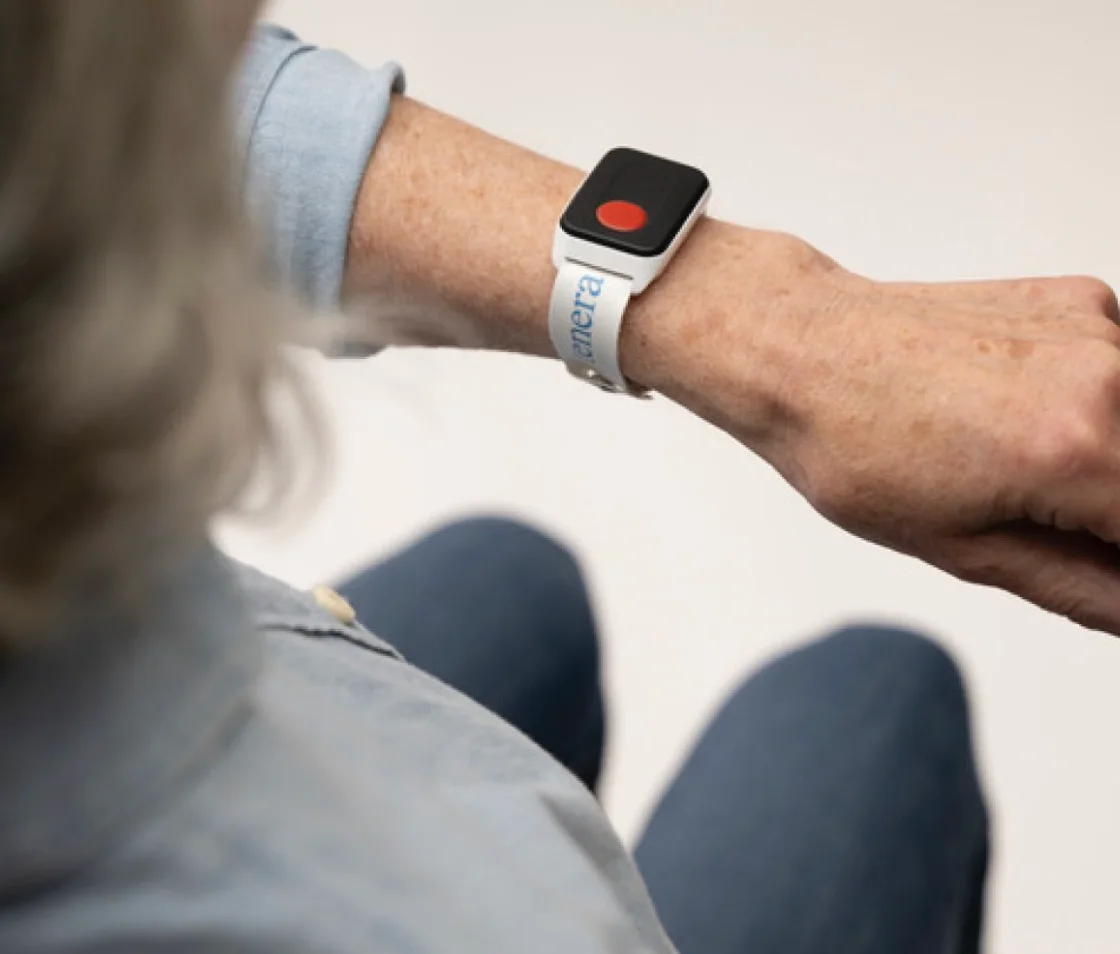
Tenera Care exists because Stewart Hardie’s stepmother fell 3 times in a single month in her long-term care home. She had early-onset dementia and couldn’t work the nurse call cord mounted on the bathroom wall. “You say it out loud and think you’re talking about 1960,” Hardie told Creative Destruction Lab. The Halifax-area company replaced the cord with a bracelet that tracks location to within about a foot and alerts staff when a resident gets out of bed.
Amptek Technologies: a smart cane people will actually use
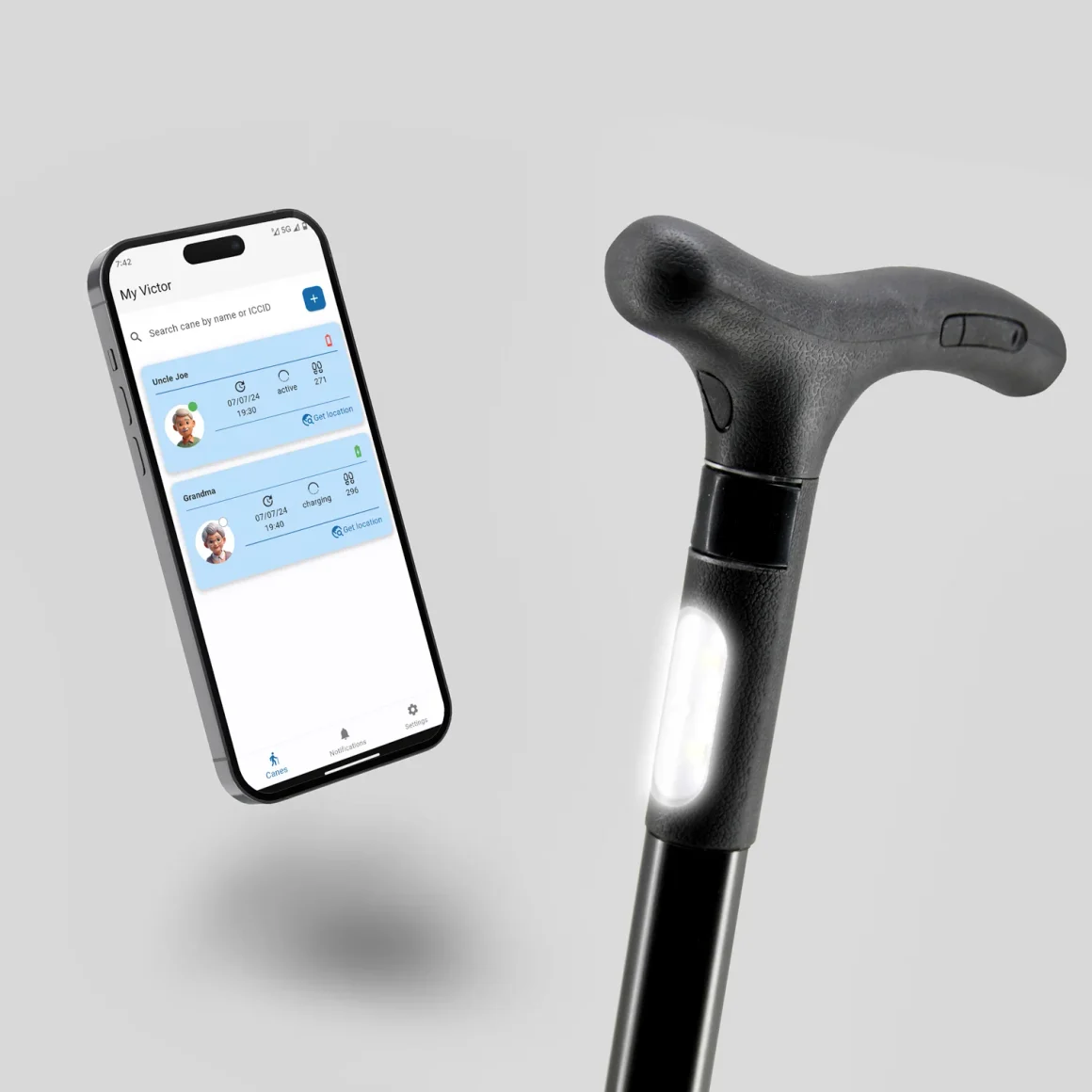
Amptek has spent more than 20 years designing electronics for other companies in Richmond Hill, Ontario. Its own product is VICTOR, a 470-gram smart cane with GPS tracking, geofencing, AI fall detection, a panic button and a flashlight that switches on in the dark.
The cellular connection is free for the first year, then CAD $6 a month, and there’s no camera or microphone. The smart part is the form factor. Many older adults resist wearing an alert device, but a cane is something they already carry every time they walk, and Amptek’s own site notes that accepting a walking aid at all can be emotional.
Life Assist Advantage: a medical alert pendant designed by a paramedic
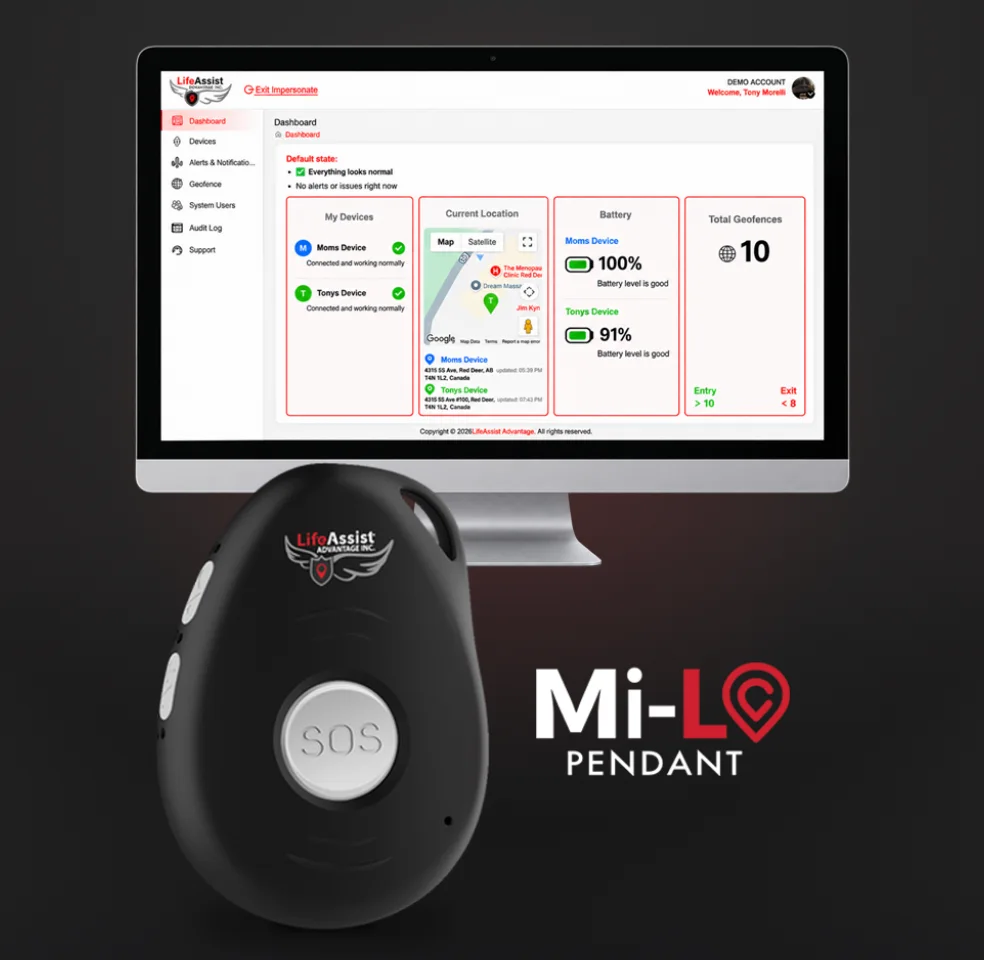
Tony Morelli spent 4 years as a primary care paramedic, including answering emergencies called in through other medical alert services. He founded Life Assist Advantage in Alberta in 2023 to fix what he saw on those calls. Each profile stores medical conditions, medications, allergies, mobility needs and home access details, so responders know them before they reach the door.
The pendant ($195) and smartwatch ($269) work anywhere with cell coverage, include fall detection at no extra cost, and offer safe zones for people living with dementia who may wander. Families pick family monitoring at $50 a month or 911 monitoring at $60, and all data stays on Canadian servers.
AgeTech for memory and brain health
These 2 companies focus on the brain, from daily routines with dementia to measuring how well the brain is holding up.
Idem: a smart clock and pill dispenser that help people with dementia stay on track
Montreal’s Eugeria launched Idem in 2024 to help people living with early dementia keep track of the time and day. The Idem Smart Clock speaks more than 10 languages and lets family members push medication reminders, appointments and digital sticky notes to the screen from anywhere. A lockable pill dispenser pairs with it and confirms each dose.
In a pilot with 50 seniors living with cognitive impairment in Quebec and Ontario, the clock helped people take their medication more consistently, and Idem is now being tested with home care teams through envisAGE. It’s a National Impact Challenge finalist too.
NERON AI: a vital sign for the brain
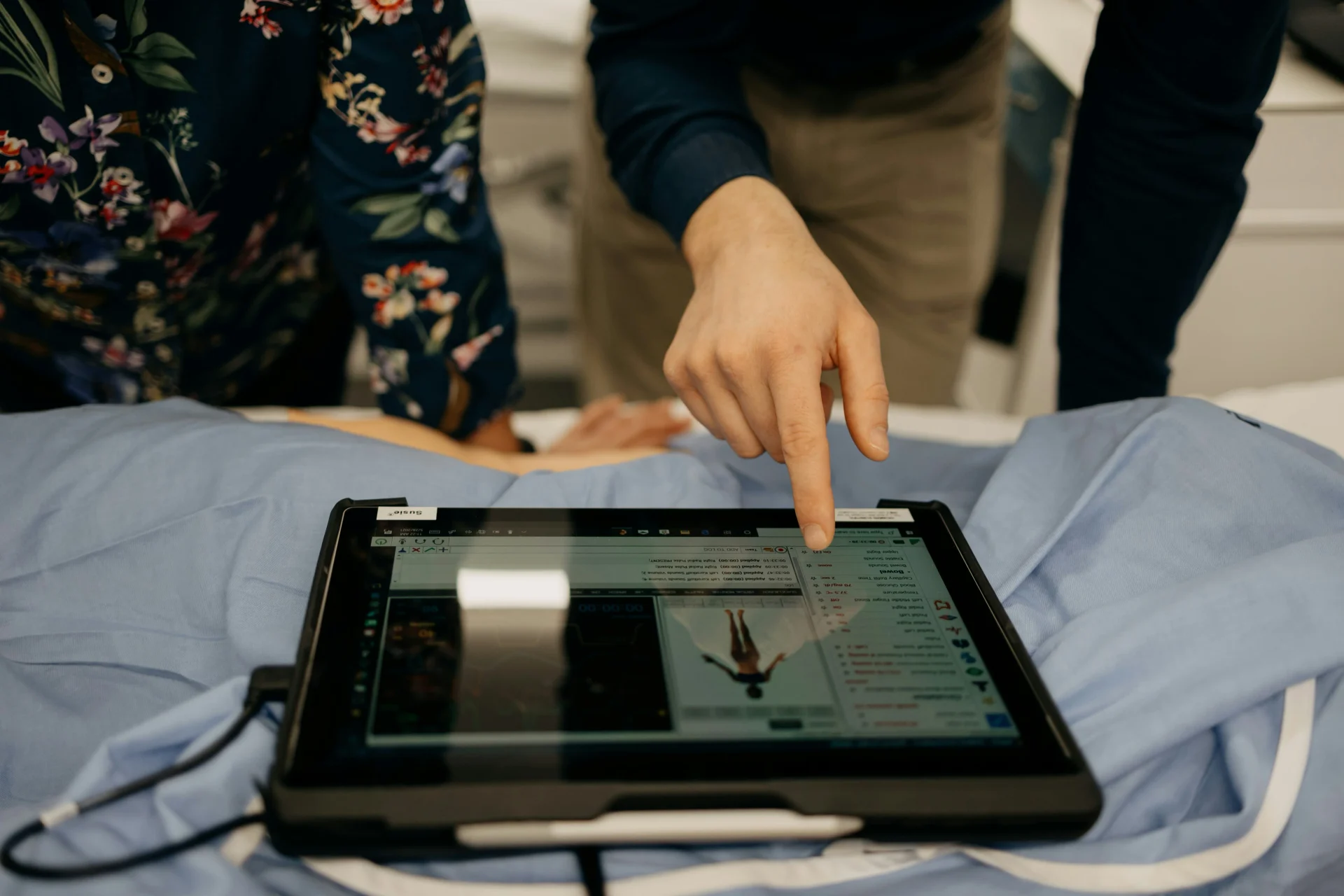
Toronto’s NERON AI runs a 10-minute tablet test that asks the brain to think and move at the same time, then turns the result into a Brain Score that can be tracked over time. The science comes from Lauren Sergio’s lab at York University, with 52 peer-reviewed papers behind it and more than 8,000 Brain Signatures collected so far.
“Early changes in brain performance can show up first in how people move,” Sergio said. That makes a quick, repeatable test useful for senior living communities that want to catch change early. NERON positions itself as a measurement tool with no diagnosis or labels, which the company says lets it deploy quickly across clinics, care homes and wellness programs.
AgeTech platforms that coordinate care at home
The third group builds the software layer: who shows up, when, and who knows what happened.
Tuktu Care: neighbours on demand
A milestone moment for Tuktu! Meet Kimberly, our first U.S. customer, sharing her fantastic experience with our on-demand care in San Diego. First experiences are always special, and we’re so grateful for hers! Thanks to Julie for leading the way! #TuktuUSA #InnovationInCare https://t.co/8p8pSz28ab
— Tuktu Care (@tuktu_care) December 10, 2024
“Think of it as Airbnb for care,” co-founder Komal Makkad told Castanet News. Tuktu matches families with vetted local helpers for rides, shopping, housekeeping, companionship and overnight care, using AI that weighs language, cultural background, personality and the task itself. Founder Rustam Sengupta built it after his own father was diagnosed with dementia.
By March, Tuktu had served more than 6,000 customers with over 300 providers in Canada, and more than 72% of users came back within the same month. Every provider passes a criminal background check and gives 2 local references. Tuktu launched in Vermont this year and is the third National Impact Challenge finalist on this list.
Thriving.ai: one app for the whole circle of care
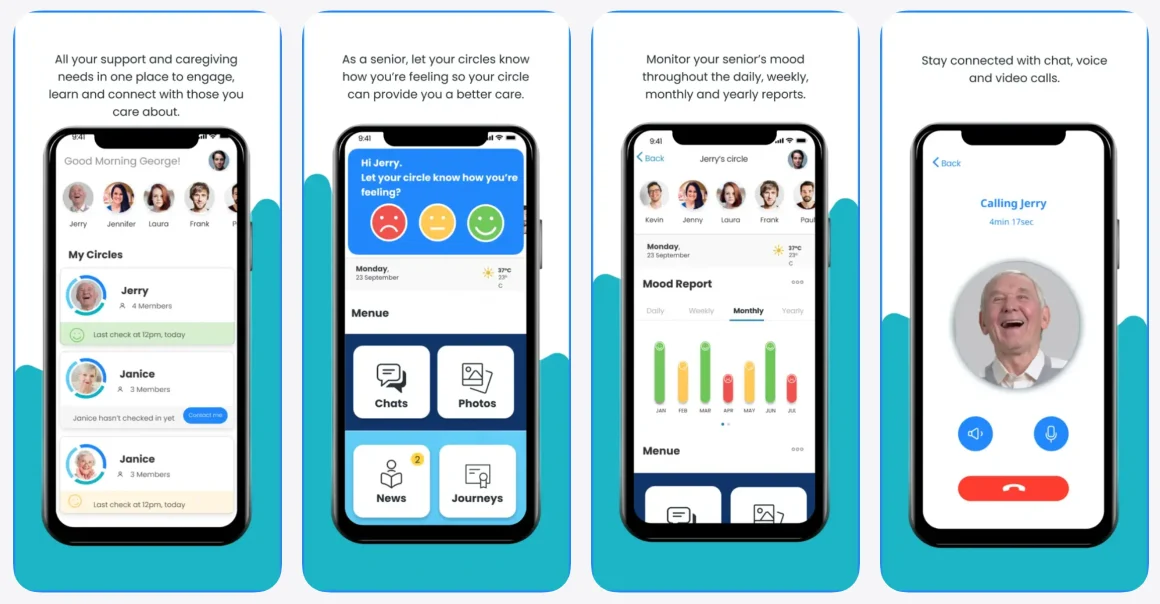
Founder Shain Khoja built Thriving.ai around a simple idea she explained to the AgeTech Collaborative: “80% of our health is a result of social determinants of health.” The app brings doctors, nurses, family and paid caregivers into one place to share updates, check in on mood and track health data from wearables.
Caring for a parent often means updates scattered across family group chats, notes on the fridge and missed calls with the doctor’s office. When everyone works from the same record, a sibling in another city can see that mom skipped lunch, and the visiting nurse can learn about
ProveraCare: scheduling software for home care teams
ProveraCare builds for the agencies behind home care. Its platform suggests the best available caregiver for each open visit, verifies check-ins with location data, and gives personal support workers and nurses mobile tools for scheduling, chat and documentation, with HIPAA and PIPEDA compliance built in.
Home care runs on visits, and when one goes unfilled, someone at home waits. Software that fills shifts faster helps both the agency and the client. The company also lists a new product, Pearl, as pre-launch, so the booth is a good place to ask what’s coming.
Canada’s AgeTech companies are being built by people who sat in the ambulance, the care home hallway and the family waiting room. They know a product only works if older adults keep using it, and that focus is turning into real contracts with care homes, health authorities and families.
If you’re in Ottawa next week, stop by these booths and ask each founder what they learned from their first 10 customers. You’ll get a better education in this market than any report can give you.