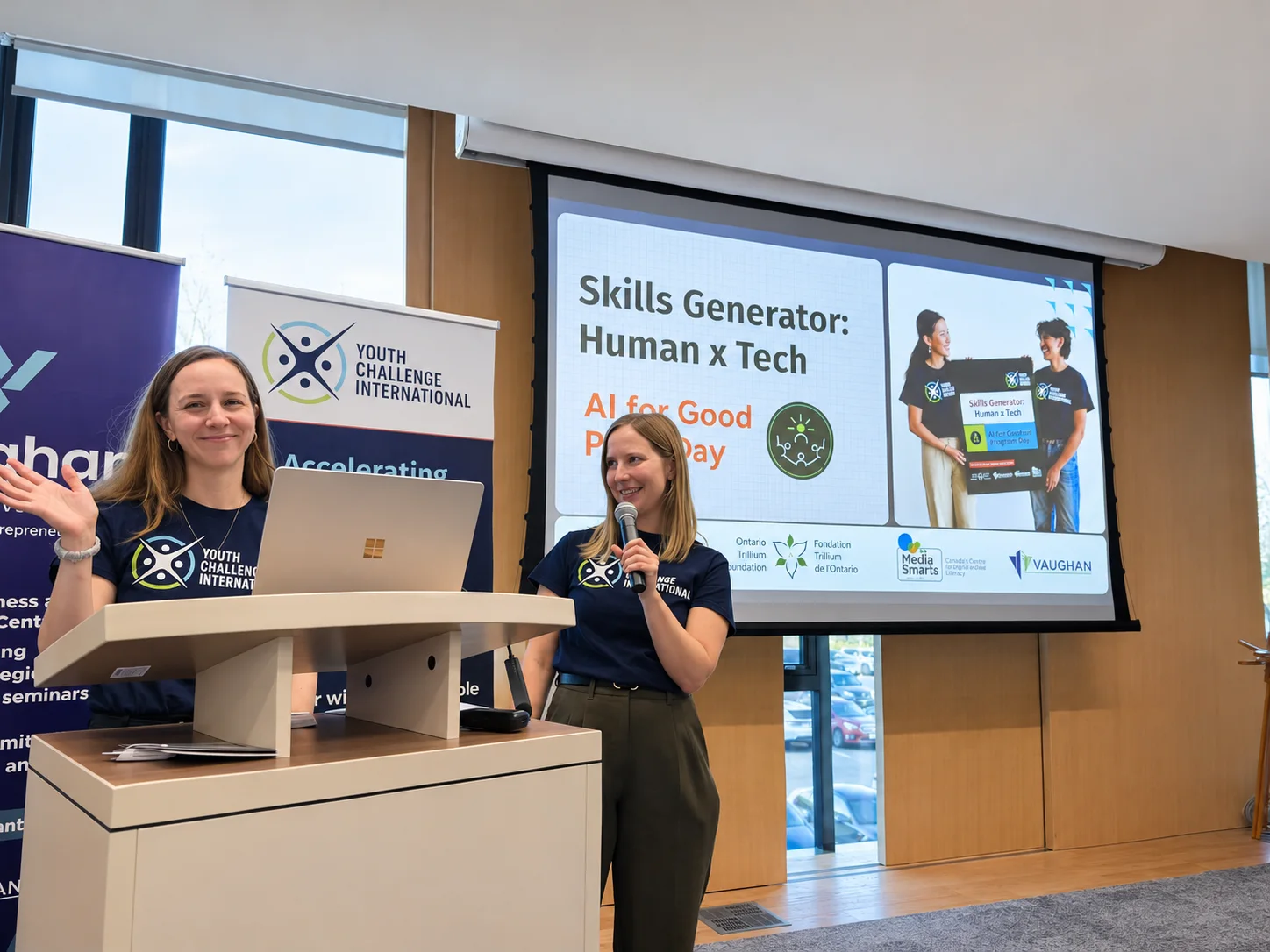
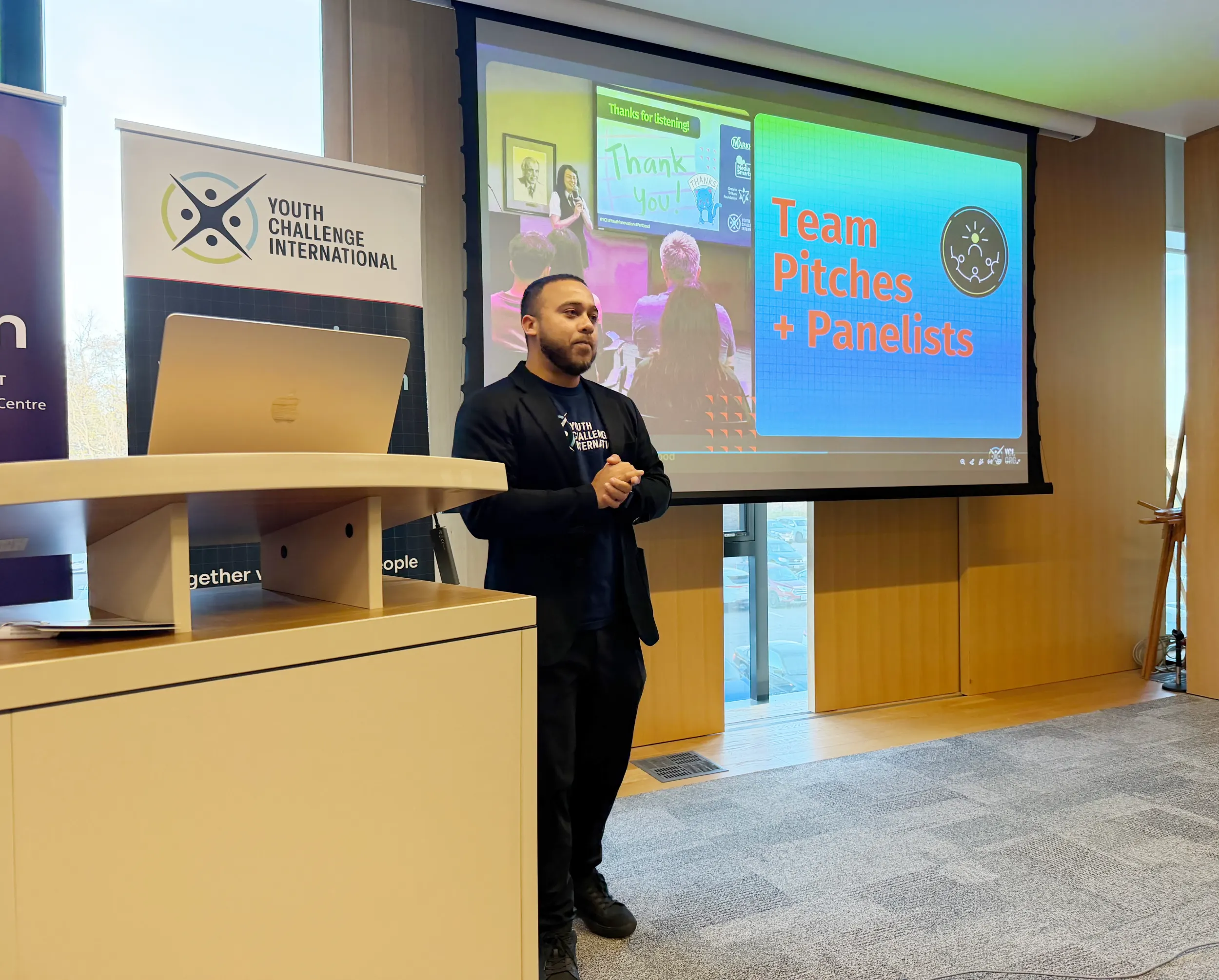
PHOTO: Rhea & Taylor from Youth Challenge International
The City of Vaughan handed 4 teams a real problem each: park repairs, building permits, local shopping and traffic safety. 10 weeks later, the teams pitched their AI tools at City Hall to close out Youth Challenge International’s Skills Generator program.
About YCI
Youth Challenge International is a Canadian non-profit organization accelerating youth innovation for good. Together with young leaders and innovators, YCI is creating a better future where people, planet and profit can thrive. For more than 40 years, YCI has partnered with young people and organizations to turn complex challenges into sustainable solutions. Learn, innovate and lead with impact at yci.org.
One of the judges wished she’d brought her dad.
The team on stage had just walked through PermitPilot, an AI assistant that helps homeowners prepare a building permit application from start to finish. She remembered her family’s basement build and the pile of paperwork that came with it. “This presentation was the perfect solution,” she said.
I was in the audience at Vaughan City Hall on November 20 for the “AI for Good” Community Pitch Day, the final event of Youth Challenge International’s (YCI) Skills Generator program. I’d already met this cohort once: earlier in the program, I joined a virtual panel to share my own entrepreneurial experience with the Skills Generator participants.
The 4 teams got 5 minutes each on stage. Every team pitched a fix for a problem the City of Vaughan had handed them 10 weeks earlier. I’ve seen plenty of pitches built around a cool idea. These were built around a problem the city already had.
What YCI’s Skills Generator program teaches
YCI has worked with young people for more than 40 years, and Skills Generator is its newest program. The Ontario Trillium Foundation funded the pilot with an $86,400 Seed grant to build leadership, social-emotional and digital skills for youth aged 18 to 24 in York Region.
Participants spend about 3 hours a week taking 5 online workshops on AI, ethics, critical thinking, design thinking and leadership. Then they join a Solutions Lab, where a small team works with a coach from local government to tackle a real local issue using AI. No tech background is required.
The program ends on a stage, but for these young participants, pitch day is just the beginning.
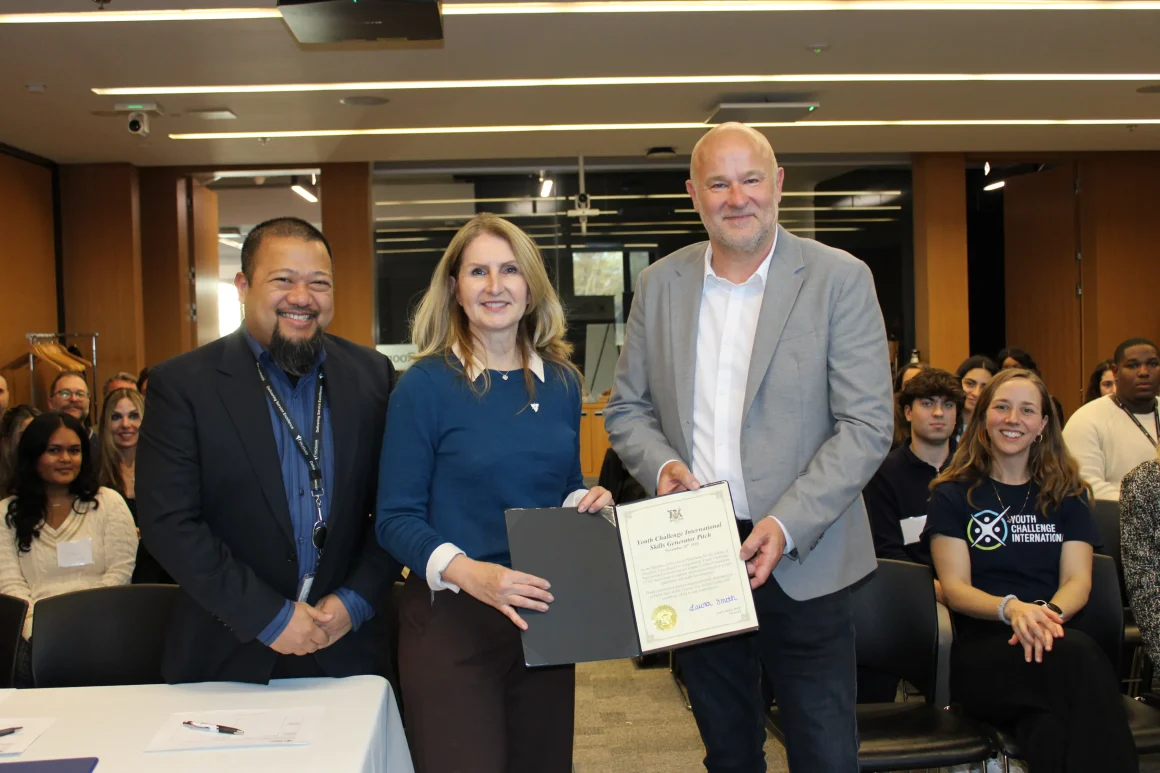
At this year’s pitch day, MPP Laura Smith (Thornhill) gave the opening remarks, and YCI CEO Bryan Cox summed up the reason for the program:
“The future of work is changing quickly, and young people need support to navigate its complexities.”

Bryan Cox, CEO at Youth Challenge International
How the City of Vaughan partnership works
Most hackathons start with a blank page. Skills Generator starts with a city department’s to-do list.
The City of Vaughan joined YCI to host the in-person sessions at City Hall and gave each team a real challenge:
- park maintenance
- residential building permits
- local business visibility
- traffic safety
The coaches came from local government too. YCI brought on Nafis Ahmed, who is also Associate Director of Entrepreneurship at YSpace, to lend his facilitator expertise and he thanked each one by name from the stage
What the 4 Skills Generator teams pitched to the City of Vaughan
Each team demoed its idea on screen, then took questions from the judges. They’re listed in the order they pitched.
ParkGo: turning park complaints into a community app
Vaughan already has a way to report park problems. Through SmartParks, residents scan a QR code on a lamp post to flag an overflowing bin or a broken playground. The program started as a pilot in 2022 and now covers every City park.
The ParkGo team (Sitara, Endrit and Mehwish) spotted 2 gaps: the Parks Department can’t easily see which parks need the most maintenance, and the tool only collects complaints, with nothing that helps neighbors connect.
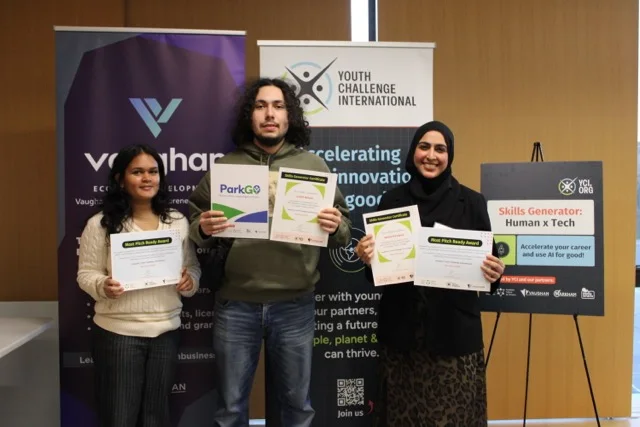
ParkGo adds the missing layer. Residents find nearby park activities, join neighborhood challenges, invite friends and earn points they can spend at local cafes and shops. Park staff get a maintenance dashboard, fed by anonymous motion sensors near fitness equipment (no faces, no physical features), that flags early inspection warnings like “fitness station F12” before something breaks.
The team came with a real plan: a pilot on 15 park structures (about 5% of parks), 3 to 4 sensors each, an estimated cost of about $8,500 and an ask of $10,000 over 4 to 6 months. Local businesses would pay to list rewards, which helps cover the cost.
The judges praised the polished design, and one suggested other City departments could plug their own volunteer events into the app.
PermitPilot: an AI co-pilot for building permits
PermitPilot team opened by asking who in the room had applied for a residential building permit. One answer from the room: “No comment.”
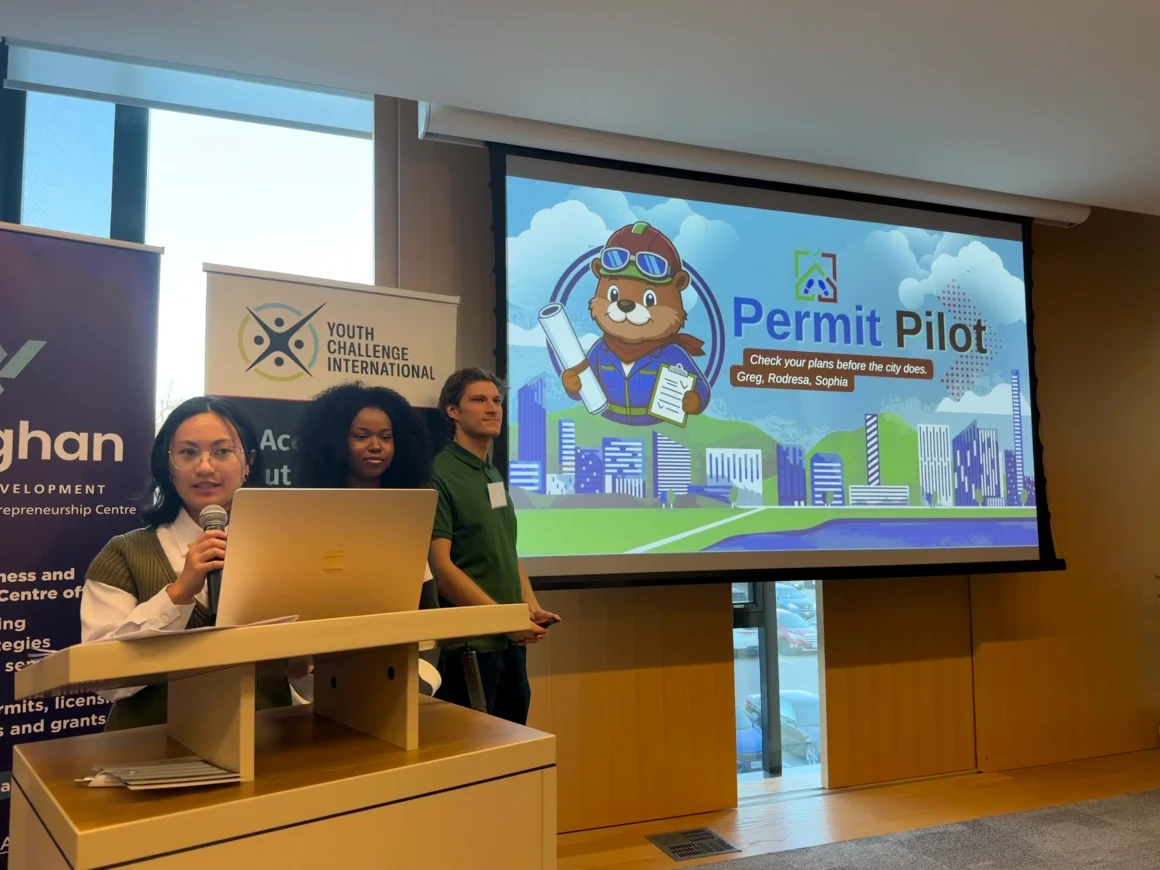
Their research explains why. In Vaughan, every mandatory document must be uploaded to the Online Permitting Portal before an application can go in. The team said a first-time homeowner can spend 2 to 3 days figuring out which forms they need, wait 30 minutes on hold for a basic answer and lose up to 6 months to a simple formatting mistake. City staff, meanwhile, answer the same questions and send incomplete files back.
PermitPilot connects 3 steps behind a mascot named Scout:
- Learn what you need.
Scout explains the jargon and makes a short tutorial for the homeowner’s project. - Sketch the project.
Scout turns the dimensions and location into a simple 2D sketch. The safeguard there is smart: a simple deck gets a green “sketch it yourself” flag, since Vaughan lets property owners prepare their own drawings for some projects, while a basement apartment gets flagged for a licensed designer. - Check the files.
A preflight checker scans the PDF package in seconds for missing forms, blocked approval stamp areas and badly named files. In the live demo, it caught a missing designer information form.
The City already offers a Building Standards Digital Assistant, an AI chatbot that answers questions. PermitPilot goes further: it scopes the project, sketches it and checks the files before anyone at the City sees them.
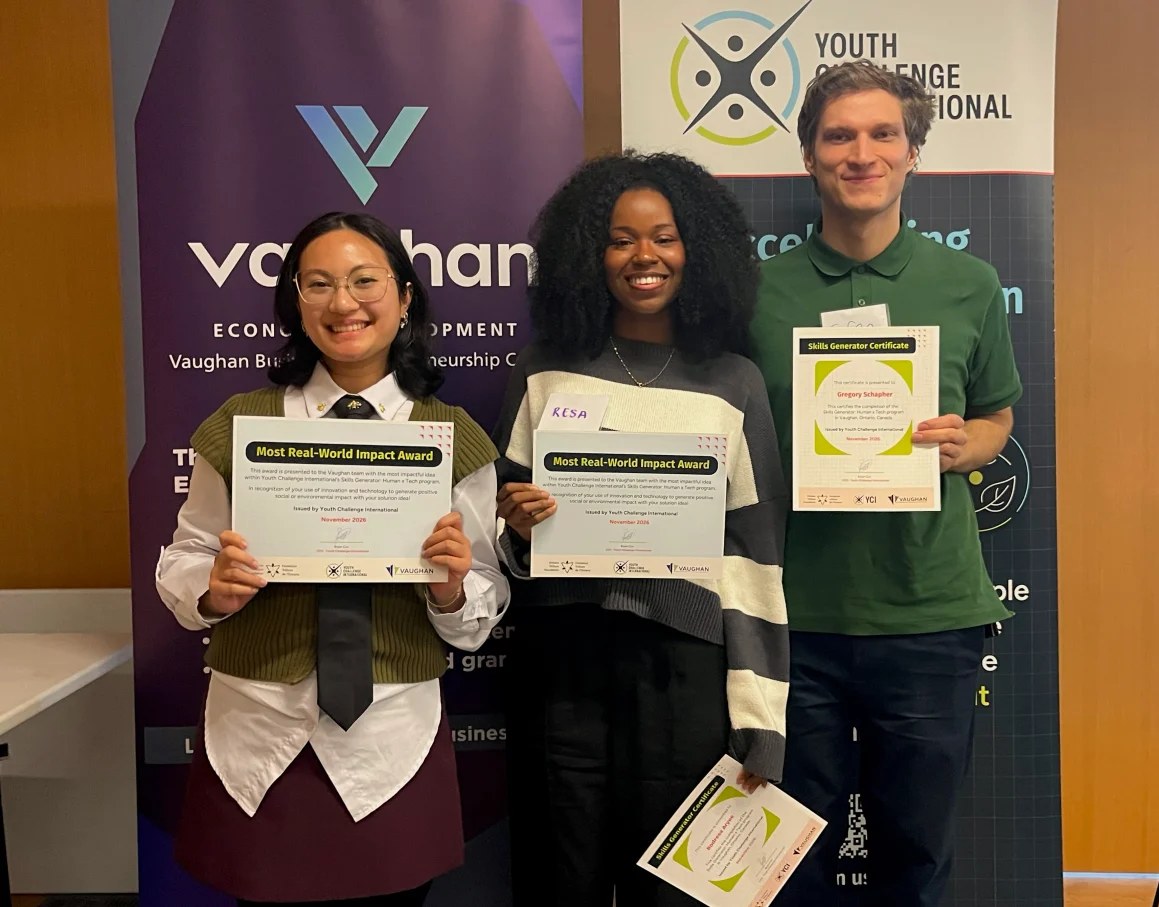
A judge said the team now knew the permit process better than she did. The open question was price, and a judge pushed them toward a subscription model that could work in more than one city.
Vaughan Local: helping Vaughan shoppers shop local
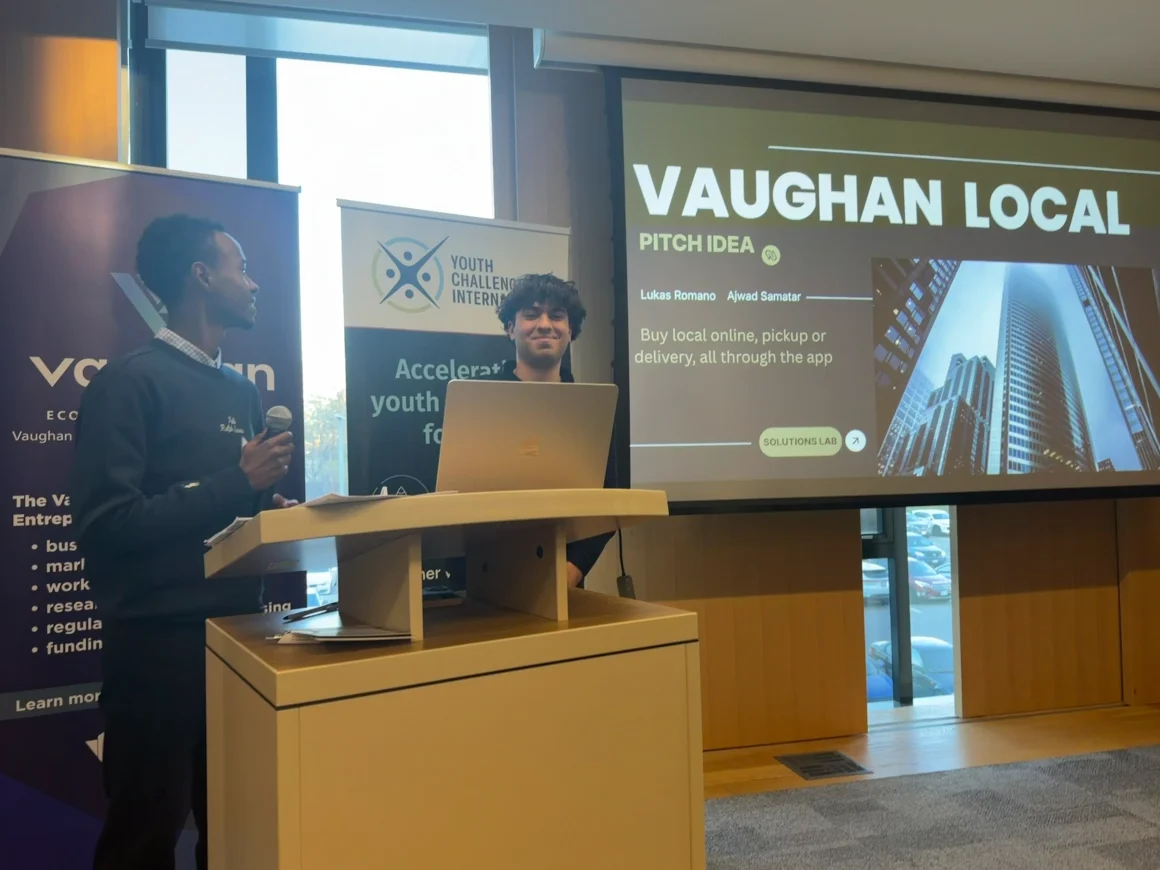
Vaughan Local team took on the City’s economic development challenge: how do you help local businesses get found? Vaughan has 19,700 businesses, and more than 86% are small enterprises. Nationally, the Canadian Federation of Independent Business (CFIB) found that 92% of small businesses use digital tools but only 10% have fully integrated them, held back by cost, time and digital skills.
The sharpest stat in the pitch came from CFIB’s survey of 2,478 owners: 78% have a website, but only about a third of those use it to sell directly. Shoppers want to help: in a 2022 CFIB poll, 86% of Canadians said supporting small businesses matters, but only 66% make the effort.
Vaughan Local puts restaurants, shops and services like barbers on one app for pickup, delivery and booking. Businesses can list for free or pay for a newsletter spot and a “shopfront” page where owners tell their own story. Frequent shoppers earn rewards.
When a judge asked how they’d get busy owners to keep profiles current, the team named a free trial and AI builders like Base44 to keep costs low. Barbershop booking was the judges’ favorite feature.
SmartSense: AI that makes intersections safer
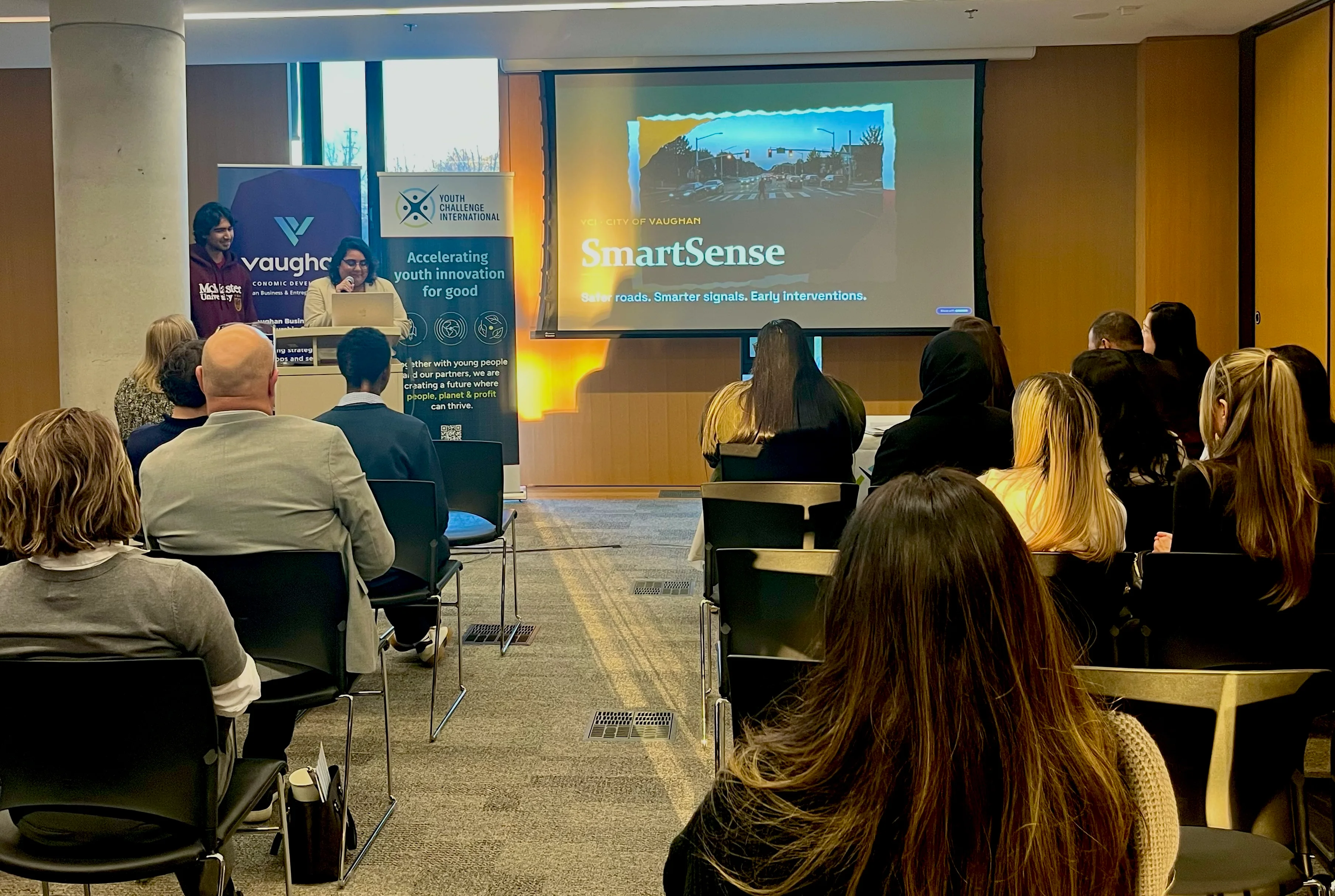
The last team opened with a quiz: how many collisions did Vaughan see from 2021 to 2025? Someone shouted 1,000. The team’s figure was 484, nearly 2 a week.
SmartSense combines sensors, cameras, radar and AI at intersections. It studies near misses (crashes that almost happened) to find their causes and adjusts signal timing based on real queues, so 10 cars don’t sit at a red light while the cross street is empty. Drivers see their speed and the time to the next intersection, and drivers who make a bad left turn get told what went wrong. The design principle: inform people before you fine them.
The team designed SmartSense to support Vaughan’s MoveSmart Mobility Management Strategy and York Region’s Vision Zero Traveller Safety Plan, with a human operator able to overrule the AI.
The team was upfront about cost (about $50,000 per intersection). A judge offered an adoption angle: insurers already reward drivers who share driving data, so a discount could make the alerts something people want.
What’s next for Skills Generator and the teams
YCI plans to extend the Skills Generator model across York Region. That means more young people in York Region could get the same seat at City Hall.
The teams have their own next steps: PermitPilot wants to test its full flow with first-time homeowners and refine Scout’s checklists with the City’s building inspectors.
The other teams have plans of their own, from ParkGo’s 15-structure pilot to SmartSense’s first school-zone test. Whatever the City decides, they’re all leaving with more than a pitch deck.
These young participants got a real problem from the City of Vaughan, then stood up in City Hall and pitched how to solve it. Some of them will start companies. Some will end up working for cities. Wherever they land, they’ll know to start with the problem first, and that habit will take them far.