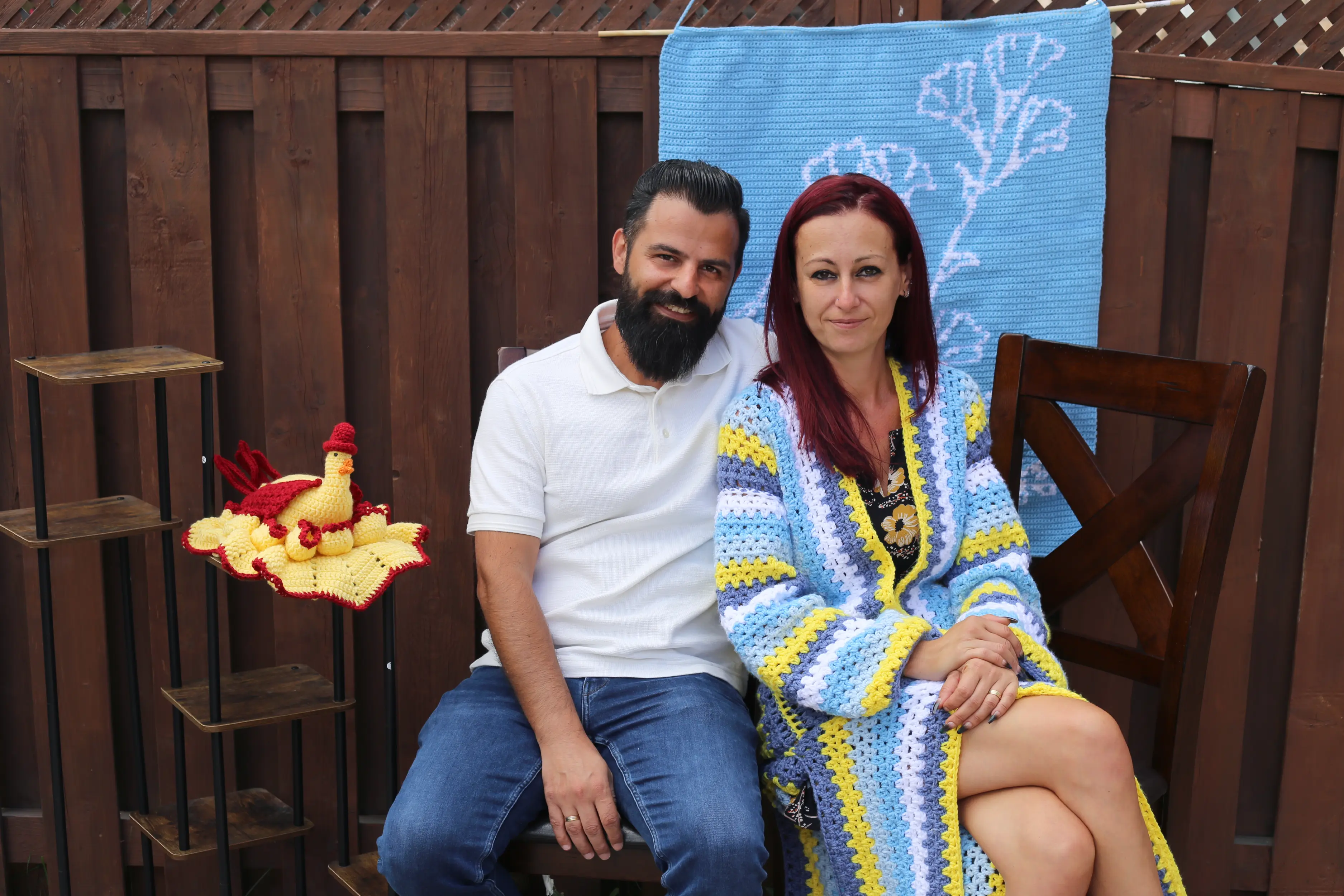
Written by Lidia Vijga
A crochet hobby turned into a real business the moment Fares, a corporate dad who hadn’t written code in 20 years, decided to fix the broken patterns his wife kept fighting. He never wrote the code himself; he ran AI agents like a team of employees and had CrochetAI Studio live in 5 months. That path is now open to any founder who’s been sitting on an idea.
Fares has spent 20 years at a big tech company, and he’s still there full-time today. He’s a technologist by training and an engineer at heart, but he never wrote a line of code in all that time; building was somebody else’s job. So when he opened ChatGPT on a flight to Mexico and typed a question he’d never thought to ask, he wasn’t planning to become a founder in his spare time.
He just wanted to know one thing:
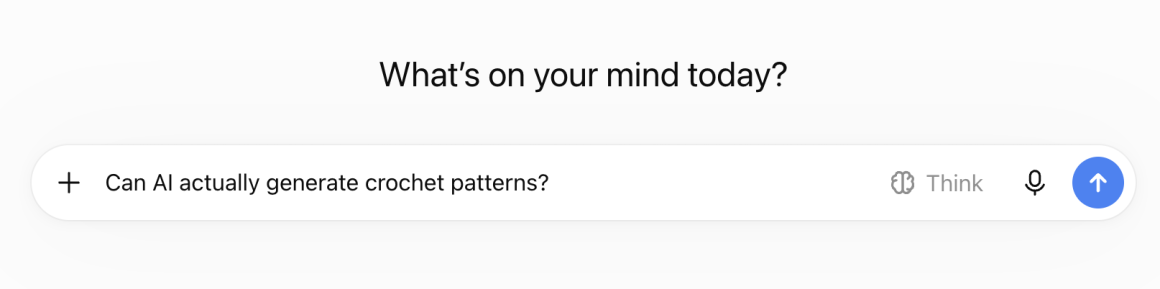
The answer came back yes, with a catch. People were already doing it, but the patterns were full of errors. That gap was the whole opportunity.
5 months later, the CrochetAI app was live in the App Store, built almost entirely by a man who directs AI the way he used to direct engineering teams. He built it for one person he loves, which is a big part of why it works.
The person he built it for
Raluca, Fares’s wife, picked up crochet during COVID. What started as a lockdown hobby turned into a craft she got serious about. She found patterns online, bought some, joined the Facebook and Instagram groups, and eventually became a pattern tester, which is a real job inside a real economy. Pattern designers build custom patterns and need people to test them before release.
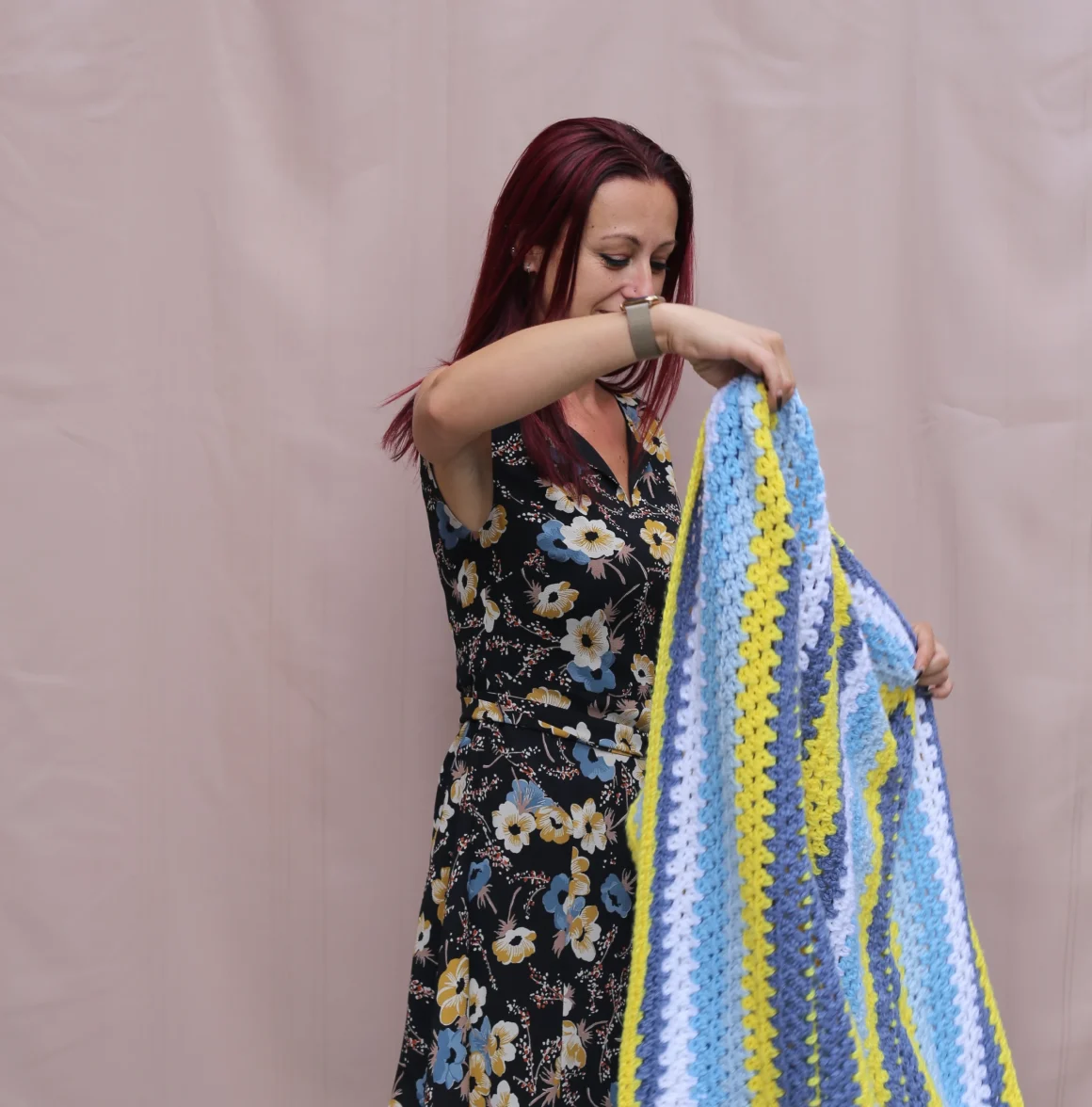
For years Fares watched Raluca from across the room without acting on it: a lot of those patterns were broken.
- The stitch math didn’t add up.
- Instructions went missing.
- Materials lists were incomplete.
Raluca would sit down with a hook and yarn, follow the steps, and end up with something that wasn’t what the pattern promised. It frustrated her for years, and Fares stayed out of it.
That changed in 2024, when the wave of people building with AI got too big to ignore. Everyone around him was building, and vibe coding became the thing everyone was suddenly trying. Fares wasn’t in it at all.
Then came the flight to Mexico, and the answer to his one question pointed straight at the problem he’d watched at home for years.

How CrochetAI makes AI crochet patterns that actually work
Fares did what 20 years in tech had taught him to do before building anything: he researched. He used AI to pressure-test the idea itself.
- Is this viable?
- Is there a market?
- Who are the competitors
- How would we be different?
The answer that came back set the whole product direction.
From a prompt to a verified pattern
If you let AI just generate the pattern, you’ve built a user interface on top of ChatGPT, and you’ve inherited all its errors.
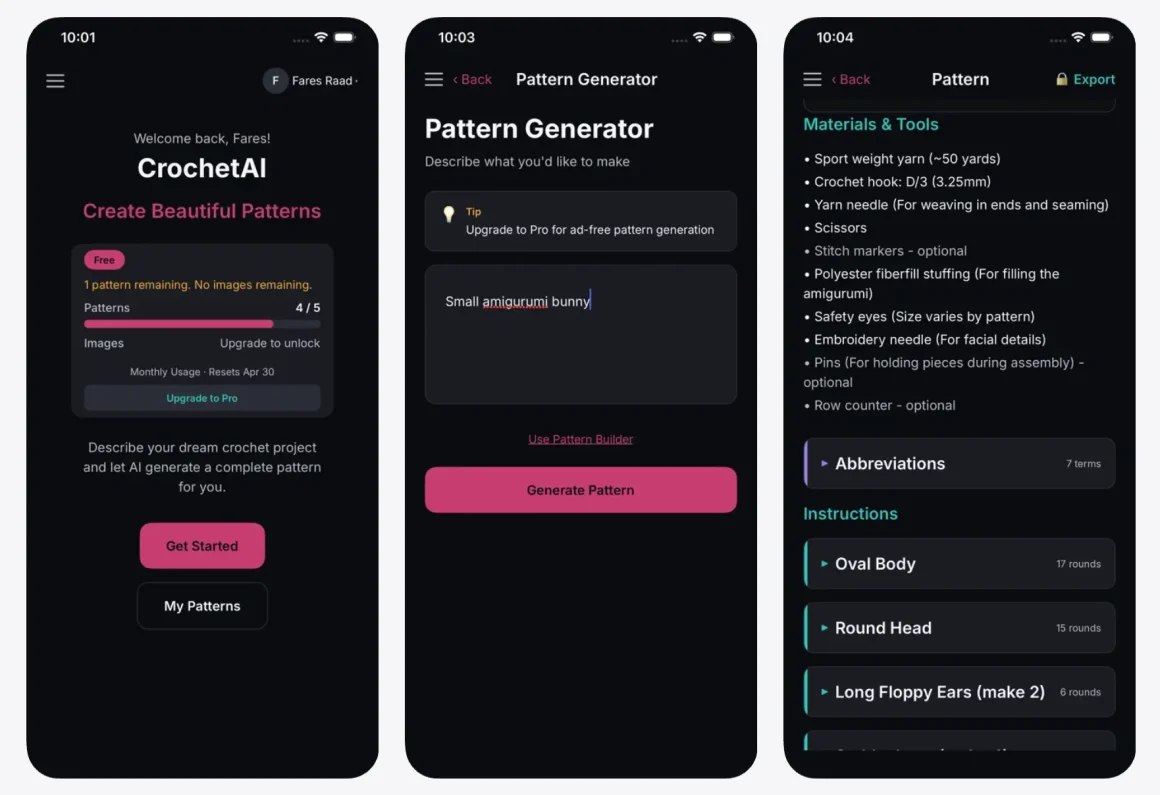
So Fares used AI only where it earned its place. A crocheter types what they want, “a chunky beanie with a pompom,” or a small bunny, or the little chicken Raluca wanted to make.
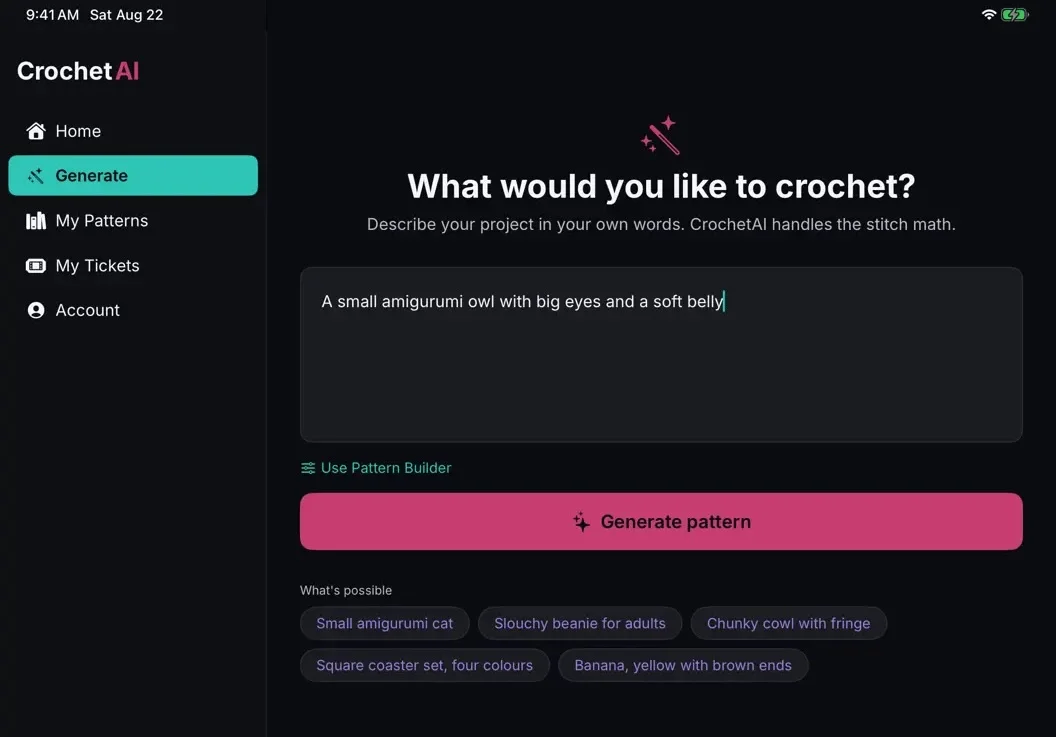
From there, the system runs a relay:
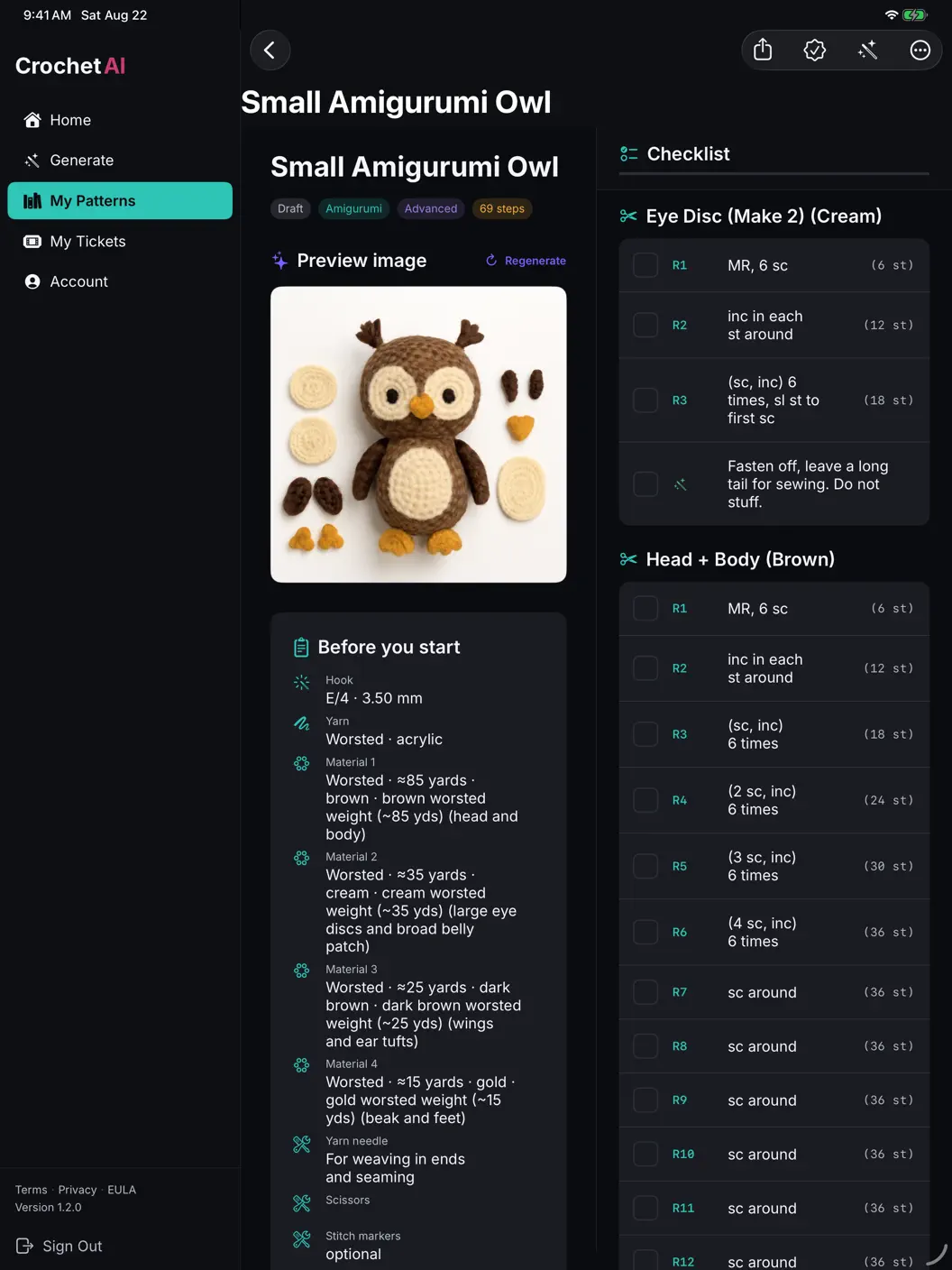
The AI reads the request and infers intent, then converts it into a body plan. A dog becomes a head, two arms, two legs, a tail. A deterministic crochet math engine, not the language model, handles the actual stitch counts, so the numbers don’t hallucinate. When it says a row takes 36 stitches, it’s 36 stitches of a named type.
Then two critic agents check the work before anyone sees it.
The first is technical: does the math add up, do the stitch counts and materials hold, does it clear the guardrails Fares built in.
The second is artistic, an agent whose whole role is “I am a crochet artist.” Can a human actually crochet this, and will the finished object be what the user asked for? Only after both pass does the pattern render in the app.
Why a chatbot alone won’t cut it
That verification step is the whole difference. Ask ChatGPT or Claude directly and you’ll get a pattern, but it’s unverified. You won’t know if it works until you’ve spent hours and yarn finding out it doesn’t.
CrochetAI’s promise, in the App Store listing, is simple:
“Crochet Patterns that actually work, no more guessing stitch counts or fixing broken patterns mid-project.”
Every pattern passes an automated quality gate before it reaches you.
Built for real crocheters, in two languages
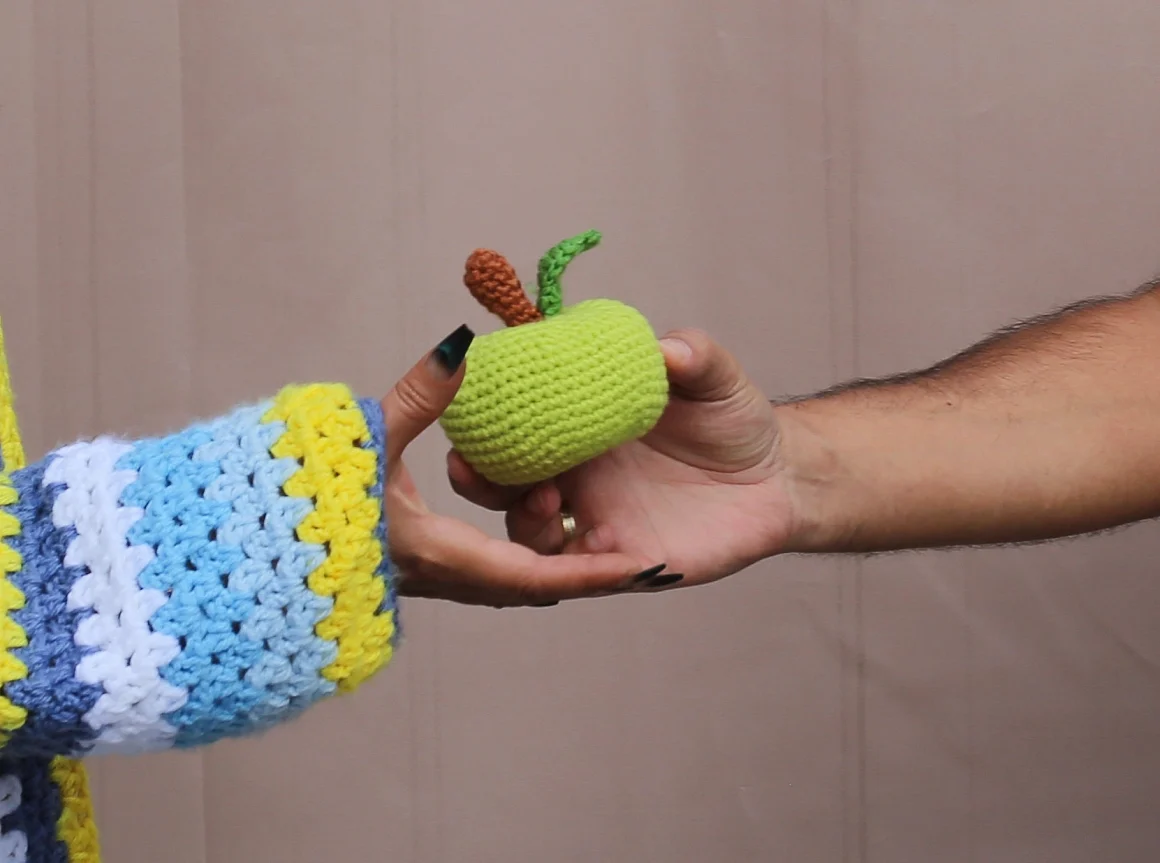
Fares made a few deliberate calls that tell you he was thinking like an operator. He adopted North American crochet terminology (single crochet, double crochet, half double), the language his users actually speak, which is also why the app isn’t in Europe yet: the terminology there is different, and shipping it wrong is worse than not shipping it.
And because Crocheh Solutions Inc. is a Canadian company, everything available to an English user is available in French too, patterns and terminology included.
Fares puts the US crochet market at around $40 million a year. It’s a focused wedge, and he’s building it well before he widens it.
How Fares built the CrochetAI app by managing AI agents
Fares started the work around January 15 and went live on the App Store in May, roughly 5 months, on iPhone first, with the iPad app following and Android in progress.
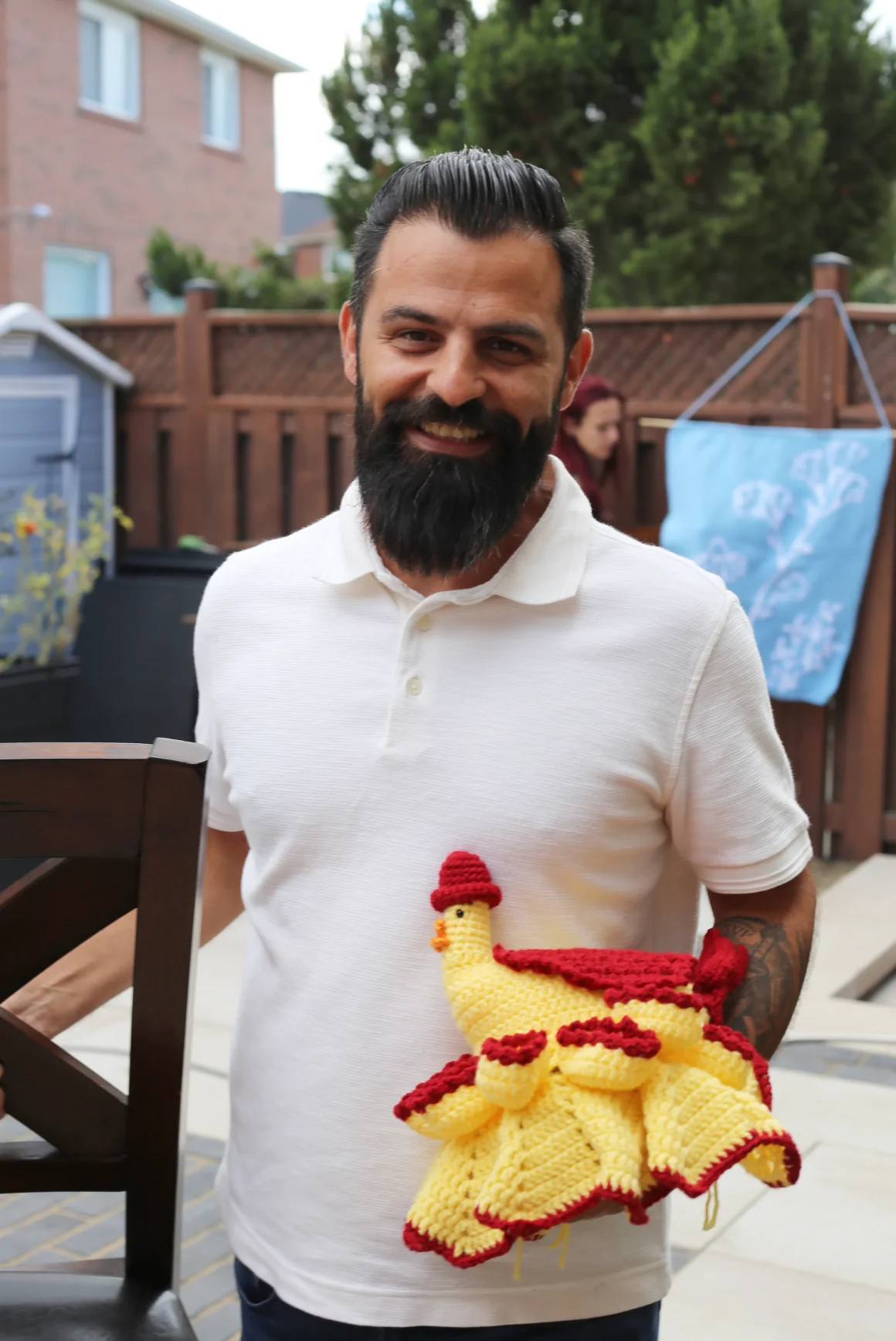
He wasn’t writing production code by hand. He used tools like Claude and Cursor to build, and by his own estimate the app runs to nearly half a million lines of code. 5 years ago, he says, that’s 5 full-time engineers working for a year. He did it for a fraction of the cost.
The mental model he used is the one worth stealing. He didn’t think of AI as a coding assistant. He thought of it as a team, and himself as the boss.
“You’re the boss, and your AI agents are your employees,” is how he describes it.
He has agents that act as project managers, agents that advise, agents that write code, agents that do nothing but test, and a chief marketing officer agent that tells him how to take this to market.
Each one has a defined role. They talk to each other and collaborate. What his career actually gave him wasn’t syntax, it was the ability to manage a product, run the research, size the market, and direct a team toward a shippable thing. The team just happens to be made of agents now.
This is the reframe that matters for anyone reading from inside a corporate job. The blocker was never the idea. Fares had ideas for years. The blocker was that every idea died at the same sentence: I’d need to hire engineers, I’d need to hire people, and the cost made it a non-starter. That doesn’t apply anymore.
Fares’s playbook for building your first app with AI
Fares’s advice for other corporate people, everyone sitting on an idea and convinced they can’t start, is specific enough to act on this week.
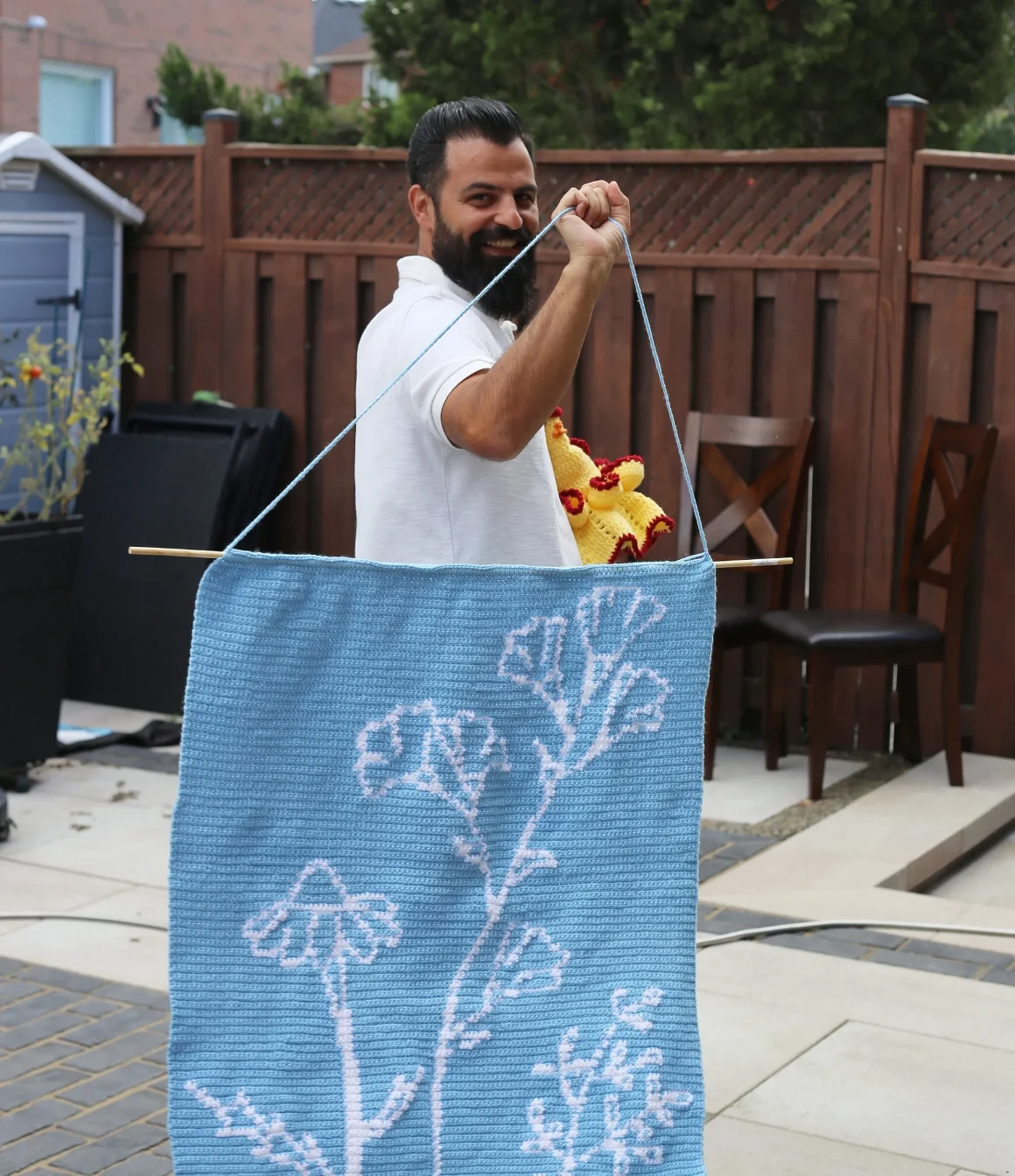
1. Start with the idea, not the feasibility.
The thing that kept him stuck was getting hung up on doability, on cost, on who he’d have to hire. Find the idea first and refuse to kill it at the feasibility step, because the feasibility math has changed underneath you.
2. Use AI only where it earns its place.
The reason CrochetAI works is that Fares didn’t hand the whole job to a language model. He let AI infer intent and critique output, and he built a deterministic engine for the part that has to be exactly right. Decide which parts of your product can be “close enough” and which parts have to be verified, and architect for that difference.
3. Treat the agents as employees, and act like the boss.
Give each agent a real role, project manager, engineer, tester, marketer, and let them collaborate. Your job is direction and judgment, the same job good operators have always had. The years of experience you think are irrelevant because you can’t code are exactly what makes you a good boss of this team.
4. Prototype in a day, then put it in front of real people.
Fares built a working prototype in hours and showed it to users, including an early version of his website. He changed direction in a single day based on the feedback he got. Research that used to take weeks can be fast-tracked. Building that used to be 90% of the work is now the last and fastest step, so spend your time on design, on non-functional requirements, and on any regulations your idea has to clear.
5. Build it for someone you actually care about.
Fares had a real problem, felt by a real person he loves, and 20 years of domain-adjacent experience to apply to it. That combination is what turned a plane-ride question into a company. If you solve a problem you’ve watched someone struggle with, you’ll know when the output is wrong even when the metrics say it’s fine.
A birthday gift that turned into a company

Fares timed the first App Store release to land before Raluca’s birthday on May 23. He shipped on the 20th. First the gift, then the company.
Ask him whether working together changed their relationship and he’ll tell you it’s as good as it’s ever been. He got pulled into her world, learned enough of the craft to look at a work in progress and tell that it’s not going to end up a proper sphere.
He still can’t crochet a stitch himself. She now knows a little more about the technical side than she used to, whether or not all of it sticks. They can meet each other in the middle, which is more than most couples building a business together manage.
The wall is gone. What will you build?
If you look past the crochet, this is a story about a barrier that just fell for everyone. For most of Fares’s career, execution was the wall. You had the idea, and then you needed money and engineers and a year, and the wall won. That wall is gone. What’s left is the part that was always the hard, human part: finding a problem worth solving, and caring enough to solve it well.