Written by Lidia Vijga
If you’re building AgeTech products for older adults, people living with dementia or the people who care for them, CABHI’s Ignite program will put up to $150,000 behind your prototype without taking a slice of your company. Applications close November 30, 2026, and you can qualify even if you’re pre-revenue or haven’t raised a round yet.
Up to $150,000 in funding that doesn’t cost you any equity is on the table for Canadian teams building in aging and brain health. You just need to apply to Ignite, the early-stage program from the Centre for Aging + Brain Health Innovation (CABHI), by November 30.
Ignite gives you $50,000 to $150,000 CAD in non-dilutive funding, plus CABHI’s support services and the Ignite Learning Series. You also get mentorship and connections to Canada’s aging and dementia care sector.
If this is your first time hearing about Ignit, don’t let the short window scare you off. Applications are open now, and the timeline suits early-stage teams well: you hear back in January and start March 1, 2027.
What the AgeTech funding covers
Ignite funds the early work of turning an idea into a product: R&D, prototype development, proof-of-concept testing, usability studies and validation. If your idea works on paper and now needs to prove itself with real users, you’re at the right stage.
You’ll need to match CABHI’s funding 1:1. The match can be cash, in-kind support or a mix of both, so you don’t need $150,000 sitting in the bank. Check the program package for what counts as in-kind before you build your budget.
Who can apply for AgeTech funding through Ignite

Ignite has 2 tracks: one for startups and one for healthcare and research teams.
- Early-stage Canadian companies.
You need to be incorporated in Canada (federally or provincially), independent of any parent company, with a lead applicant who has signing authority. You also need to have raised under $2M, earned under $250K in annual revenue and a valuation no higher than $6M. If you’ve never had a formal valuation through a SAFE, convertible note or priced round, you count as “Pre-Valuation” and you’re eligible. - Healthcare and research teams.
If you’re faculty, a postdoc, a research scientist or a point-of-care worker (physician, nurse, PSW, clinical manager) at an accredited Canadian institution or recognized healthcare organization, you can apply too. You’ll need to control the IP (and have filed or plan to file for protection), have received under $2M toward that IP, and sit at a Technology Readiness Level of 2 to 6. So if you’re a nurse or PSW with an idea for a problem you see on every shift, you can apply.
Both tracks need the equivalent of at least 1 full-time person who has worked on the project in the past 6 months and will stay dedicated to it for the full program.
The AgeTech areas CABHI wants to fund
CABHI backs innovations that address 6 priority areas, with a particular focus on dementia:
- Aging at home
- Caregiver support
- Care coordination and Navigation
- Cognitive and Mental health
- Financial health and Wellness
- Women’s brain health and FemTech.
Cognitive health and aging at home are natural fits, and strong teams there should apply. So should teams working on problems that get less attention, like helping families find their way through the care system, protecting older adults’ finances or closing the research gap in women’s brain health.
CABHI is based in Toronto, but Ignite is open to teams across Canada, including Saskatchewan, Manitoba, Nova Scotia, New Brunswick, PEI, Yukon, the Northwest Territories and Nunavut. If you’re building where care services are stretched thin, you’ve likely seen problems up close that others miss.
What past Ignite recipients built
A few past recipients show where Ignite can lead.
Amical
Amical started when co-founder Tony Aubé watched his grandmother, living with Alzheimer’s, feel lonely even though she had regular visitors, because she’d forget they’d come (Noovo Info). The Quebec City startup now delivers an AI companion through a classic phone, with no screen or app to learn.
Amical fast-tracked from Ignite into CABHI’s Fuel program and was named one of 10 winners of Manulife and the World Economic Forum UpLink’s Shaping Canada’s Longevity Advantage challenge. Aubé credits the money for helping the team move fast, but he singles out what came with it: “the mentorship, the resources, the support from the CABHI team.”
Epiloid Biotechnologies
Epiloid Biotechnologies grows 3D brain tissue in the lab so drug companies can test how new treatments for conditions like Parkinson’s and dementia might work before they ever reach patients. CABHI backed its Parkinson’s Disease Organoid Platform for Drug Development through Ignite, and the company has since moved up into CABHI’s Fuel program.
Bigger names followed. In March 2026, the Ontario Brain Institute picked an Epiloid project as one of 8 in its $640,000 investment in AI and brain health, this time looking at brain signals and genetic markers that could predict how people with epilepsy respond to drugs. That same month, Epiloid joined the second cohort of the Merck Digital Sciences Studio in Montréal, a 9-month accelerator where each of the 12 startups gets US$100,000 in funding and mentoring from Merck and Centech.
Dr. Ravi Prakash

On the research side, Dr. Ravi Prakash and Carleton University’s Organic Sensors and Devices Lab used Ignite to develop a device that detects Alzheimer’s biomarkers in blood and saliva, a cheaper and less invasive route to diagnosis. The lab has since spun off a company, H2OM. Prakash called CABHI’s Leap end-user engagement service “invaluable for creating market-disrupting new technologies.”
Faculty team at Royal Roads University
And at Royal Roads University, a faculty team received $50,000 in Ignite funding for Pathways to Cognitive Wellness, a 12-week dementia risk reduction program for adults 60 to 79 that combines lifestyle science with Indigenous wisdom and cultural safety.
Cogni
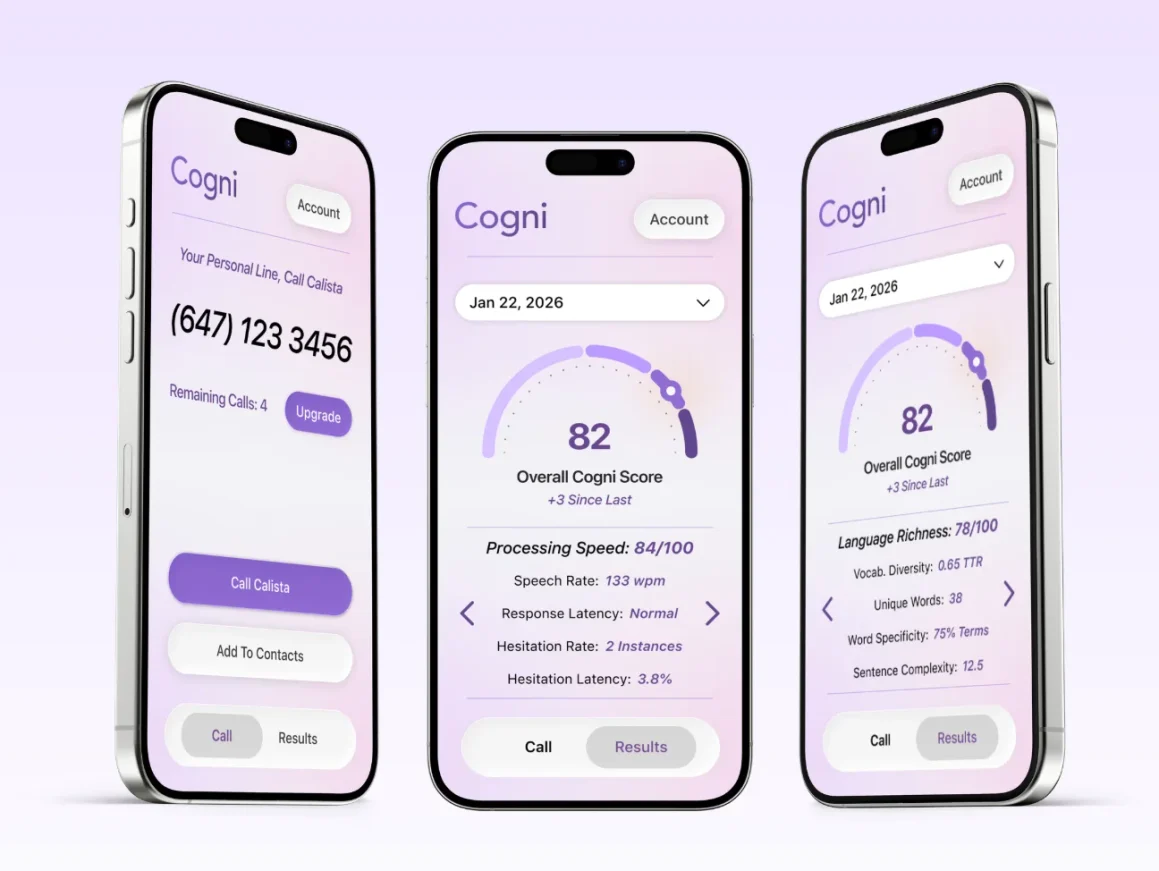
Cogni shows how Ignite works as a next step for student and recent-grad founders. The team moved up from CABHI’s NextGen program into the current Ignite cohort. Cogni offers remote cognitive monitoring for older adults: it analyzes a person’s voice during ordinary phone calls to pick up subtle signs of decline that might otherwise go unnoticed until the next doctor’s visit.
Displaid
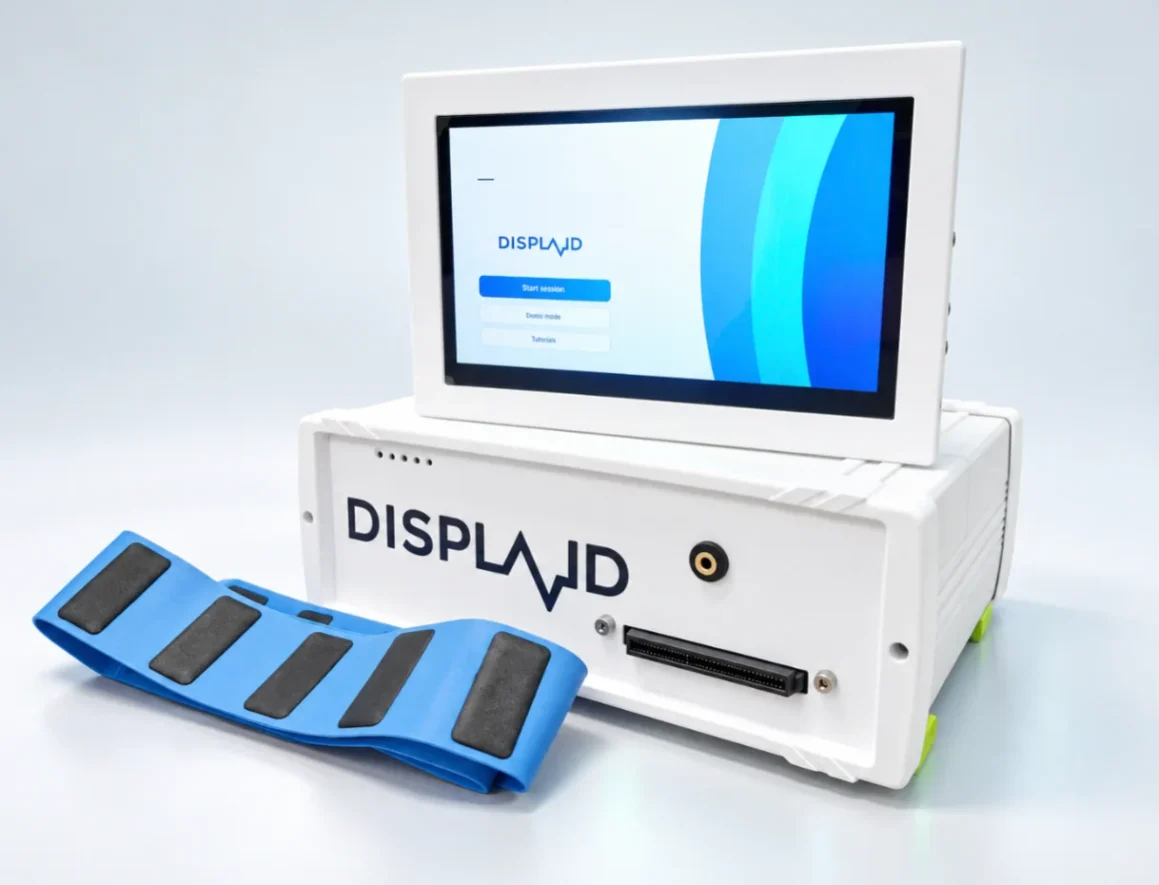
Displaid made the same jump from NextGen to Ignite. The company started in 2021 with electrical engineering students at Montréal’s École de Technologie Supérieure, and it’s now building an AI-enabled chest wearable that measures pulmonary artery pressure at home in under 2 minutes a day, without the implant that kind of reading usually needs.
It works through thoracic bioimpedance, which tracks how small electrical signals move through the chest. The brain health link is direct: when heart failure gets worse, it can cut oxygen to the brain, damage its smallest blood vessels and trigger delirium, so catching it early protects the brain too.
How to apply before November 30
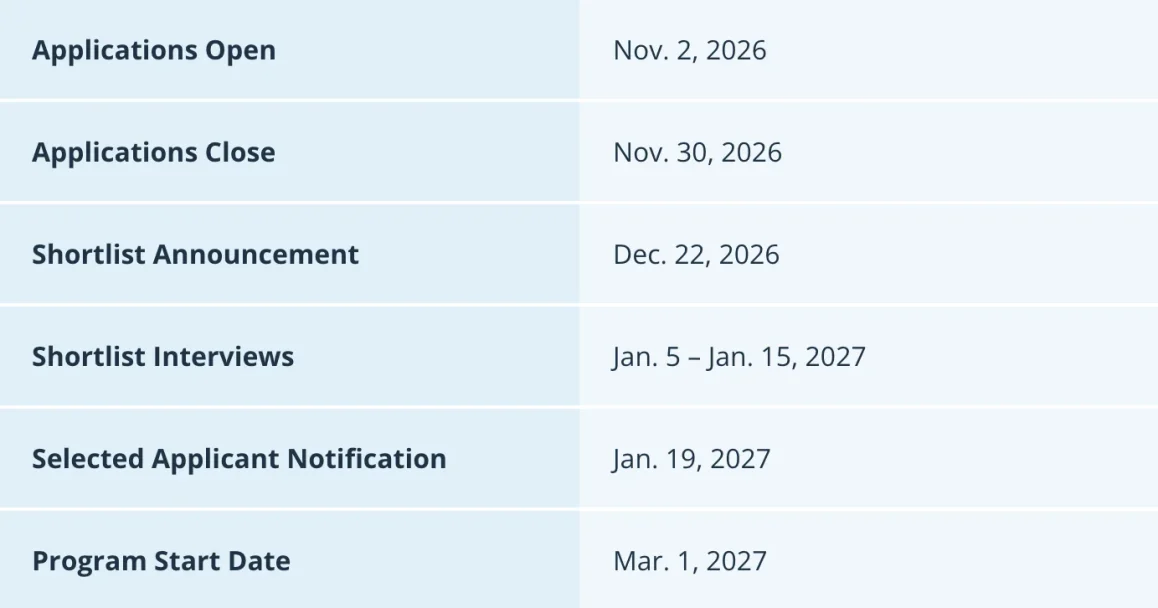
The dates to put in your calendar:
- Applications close: November 30, 2026, end of day Eastern
- Shortlist announced: December 22, 2026
- Shortlist interviews: January 5 to 15, 2027
- Selected applicants notified: January 19, 2027
- Program starts: March 1, 2027
Read the full eligibility details and apply at cabhi.com/ignite. If you’re unsure whether you qualify, email programs@cabhi.com before the deadline instead of guessing.
Older adults and their families need better tools, and the teams building them need early funding to prove their ideas work. If you have a prototype and a problem you’ve seen up close, put it in front of CABHI before November 30.