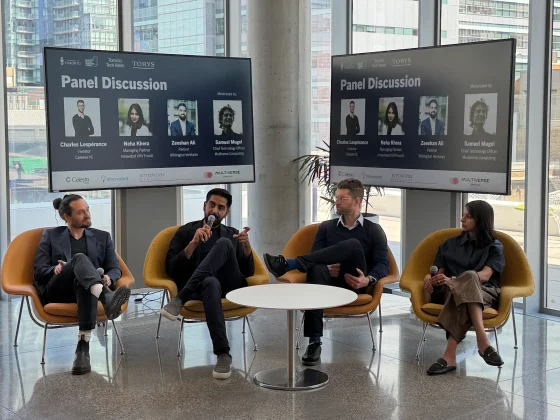
Content by Feyza Gulbent
Everyone keeps telling ambitious students to pack a bag and leave. We called the bluff, and we’re building real products from a city nobody put on the startup map.
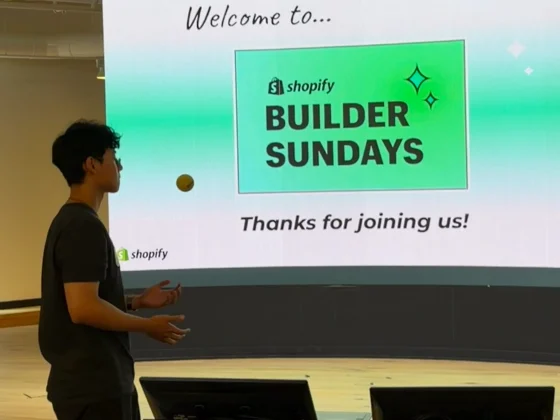
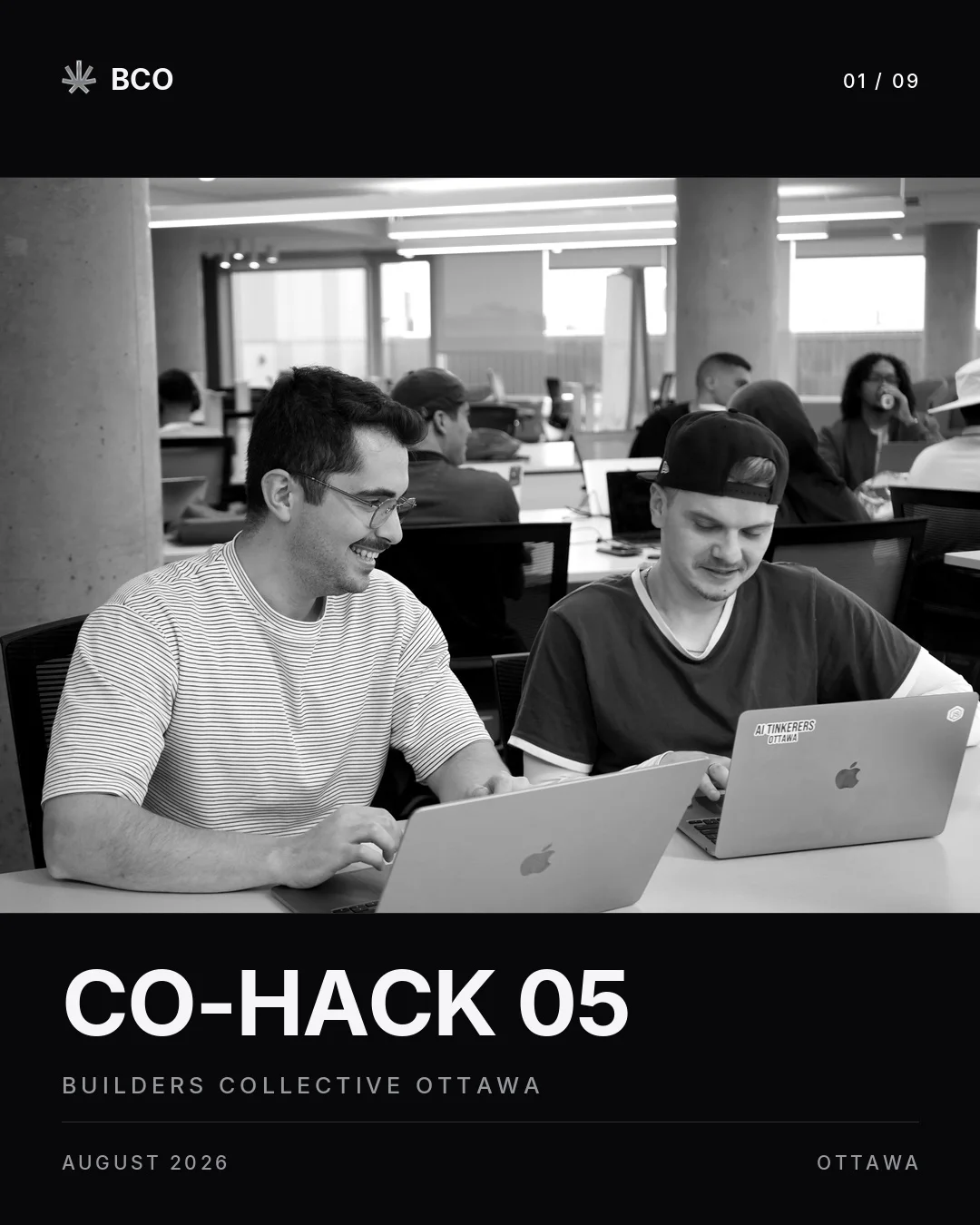
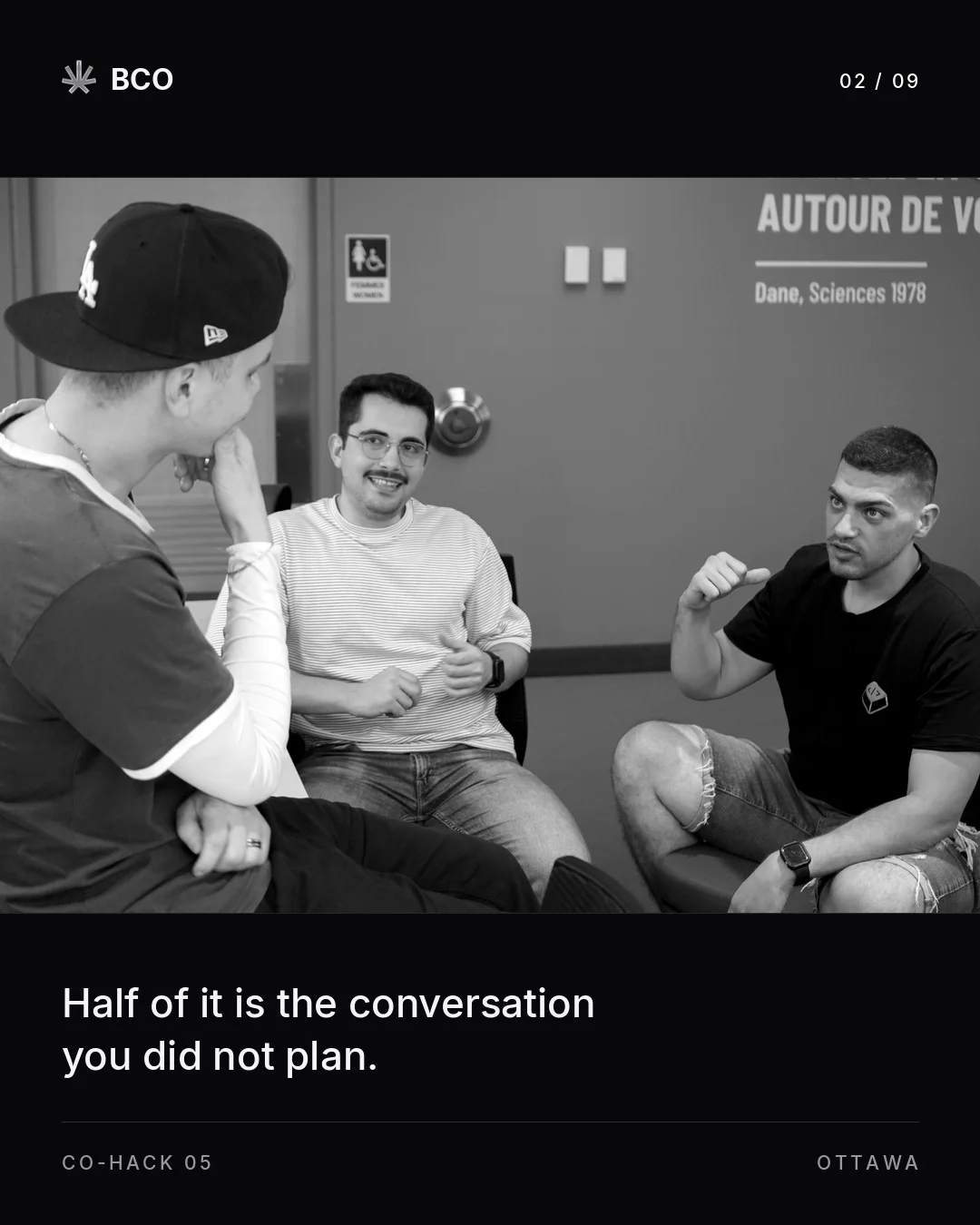
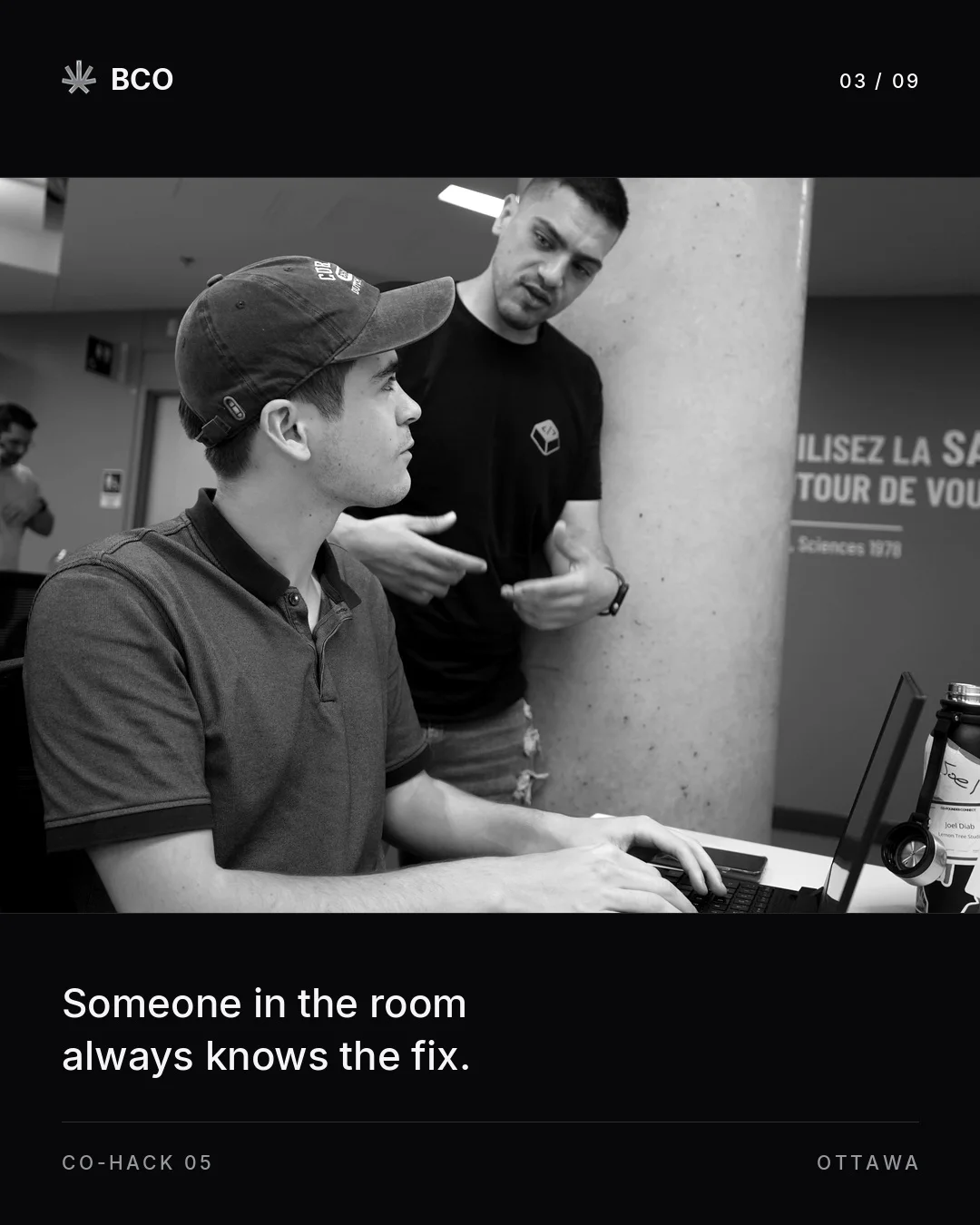
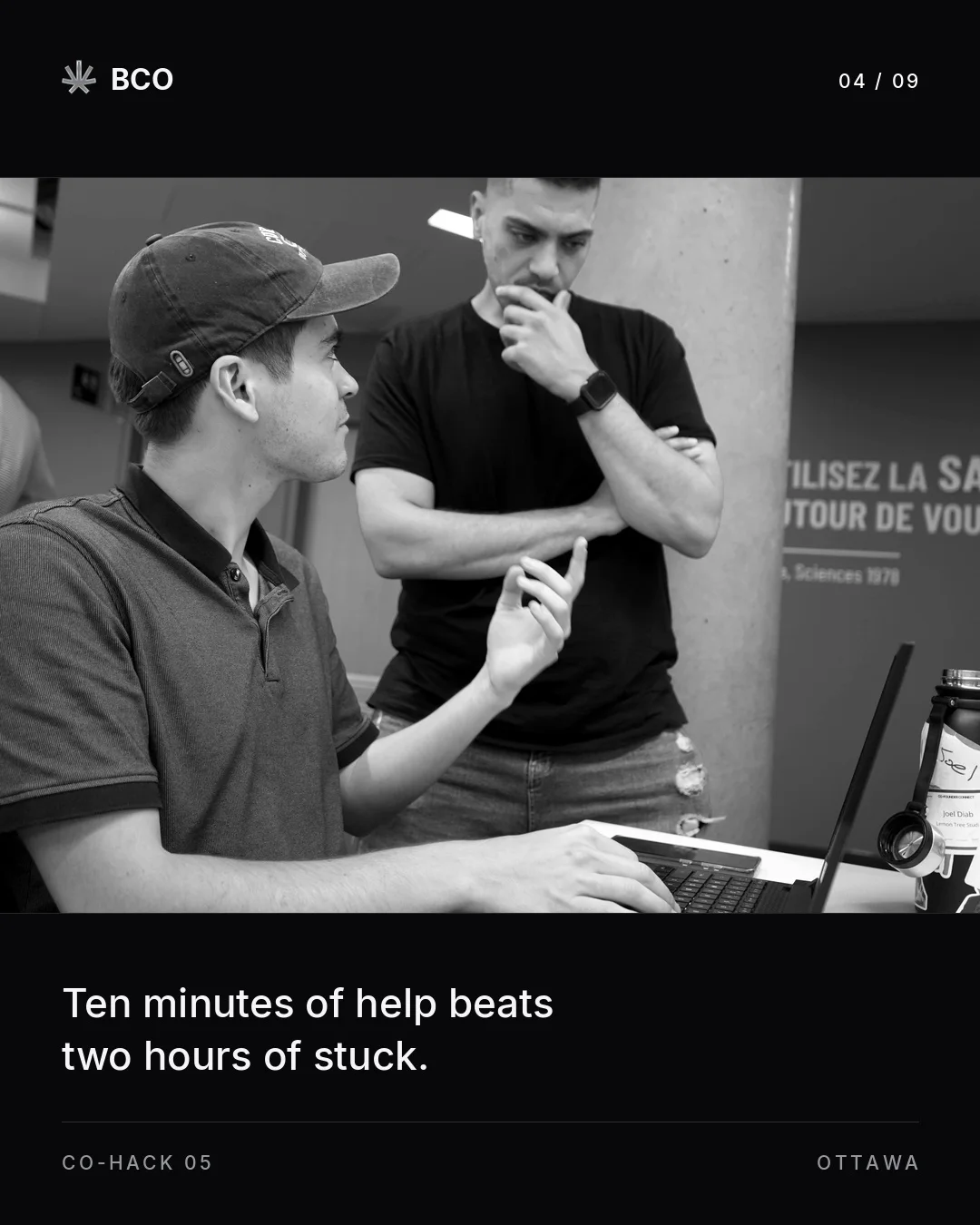
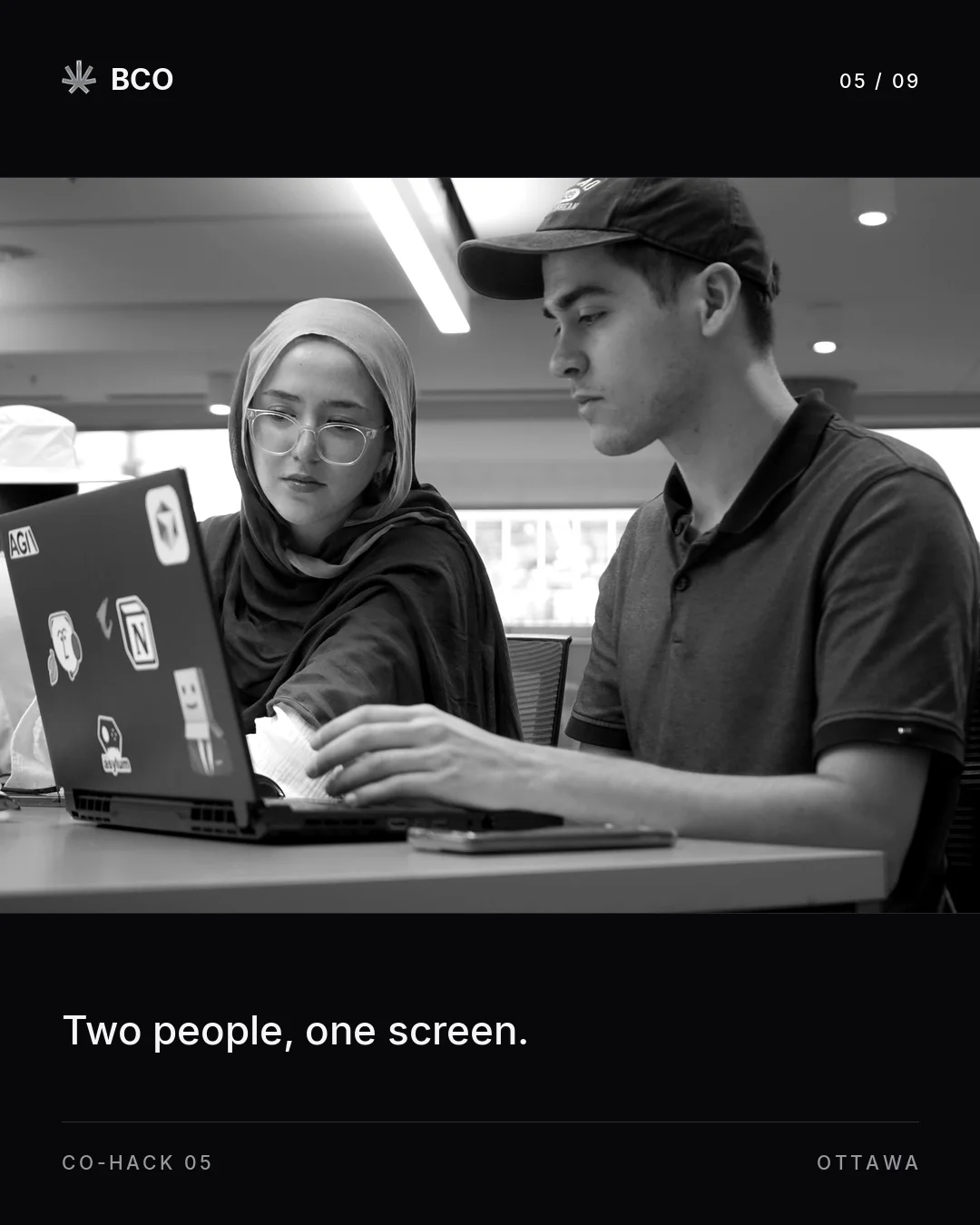
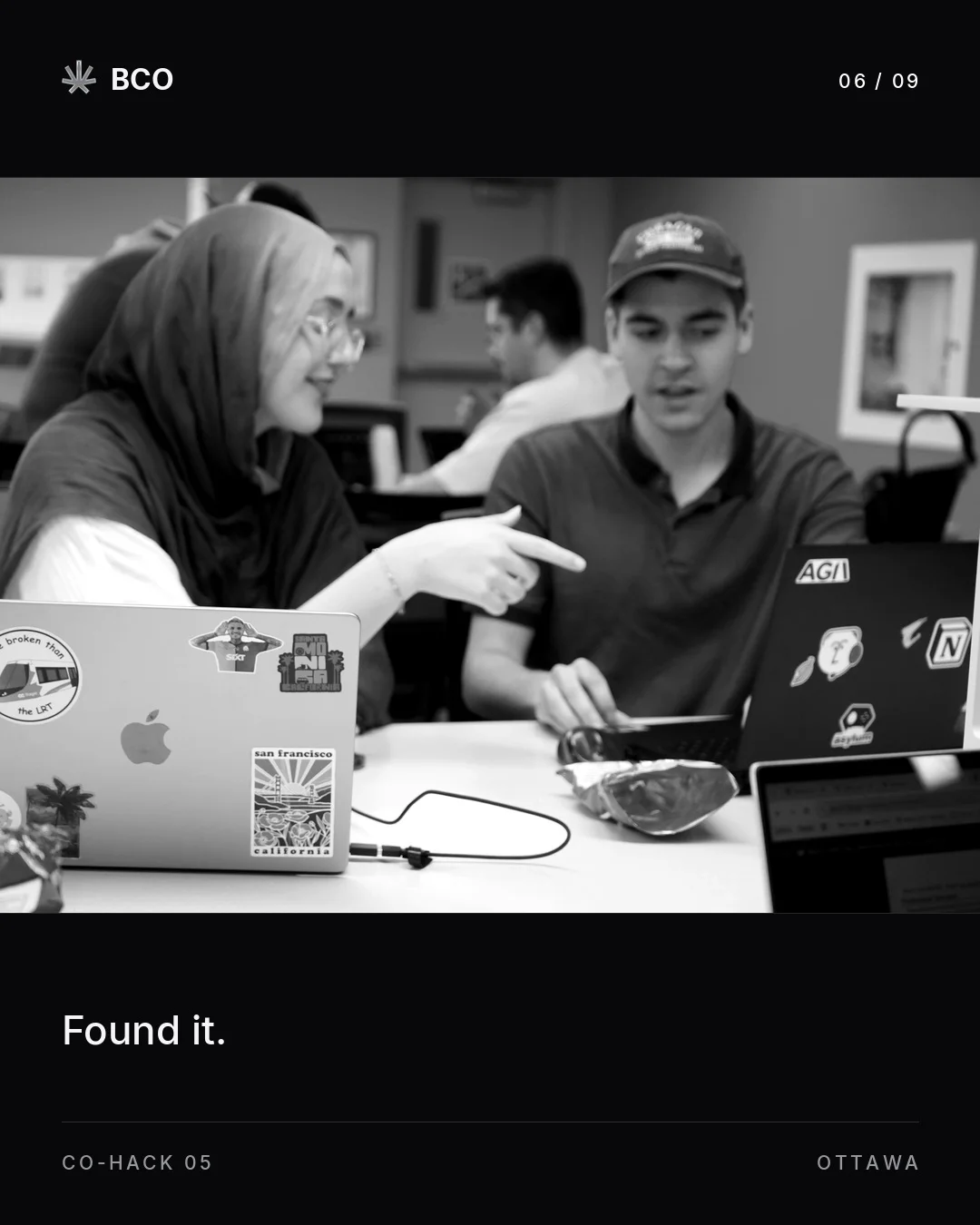
Somewhere in Ottawa tonight, a student is walking into a room with a half-finished idea and absolutely nothing to prove it. No co-founder. No funding. No clue what the first step is. They sit down next to a total stranger who is elbow-deep in their own project, flip open a laptop, and start building. Three hours later the thing is real in a way it wasn’t when they walked in. That is the entire event. We call it a co-hack, and it’s the engine room of Builders Collective, our community for “student founders, engineers, and designers who actually build.”
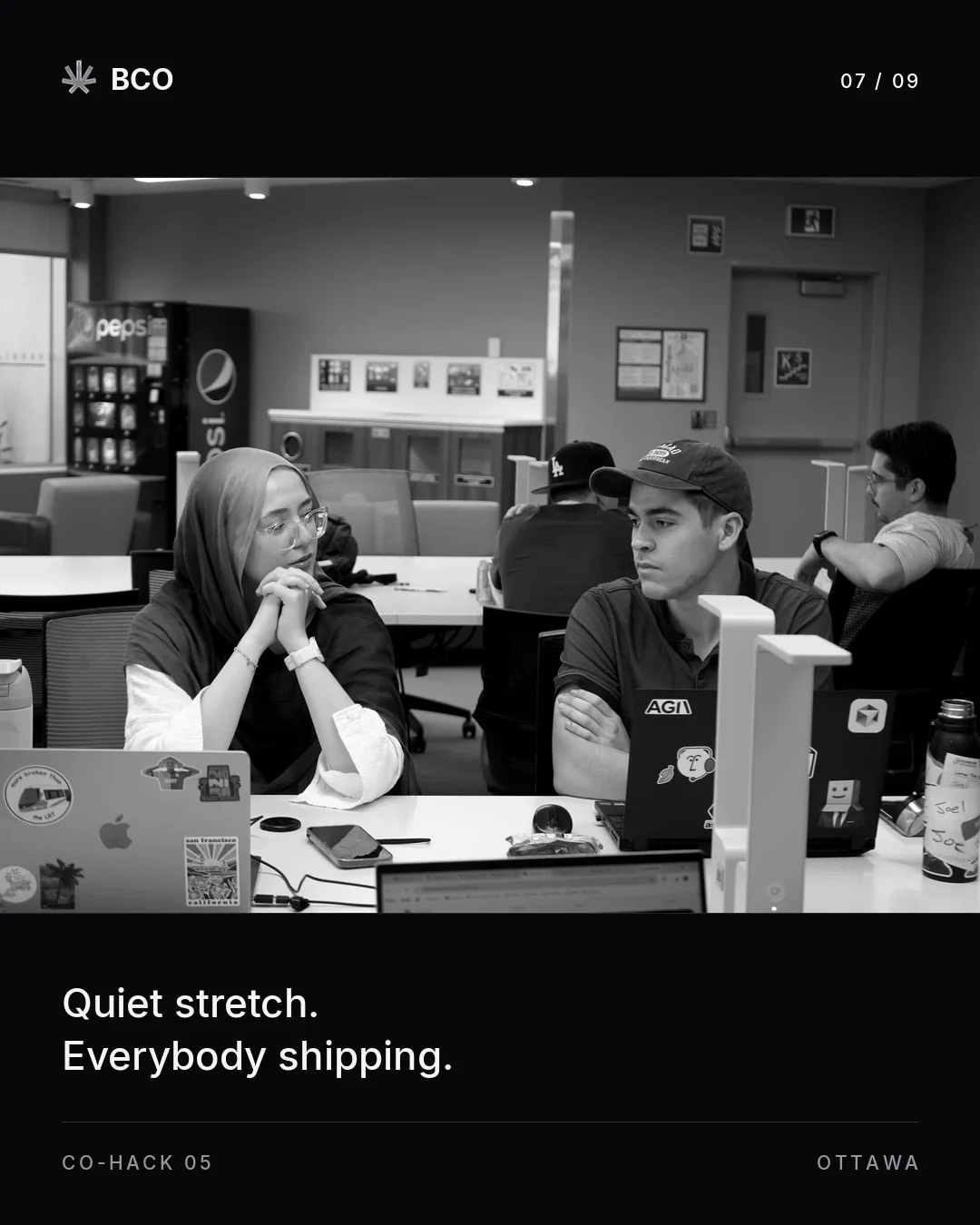
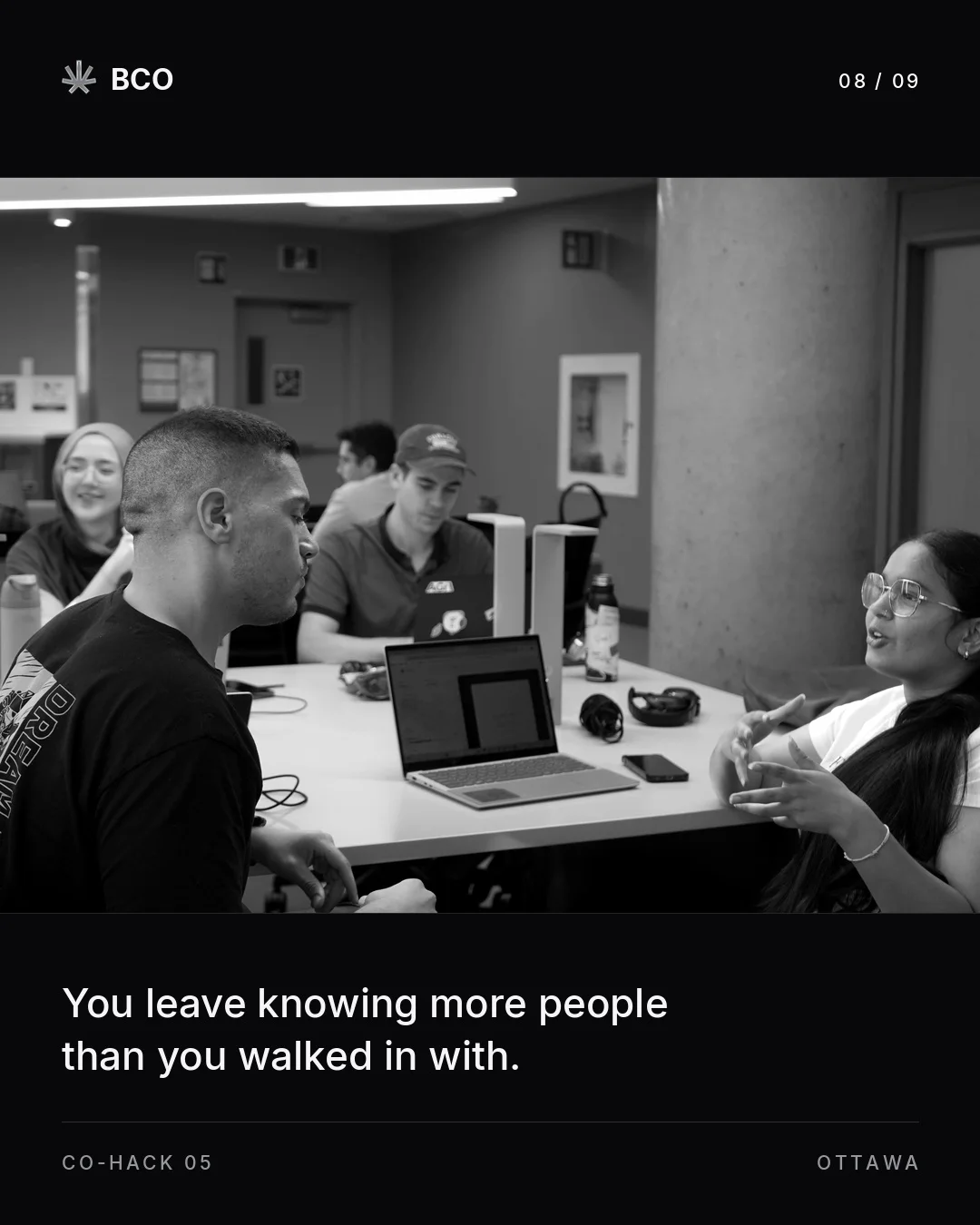
That phrase, “actually build,” is doing a lot of work. Half the tech world right now is tokenmaxxing, competing to burn the most AI tokens and climb internal usage leaderboards as if activity were the same thing as output. “Actually build” is the opposite instinct: put a real thing in front of real people. It’s also a reaction against a mindset that keeps talented people stuck for years, the belief that you need everything lined up before you begin. The right network. The right technical skills. The right co-founder. And, most stubbornly, the right city.
The advice you’re exhausted by
You know the line. If you’re serious about startups, you’ll eventually have to leave. Go to Toronto. Go to New York. Go to San Francisco. It gets handed to you like settled fact, usually by people who mean well and have never questioned it.
The annoying part is that it isn’t nonsense. Geography matters, and the numbers are brutal about it. Bay Area startups pulled in $90 billion in 2024, which was 57% of every venture dollar spent in the U.S. that year. And the money is clustering earlier and tighter: the Bay Area grabbed 45% of U.S. seed dollars in 2025, up from 33% the year before. We’re not denying any of that.
The trap is when an advantage becomes a requirement. “San Francisco might be the best place to scale this” is a strategic call you make later, with real information. “You can’t start a company until you’re in San Francisco” is just a story you tell yourself, one that keeps you stuck in planning for years, waiting on a plane ticket you can’t afford to give you permission you never needed in the first place.
The perfect city has never once built a startup on its own. You still need a foundation, a community, and a door into that world. Closing that gap, without asking anyone to move first, is the bet we’re making.
We built the room instead of leaving it
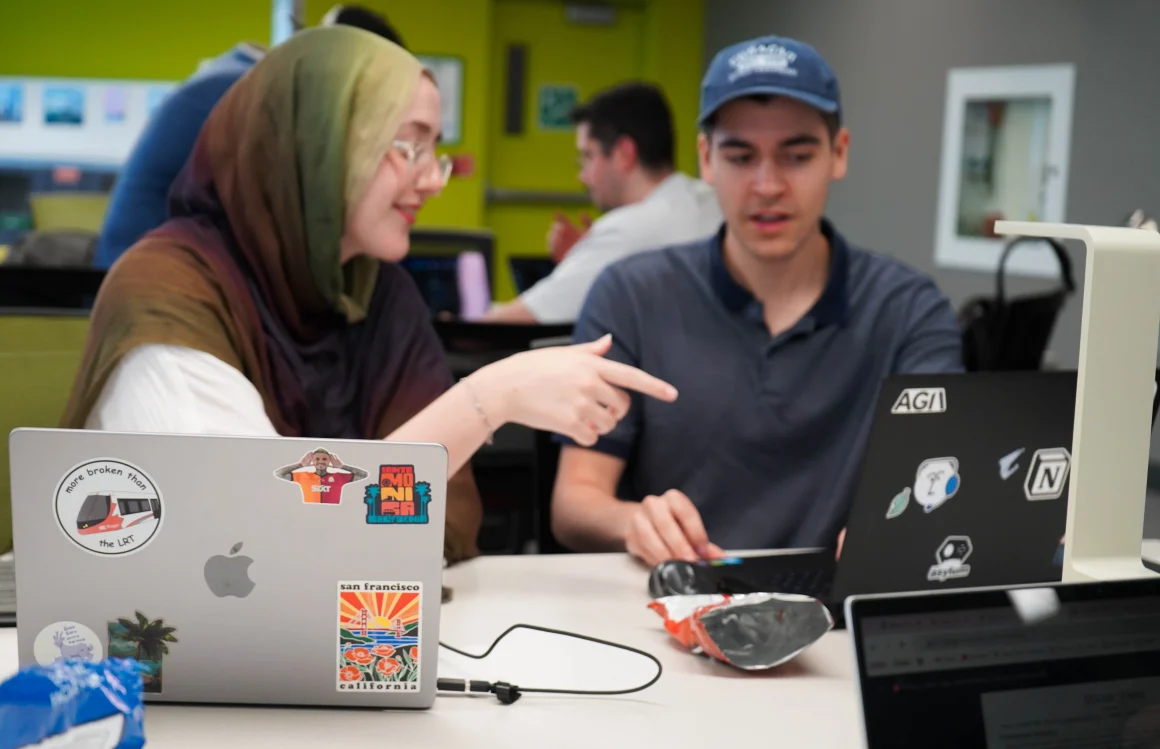
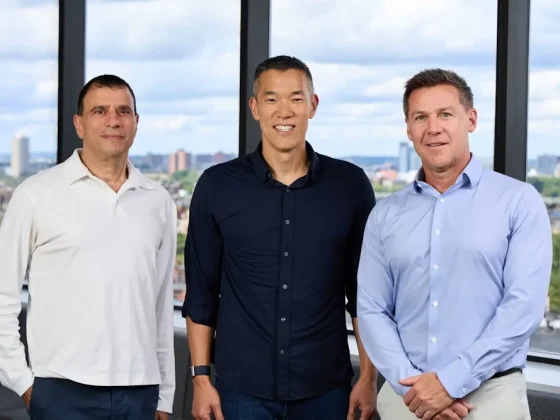
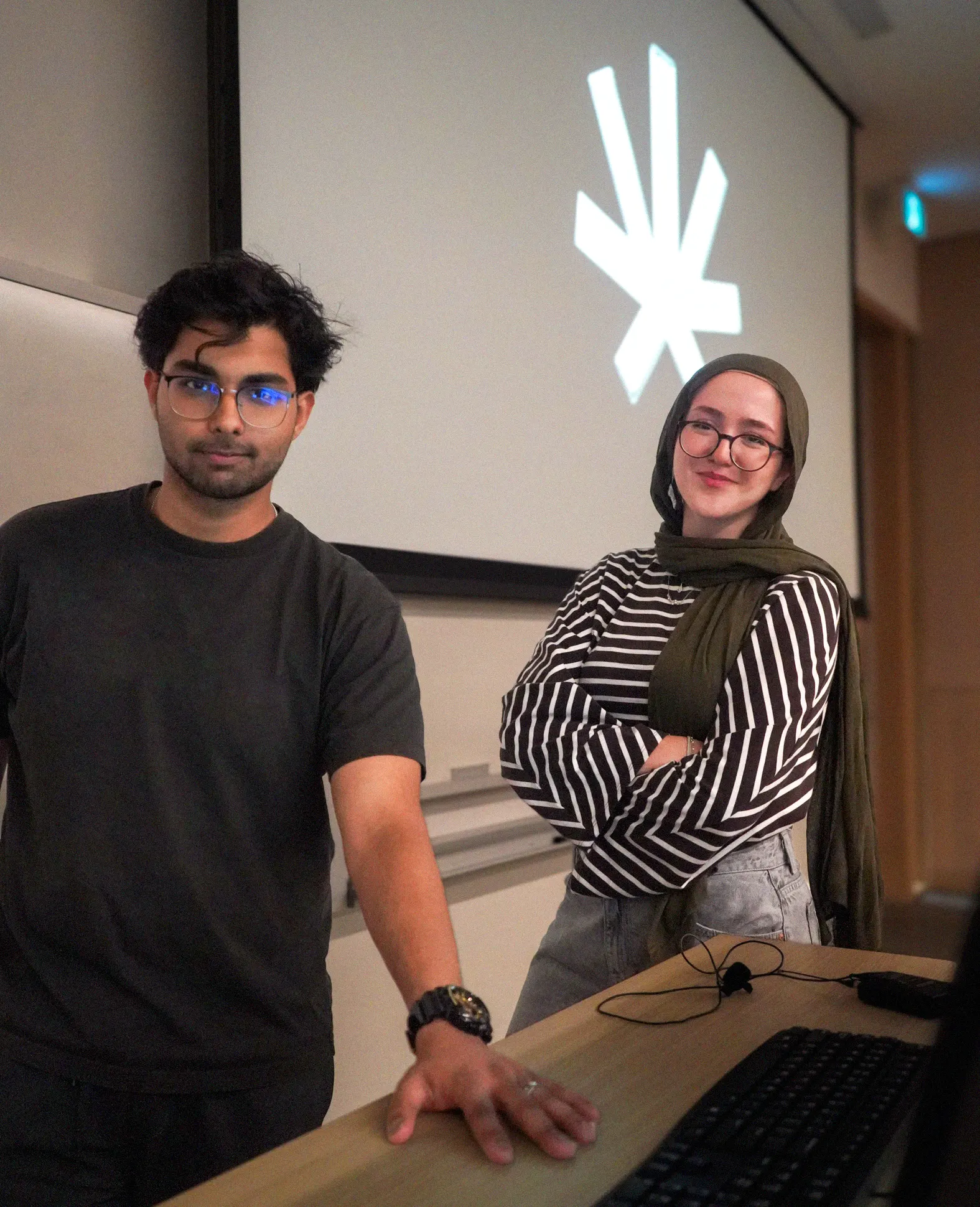
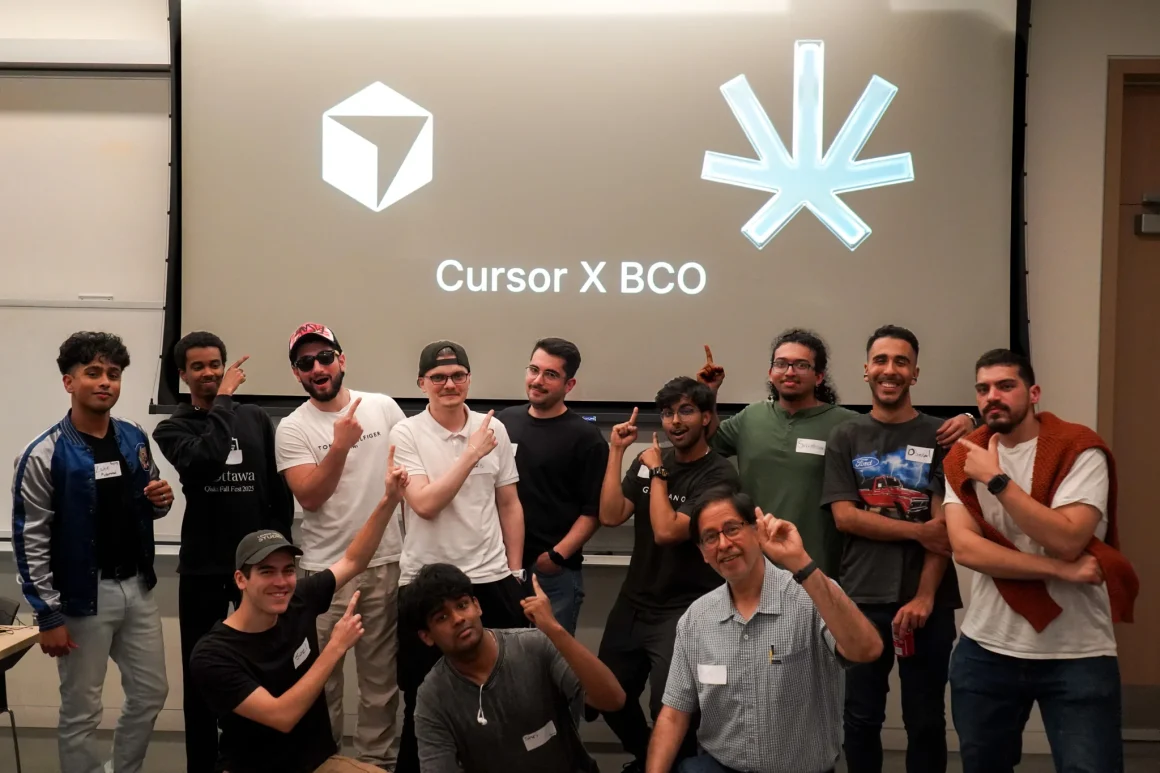
The origin story is almost too simple. Qurb E Muhammad Syed and I started Builders Collective, with Hamza El Sousi, Srivathsan Murali, and Imane Amine as our founding engineers.
We kept watching sharp, ambitious students get told to leave, and instead of asking “where do we move to find a startup community,” we flipped it: “why don’t we just build the one we want, right here?”
We were betting on a hunch, that Ottawa was never short on talent. It was short on a place for that talent to keep bumping into itself. The most surprising thing the experiment turned up was how fast the hunch paid off. The second there was somewhere to show up, the introductions started making themselves.
Someone needs a designer, someone knows one. Someone’s stuck on a bug another person squashed last month. Someone has an idea but no idea where to start, and across the table sits the person who’s already done it.
The people were already here. They just needed a way to find each other.
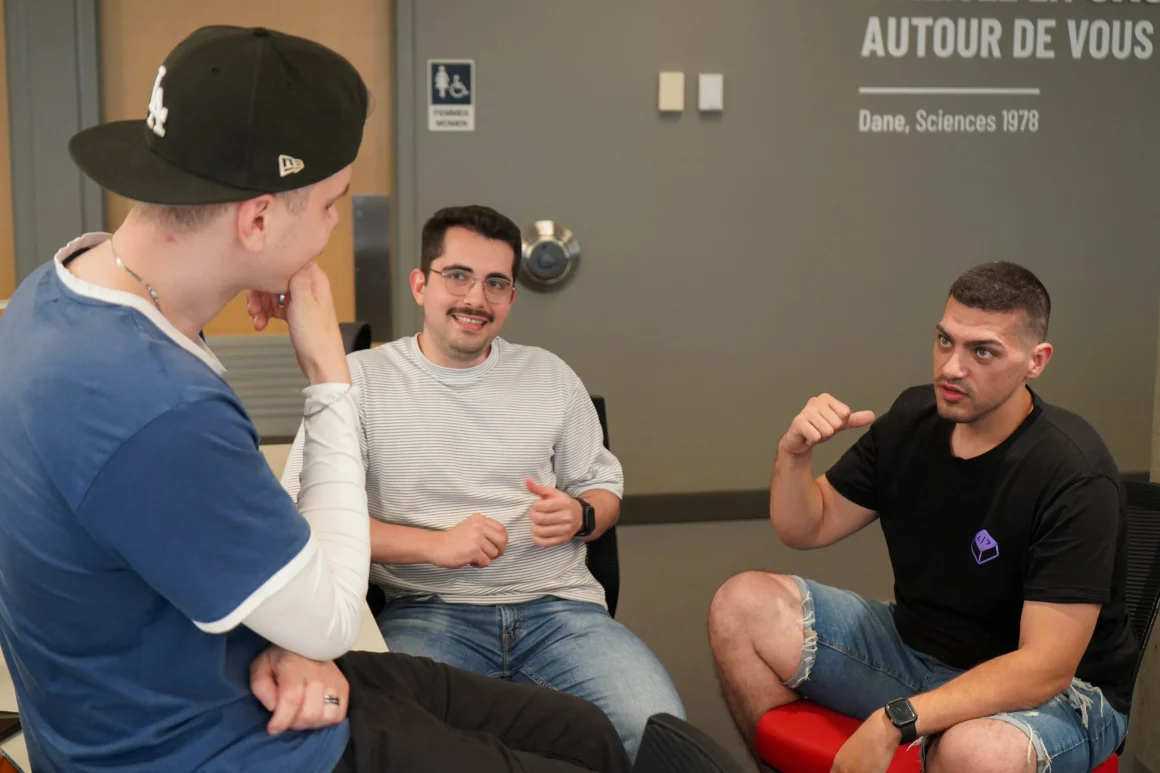
That’s why the format runs with almost no formality. You don’t arrive knowing what you’re doing. You arrive with something you want to work on, you pull up a chair next to other people doing the same, and you build. Starting is the only requirement, because starting is the part most people never get past.
What we’ve actually shipped
Builders Collective is new, and most of us are mid-build. That’s exactly what a group this age should look like, not a knock on anyone. But things are already going out the door, and that’s the part that matters.
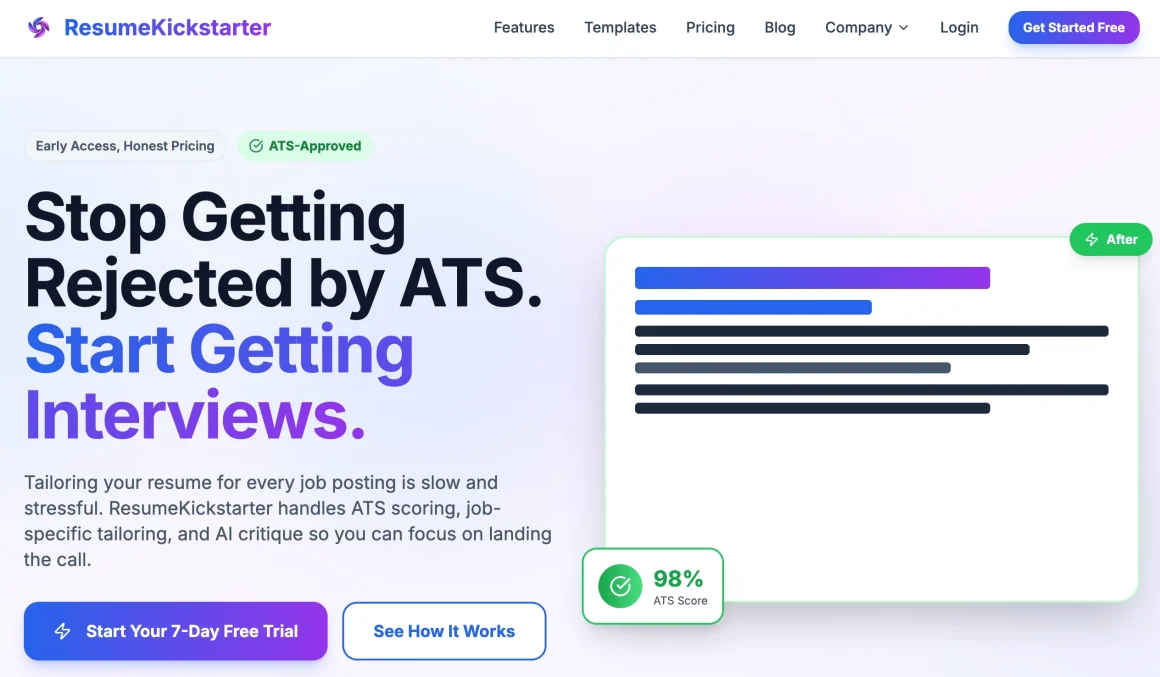
Hamza El Sousi, one of our founding engineers, built and launched ResumeKickstarter, an AI resume builder that spits out ATS-optimized resumes, free to start, no credit card. You upload whatever resume you’ve got, paste in a job description, and it rewrites the wording to match without inventing experience you don’t have. It’s a real, working product with real users.
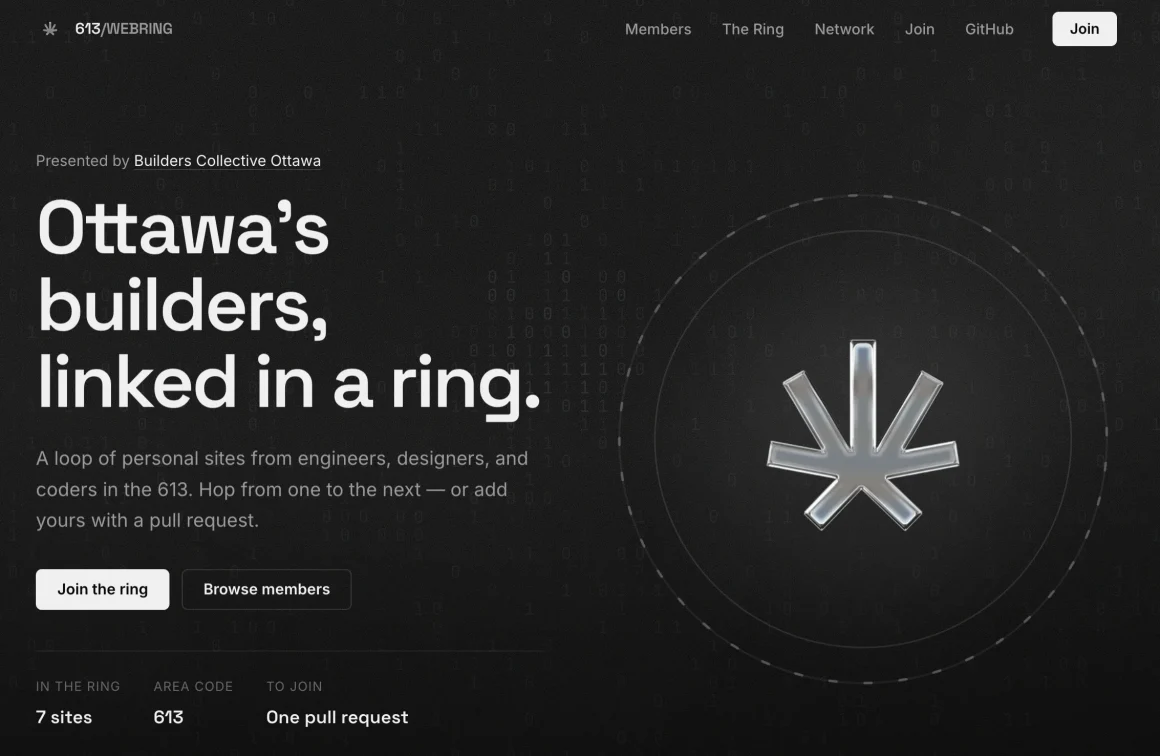
Qurb E Muhammad Syed built the 613 Webring, presented by Builders Collective. If you haven’t seen a webring since the dial-up days, the idea is equal parts nostalgic and genuinely smart: a loop of personal sites from engineers, designers, and coders across the 613 (Ottawa’s area code), each one linking to the next.
You add your site, paste in a tiny snippet, and “previous, 613, next” controls appear in your footer, turning every builder in the city into someone the rest of the city can actually find. It’s infrastructure for the scene. The tagline says it best:
“Ottawa’s builders, linked in a ring.”
Who’s in the room
The range is the best part. Some members are shipping their first small tool. Others are swinging enormous.
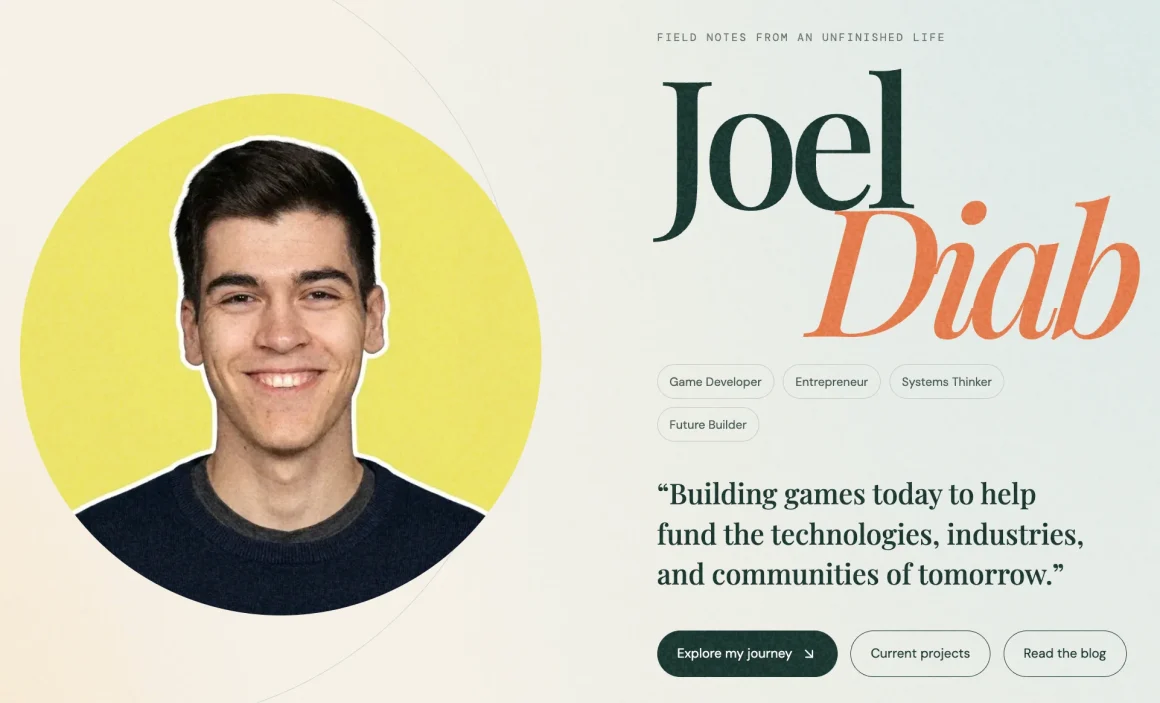
Joel Diab is an Ottawa game developer building Lemon Tree Studio, an AI-native game engine for creator-led games, and he’ll tell you flat out that he’s aiming for a $100 billion studio. The games are just the start. He describes them as a way to fund the technologies and communities he wants to build after them. That kind of goal can sound ridiculous out loud, which is the entire reason it needs a room where it doesn’t.
Hamza, who built ResumeKickstarter, is already quietly turning a profit, just not from the product with his name on it. ResumeKickstarter is the part you can click on. The bills get paid by Social Automate, a small Ottawa studio doing tech consulting for the least glamorous, most underserved clients in the city: mechanics, contractors, accountants, construction crews. Before he builds a thing, he embeds in the business for a day or two and just watches. Then he finds the task quietly eating 3 or 4 hours a week and rebuilds it into something that takes 10 minutes, a proper CRM, branded proposals, invoicing, whatever that specific shop actually runs on.
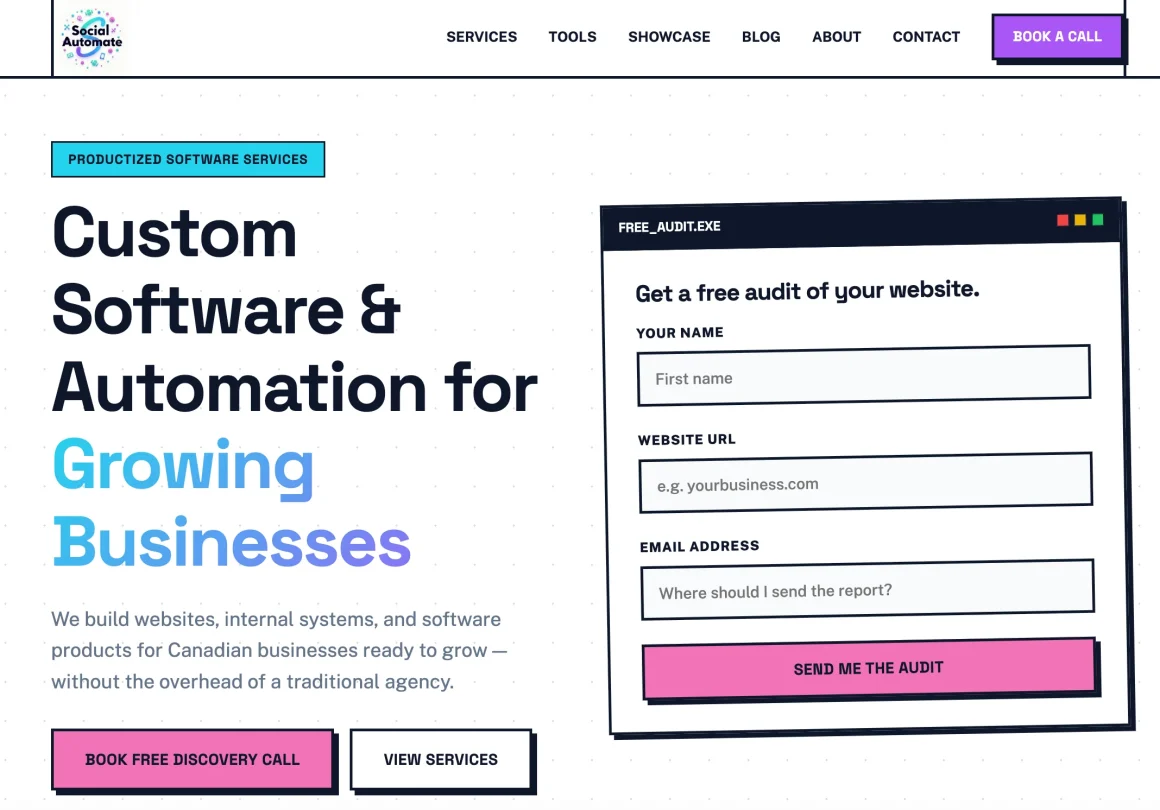
His read on AI is refreshingly free of hype. Not everyone needs an AI agent, he’ll tell you, and most of the time they don’t. What a contractor usually needs is a system that keeps them consistent, because they lose deals to lower-quality competitors who simply present better. Give them professional, branded proposals and they stop leaving money on the table. Social Automate is the quieter, more profitable half of what Hamza does, and it grew out of a leftover: the name is a holdover from a social media tool he built for his college capstone, proved out, then shut down. He kept the aged domain, pivoted the business, and kept building.
Then there’s Tandem Robotics, which settles any argument that real hardware with real revenue can’t come out of Ottawa. Ming Chen, Mumtahin Farabi, and Alvin Htet built Taro, a farm robot that lays the farmer flat and slides them down the crop rows, transplanting 2.5 times faster and weeding 4 times faster than doing it by hand.
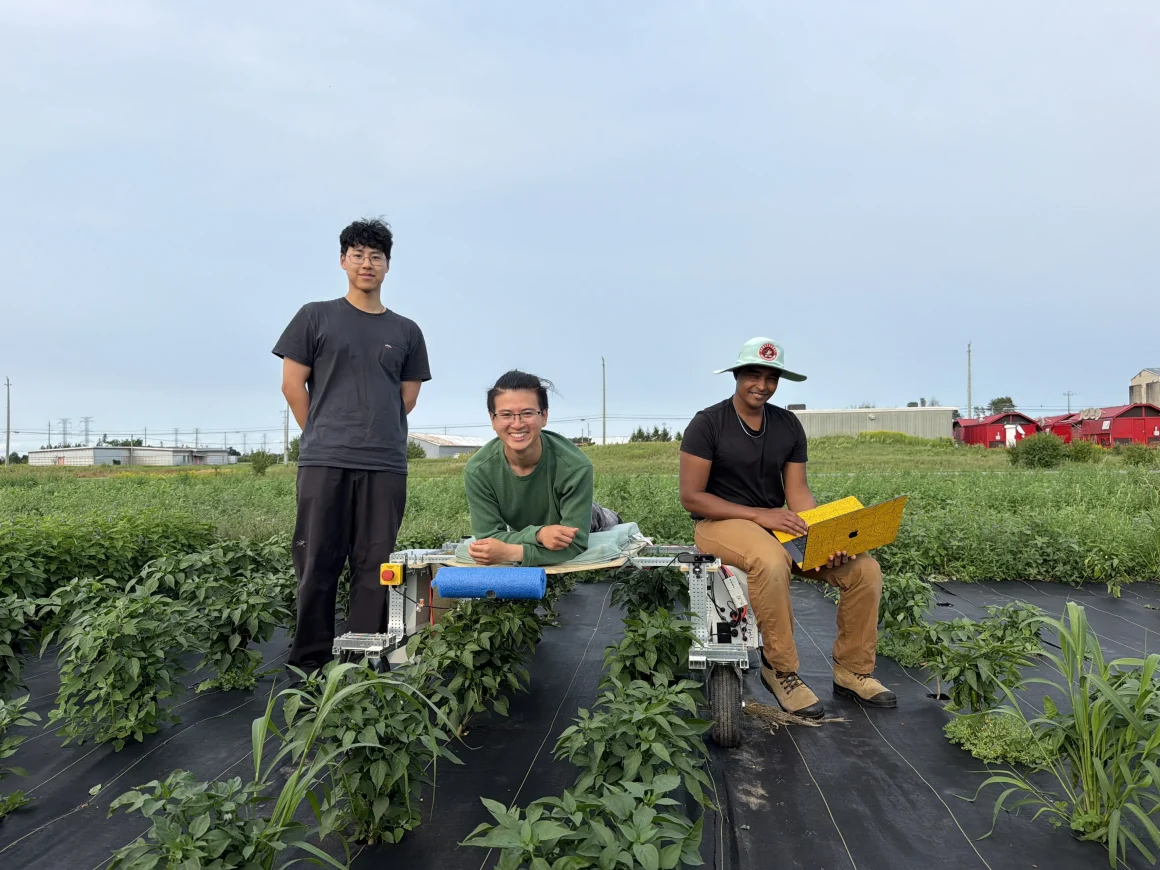
Before they wrote a line of code, they spent 2 full growing seasons volunteering on farms so they’d actually feel the problem they were solving. It shows. They’re sitting on $225,000 in letters of intent, ran 2 robots this season, and plan 20 across more than 15 farms next year. Farmers ask for the machines back when they go in for maintenance. That’s the clearest signal there is that you’ve built something people need.
What Ottawa hands you that a hub can’t
The claim isn’t that Ottawa is secretly cooler than every tech hub. It’s that different cities let you build in different ways, and the trade Ottawa offers is a steal when you’re early.
Start with room to fail. You barely need money to exist here, and that quietly changes what you’re willing to try. Living in San Francisco runs about 78% more than Ottawa once you add rent, with rent alone roughly 148% higher. A one-bedroom in the core is around $2,068 CAD in Ottawa versus $5,261 CAD in San Francisco. When your burn is that low, a project that might flop is cheap enough to just try.

Then there’s space. In a smaller scene you’re not one of ten thousand people clawing to get into the same rooms. You have room to build your own. Some of our members who travel back and forth describe Ottawa as the place they come home to when they actually need to sit down and write code for hours. San Francisco and Toronto are unbeatable for meeting people and making connections. But when the job is to shut the door and finish the thing you care about, sometimes there’s no place like home.
The slower pace cuts both ways, and we won’t pretend otherwise. Fewer events and less hype can mean less momentum. It can also mean you’re not pressured into chasing every trend, which frees you to build what you actually want instead of copying whatever’s loud this week. And when something genuinely isn’t available locally, the internet erases the distance, while we keep widening the network until fewer gaps are left to close. Strong roots in Ottawa, connections everywhere. Not a bubble.
What Builders Collective proves if it works
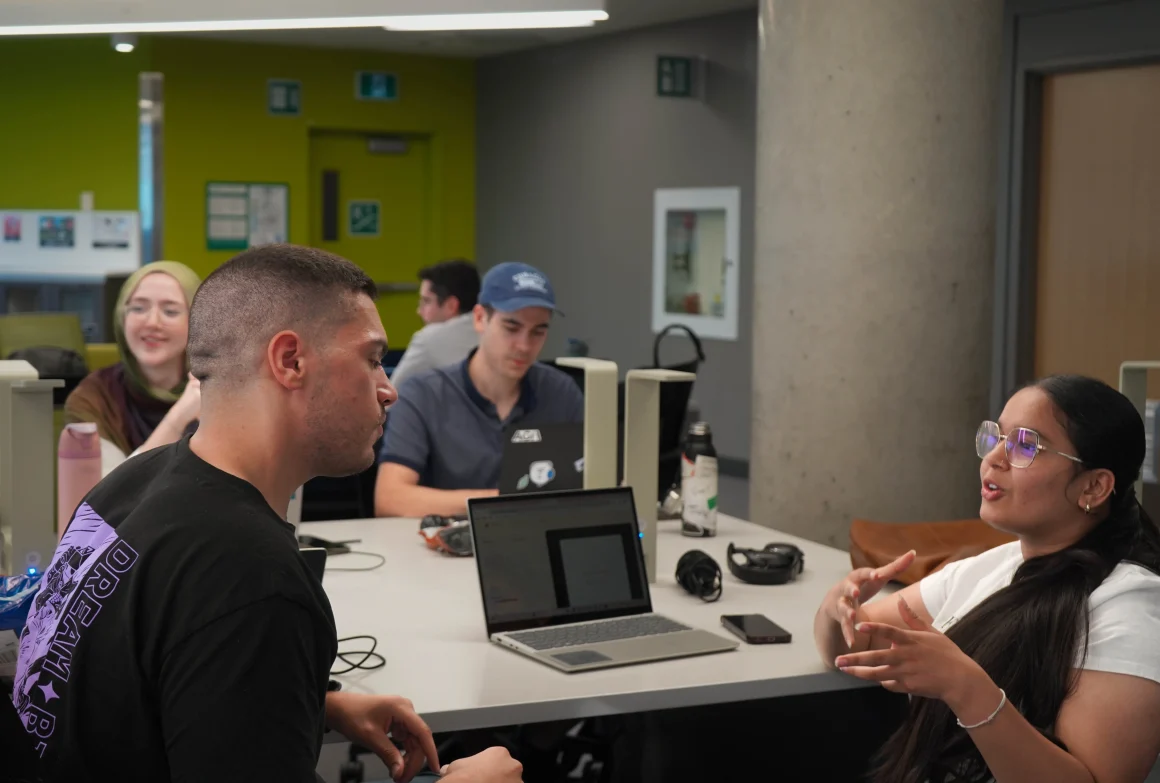
Strip it back and we’re testing a single idea: talent is everywhere, but exposure, opportunity, and the ability to find each other are not. Give ambitious people an easy place to meet, learn, and work on real things, and real companies start getting built where nobody was looking for them.
True for Ottawa. Just as true for every city written off for never making the list of “real” startup hubs. Inside 3 years, we want co-hacks to be the thing you guard on your calendar, a network people actually use to find a co-founder, a designer, or the one person who’s felt the exact problem they’re chasing. We’re deliberate that “builder” covers non-technical people too, because tech companies run on designers, marketers, operators, and strategists just as much as coders. The long game reaches past a better-connected Ottawa: a model that helps builders find each other wherever they happen to land, then helps the next city stand up its own version.
The real ambition is smaller and bigger than it sounds: a place where having a huge idea doesn’t feel ridiculous.
Come build with us
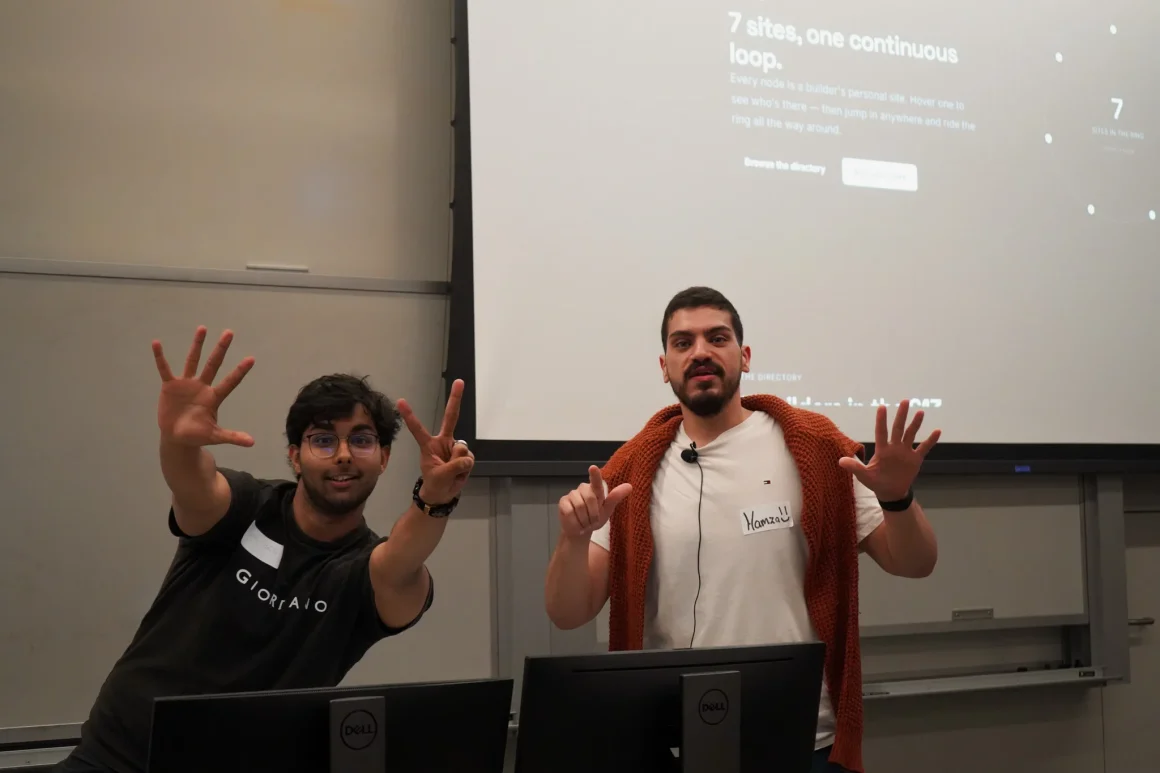
If you’re in Ottawa, this part is simple. We’ve already made the room, so come use it. Show up to a co-hack with whatever you’re working on (half-finished is exactly right), join Builders Collective, and once you ship something, add your site to the 613 Webring so the rest of us can find you.
If you’re a student somewhere else, convinced you have to leave to be taken seriously, my advice is simple. Don’t confuse where you eventually need to be with where you’re allowed to begin. Maybe you’ll move someday. Maybe the company you build ends up in San Francisco. But nothing about that requires you to wait. The playbook is short, and not one line of it needs a plane ticket.
- Find 3 people as obsessed with making things as you are. Not a network. Not a scene. Three people. That’s the whole seed.
- Meet every single week. Consistency crushes intensity. A standing time you always show up to is how a habit hardens into a community.
- Build something and put it online. No waitlist. No “coming soon.” A real thing strangers can touch, however small.
- Get users, then build the next thing. Ship, learn, repeat. Momentum compounds, and so does the crew you build it with.
You don’t need an ecosystem’s permission to start. Sometimes you build the ecosystem around you.
And you don’t need to be in San Francisco to start building something worth going to San Francisco for, either. You just need to take the first step.

Feyza Gulbent is a business student, an artist, and co-founder of Builders Collective Ottawa. Her interests span entrepreneurship, software, design, and creative work, and she loves finding ways to bring those worlds together. As co-founder of Builders Collective Ottawa, she helps create the kind of environment she wanted to see more of in Ottawa; one where ambitious people can find each other, share ideas, experiment with technology, and build meaningful things together.