BYVI
  • Startup Stories
  • Learn from founders
  • Startup Reviews
  • Editor’s Corner
  • Ecosystem
  • Shop
BYVI
  • Startup Stories
  • Learn from founders
  • Startup Reviews
  • Editor’s Corner
  • Ecosystem
  • Shop
0
  • Startup Ecosystem

Funding for Female Founders: How AeQuitas Is Rewriting the Playbook

  • June 2, 2026
Funding for Female Founders
For most women building companies, the way fundraising actually works is rarely said out loud, something I came to understand while building and raising money for my own startup DeckLinks.…
View Post
Share
How to Build and Fund a Deep Tech Company
View Post
  • 12 min
  • Startup Ecosystem

How to Build a Deep Tech Company: Insights from Leading Investors

  • June 1, 2026
Deep tech companies face a unique paradox: the harder the science, the longer the runway required before anyone can tell if it will work. The investors willing to fund that…
View Post
Share
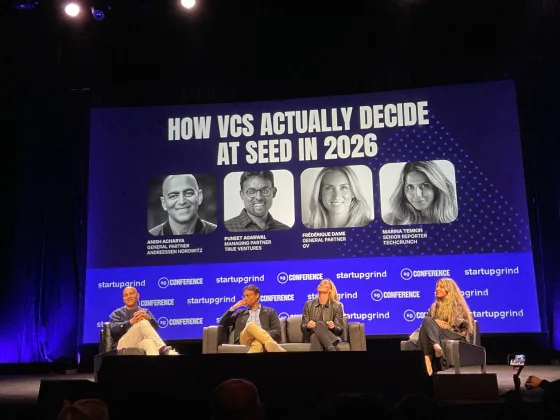
How VCs Actually Decide at Seed in 2026
View Post
  • 7 min
  • Startup Ecosystem

Seed Fundraising in 2026: The Real Reasons VCs Fund or Pass

  • May 24, 2026
If you’re gearing up to raise a seed round in 2026, the playbook has changed. At a recent Startup Grind panel, a group of seed investors spelled out exactly what…
View Post
Share
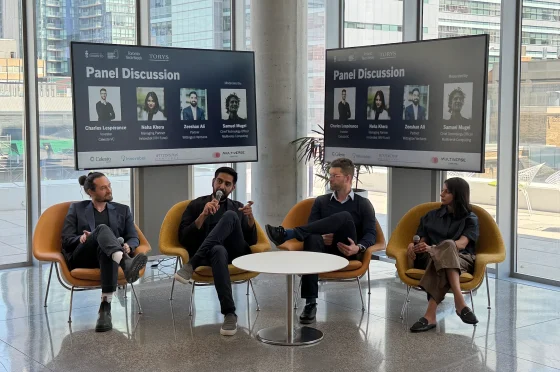
Toronto Tech Week 2026 - Events for Startups
View Post
  • 5 min
  • Startup Ecosystem

Toronto Tech Week 2026: Must-Attend Events for Early-Stage Founders

  • May 22, 2026
Toronto Tech Week 2026 kicks off May 25–29, and the calendar is wild: 500+ events spread across 30-something neighbourhoods, all happening at once. Great problem to have, tricky logistics. If…
View Post
Share
Startup Open House Toronto
View Post
  • 8 min
  • Editor's Corner
  • Startup Ecosystem

Startup Open House: The Startups You Can’t Miss

  • October 7, 2025
A single visit and one honest story can stretch a runway, attract partners, and turn a quiet team into a city-wide conversation. That’s the power startups unlock when they throw…
View Post
Share
Startup Spotlight Web Summit 2025 Vancouver
View Post
  • 23 min
  • Startup Ecosystem
  • Startup Reviews

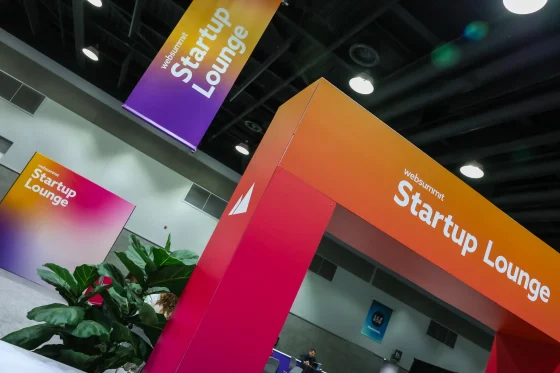
Web Summit 2025 Vancouver: Startup Spotlight

  • June 2, 2025
If you’re debating whether to book that flight to Vancouver next spring, here are some numbers that might help. Web Summit Vancouver 2025 drew over 15,000 attendees, 600 investors, and…
View Post
Share
WebSummit Vancouver 2025
View Post
  • 7 min
  • Startup Ecosystem

Web Summit 2025 Vancouver: Startups You Can’t Miss

  • May 19, 2025
Web Summit is projecting more than 15,000 founders, operators, and investors to flood the Vancouver Convention Centre from May 27-30, 2025. This single gathering could pump CA$172 million of direct…
View Post
Share
Startup Grind Global Conference
View Post
  • 13 min
  • Editor's Corner
  • Startup Ecosystem

Startup Grind 2024: Top Highlights & Key Takeaways

  • May 28, 2024
This year I jumped at the opportunity to attend the highly-anticipated Startup Grind Global Conference. However, this time around, I attended with a different purpose – to cover the event…
View Post
Share
Blipblox toy synthesizers
View Post
  • 4 min
  • Startup Ecosystem

Blipblox: Bringing Professional Music Production to the Toy Aisle

  • March 30, 2024
Electronic music production opened up the world of making music to basically anyone who wants to give it a try. Unlike traditional musical instruments that took forever to learn and…
View Post
Share
Adaawe Hub
View Post
  • 5 min
  • Startup Ecosystem

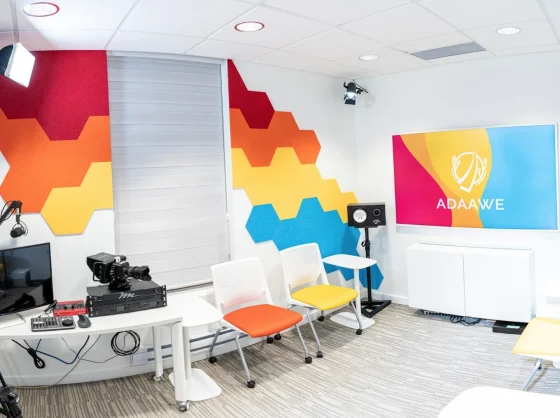
The Startup Hub for Indigenous Founders ADAAWE Turns One

  • December 15, 2023
I was recently invited to celebrate the first anniversary of ADAAWE, an Indigenous startup hub located in downtown Ottawa. It’s a unique co-working space and community hub that empowers Indigenous…
View Post
Share

Posts pagination

Previous 1 2 3 4 5 Next
Featured Posts
  • What DTC CFOs Must Learn From Cal-Maine’s Van’s Foods Acquisition
    • June 12, 2026
  • mergers and acquisitions Trends in Ecommerce 2026
    M&A Trends in Ecommerce: Structuring Working Capital for Profitable Exits
    • September 5, 2026
  • Get Paid to Travel
    How to Get Paid to Travel and Monetize Your Itineraries
    • October 14, 2026
  • Top Trends for DTC Brands 2026
    The $93.5B Frozen Food Boom Is a Cash Flow Problem for DTC Brands
    • August 14, 2026
  • How Tally Turned AI Search Into Its Biggest Growth Channel
    • October 3, 2026
  • How a Solo Founder Is Mapping His Hometown
    Why a Solo Founder Bet on His Town Instead of the Big City
    • September 1, 2026
  • Everyone Can Build Now But Speed and Brand Win the Market
    Everyone Can Build Now: Speed Wins the Market and Brand Keeps It
    • August 25, 2026
  • Personal Finances as a Startup Founder
    How to Plan Personal Finances as a Startup Founder
    • June 30, 2026
@byvi.co
byvi.co

@byvi.co

Startup stories told by founders, not the press.
  • Want to get paid to travel? Start with your DMs you already answer for free.  Your DMs are proof of demand. Every “where did you eat?” or “is that hotel worth it?” is someone asking you to plan their trip. If you answer them one by one, you’re doing a travel agent’s job for free.  Here’s how to monetize your travel content instead:  1. Count your free planning DMs. 54% of travelers like to plan big trips 3 to 6 months ahead, so the questions keep coming long after your post goes quiet.  2. Run an ROI test on your tools. A $29/month storefront adds up to $348 a year, and 68% of part-time creators earn under $1,000 a year from their content. Keep only what pays you back.  3. Skip static PDF travel guides. When a restaurant closes, you can’t update the copies you’ve sold, and buyers lose trust. A digital travel guide on a map lets you fix it once for everyone.  4. Make your itineraries bookable. 73% of travelers say influencer recommendations have influenced a booking. Viator pays affiliates 8%, so a $200 food tour booked through your link earns you $16.  5. Own your audience. Instagram accounts with 10K to 50K followers reach about 5.5% of them per post. Email open rates average close to 40%.  NOWY brings this together: it turns your Instagram posts into a bookable travel map in minutes.  Your last trip can help pay for your next one.  Full guide by @nowy.travel on byvi, link in our bio.  #travelcreator #travelcontentcreator #monetizetravel #travelitinerary #creatoreconomy
  • Tally is a bootstrapped form builder with a team of 10.  43% of its new users now find it through ChatGPT, Claude, Gemini and Perplexity.  They did it without investors, a big budget or a content team.  Full story on byvi.co, link in bio.  #AISearch #AIvisibility #bootstrapping #startupgrowth #SEOforFounders
  • Michael Wang’s piano students have homework they can’t do alone. Every RCM exam includes ear tests, and practicing them usually takes 2 people: one to play, one to name what they hear.  So Michael, a piano teacher and first-year CS student at Carleton, started building an app that lets students drill on their own. 3 weeks in, he pitched it at Shopify’s Builder Sundays and asked the room one question: free app or paid subscription?  4 lessons from his first 3 weeks:  1. Build for people you already see every week
2. Separate who pays from who uses the product
3. Treat user data as a risk before you treat it as revenue
4. Ask for feedback while it’s still cheap to change course  Full story on byvi.co, link in bio.  #startupstories #edtech #studentfounders #ottawatech #buildersundays
  • If you run more than one AI coding agent at a time, this is for you.  When you’ve got Claude Code, Codex, and a few terminals all going at once, the hard part isn’t the code. It’s keeping track of which agent needs you.  One is waiting for you to approve a command. One wants you to check its plan. One finished 10 minutes ago and you didn’t notice. So you spend your day clicking between windows just to see what’s happening.  CrewTower fixes that. It’s a Mac app that shows all your agents in one small bar at the top of your screen (the Apple notch).  From there you can:  1. Approve or deny a command without switching apps  2. Review an agent’s plan before it writes any code  3. See how much usage you have left before you hit a limit  4. Jump straight to the session that needs you  Everything stays on your Mac, nothing gets uploaded.  For the full review follow the link in our bio.  #tokenmaxxing #claudecode #codex #vibecoding #devtools
  • In 2023, 260,000 women died from pregnancy or childbirth. That’s one every 2 minutes, and most of those deaths are preventable with screening that already exists.  Laila Mahmoudi and Ariadna Lozano Sanchez built DayOne at Montréal’s Coopérathon on a simple belief: the tools to save mothers already exist. Getting them to the women who need them is the hard part.  The kit gets them through the door. The company is everything behind it: training, workflows, referral logic, and a data layer that grows with every screening.  Founders, the lesson: find your $5 kit, then build the system behind it.  Full story on byvi.co. Link in bio.  #startupstories #healthtech #maternalhealth #womeninspiringwomen #montrealstartup
  • Google’s AI Contribution Pilot is now live in Search Console, and it pays select publishers when their content feeds AI Overviews, AI Mode and Gemini answers. Invite only. Dozens of sites so far.  One publisher inside the pilot told Digiday the payout formula is “quite black box.” Google calls it an early-stage learning pilot.  Meanwhile, AI Overviews have cut clicks to top-ranking pages by 58%, according to Ahrefs research across 300,000 keywords. Rankings hold steady. Traffic falls anyway.  So who actually gets paid for AI content? Reddit takes a reported $60M a year from Google and around $70M from OpenAI, because it owns millions of human conversations no model can copy. Your blog gets an invite-only widget.  4 levers founders control without an invitation from Google:  1. Refresh your top 10 pages monthly, not yearly
2. Publish expert-led content no one else can write
3. Own an audience outside of search: a newsletter, a Slack or Discord community, a podcast, a YouTube or LinkedIn following
4. Track your AI citations weekly, like you track rankings  While Google decides who gets paid, you can start getting cited today.  #AIContributionPilot #AISearch #AIOverviews #SEOforFounders #AIvisibility
  • Joel spent $1,000 to make $2.50, then built a studio around the lesson.  Now Joel Diab makes custom games for content creators at no upfront cost, funding each one himself and earning only if it does.  It points to something most creators are sitting on and few have used: games may be the most lucrative channel in the creator economy, and it is still wide open.  Full story on BYVI, link in bio.  #creatoreconomy #gamesforcreators #creatortips #mobilegames #customgames
  • Fares hadn’t touched code in 20 years. Then he turned his wife’s crochet hobby into a real business with AI, and shipped it in 5 months without quitting his day job.  The lesson underneath the yarn is bigger than one app: the wall that used to stand between a good idea and a real product is gone. What’s left is finding a problem worth solving, and caring enough to solve it well.  Full story on BYVI (link in bio)  #vibecoding #agenticbuilders #startupstories #crochetpattern #crochetapp
  • Stripe’s Q2 2026 data: 63% of new startups are solo founders. An all-time high.  Same data, second chart: the median solo founder’s first-six-month revenue is down 23%. The top 10% are up 19%. The gap between them is 61×, up from 34× in 2022.  Here’s 5 things the founders pulling ahead do:  1. Ship before you’re ready
2. Go global on day one
3. Own a niche too small to fight over
4. Build the audience before the product
5. Obsess over retention  Full story on byvi.co - link in bio.  #solofounder #startups #buildinpublic #indiehackers #techfounders
View on Instagram
Want to get paid to travel? Start with your DMs you already answer for free.  Your DMs are proof of demand. Every “where did you eat?” or “is that hotel worth it?” is someone asking you to plan their trip. If you answer them one by one, you’re doing a travel agent’s job for free.  Here’s how to monetize your travel content instead:  1. Count your free planning DMs. 54% of travelers like to plan big trips 3 to 6 months ahead, so the questions keep coming long after your post goes quiet.  2. Run an ROI test on your tools. A $29/month storefront adds up to $348 a year, and 68% of part-time creators earn under $1,000 a year from their content. Keep only what pays you back.  3. Skip static PDF travel guides. When a restaurant closes, you can’t update the copies you’ve sold, and buyers lose trust. A digital travel guide on a map lets you fix it once for everyone.  4. Make your itineraries bookable. 73% of travelers say influencer recommendations have influenced a booking. Viator pays affiliates 8%, so a $200 food tour booked through your link earns you $16.  5. Own your audience. Instagram accounts with 10K to 50K followers reach about 5.5% of them per post. Email open rates average close to 40%.  NOWY brings this together: it turns your Instagram posts into a bookable travel map in minutes.  Your last trip can help pay for your next one.  Full guide by @nowy.travel on byvi, link in our bio.  #travelcreator #travelcontentcreator #monetizetravel #travelitinerary #creatoreconomy
@byvi.co
@byvi.co
•
Follow
Want to get paid to travel? Start with your DMs you already answer for free. Your DMs are proof of demand. Every “where did you eat?” or “is that hotel worth it?” is someone asking you to plan their trip. If you answer them one by one, you’re doing a travel agent’s job for free. Here’s how to monetize your travel content instead: 1. Count your free planning DMs. 54% of travelers like to plan big trips 3 to 6 months ahead, so the questions keep coming long after your post goes quiet. 2. Run an ROI test on your tools. A $29/month storefront adds up to $348 a year, and 68% of part-time creators earn under $1,000 a year from their content. Keep only what pays you back. 3. Skip static PDF travel guides. When a restaurant closes, you can’t update the copies you’ve sold, and buyers lose trust. A digital travel guide on a map lets you fix it once for everyone. 4. Make your itineraries bookable. 73% of travelers say influencer recommendations have influenced a booking. Viator pays affiliates 8%, so a $200 food tour booked through your link earns you $16. 5. Own your audience. Instagram accounts with 10K to 50K followers reach about 5.5% of them per post. Email open rates average close to 40%. NOWY brings this together: it turns your Instagram posts into a bookable travel map in minutes. Your last trip can help pay for your next one. Full guide by @nowy.travel on byvi, link in our bio. #travelcreator #travelcontentcreator #monetizetravel #travelitinerary #creatoreconomy
1 day ago
View on Instagram |
1/9
Tally is a bootstrapped form builder with a team of 10.  43% of its new users now find it through ChatGPT, Claude, Gemini and Perplexity.  They did it without investors, a big budget or a content team.  Full story on byvi.co, link in bio.  #AISearch #AIvisibility #bootstrapping #startupgrowth #SEOforFounders
@byvi.co
@byvi.co
•
Follow
Tally is a bootstrapped form builder with a team of 10. 43% of its new users now find it through ChatGPT, Claude, Gemini and Perplexity. They did it without investors, a big budget or a content team. Full story on byvi.co, link in bio. #AISearch #AIvisibility #bootstrapping #startupgrowth #SEOforFounders
1 week ago
View on Instagram |
2/9
Michael Wang’s piano students have homework they can’t do alone. Every RCM exam includes ear tests, and practicing them usually takes 2 people: one to play, one to name what they hear.  So Michael, a piano teacher and first-year CS student at Carleton, started building an app that lets students drill on their own. 3 weeks in, he pitched it at Shopify’s Builder Sundays and asked the room one question: free app or paid subscription?  4 lessons from his first 3 weeks:  1. Build for people you already see every week
2. Separate who pays from who uses the product
3. Treat user data as a risk before you treat it as revenue
4. Ask for feedback while it’s still cheap to change course  Full story on byvi.co, link in bio.  #startupstories #edtech #studentfounders #ottawatech #buildersundays
@byvi.co
@byvi.co
•
Follow
Michael Wang’s piano students have homework they can’t do alone. Every RCM exam includes ear tests, and practicing them usually takes 2 people: one to play, one to name what they hear. So Michael, a piano teacher and first-year CS student at Carleton, started building an app that lets students drill on their own. 3 weeks in, he pitched it at Shopify’s Builder Sundays and asked the room one question: free app or paid subscription? 4 lessons from his first 3 weeks: 1. Build for people you already see every week 2. Separate who pays from who uses the product 3. Treat user data as a risk before you treat it as revenue 4. Ask for feedback while it’s still cheap to change course Full story on byvi.co, link in bio. #startupstories #edtech #studentfounders #ottawatech #buildersundays
2 weeks ago
View on Instagram |
3/9
If you run more than one AI coding agent at a time, this is for you.  When you’ve got Claude Code, Codex, and a few terminals all going at once, the hard part isn’t the code. It’s keeping track of which agent needs you.  One is waiting for you to approve a command. One wants you to check its plan. One finished 10 minutes ago and you didn’t notice. So you spend your day clicking between windows just to see what’s happening.  CrewTower fixes that. It’s a Mac app that shows all your agents in one small bar at the top of your screen (the Apple notch).  From there you can:  1. Approve or deny a command without switching apps  2. Review an agent’s plan before it writes any code  3. See how much usage you have left before you hit a limit  4. Jump straight to the session that needs you  Everything stays on your Mac, nothing gets uploaded.  For the full review follow the link in our bio.  #tokenmaxxing #claudecode #codex #vibecoding #devtools
@byvi.co
@byvi.co
•
Follow
If you run more than one AI coding agent at a time, this is for you. When you’ve got Claude Code, Codex, and a few terminals all going at once, the hard part isn’t the code. It’s keeping track of which agent needs you. One is waiting for you to approve a command. One wants you to check its plan. One finished 10 minutes ago and you didn’t notice. So you spend your day clicking between windows just to see what’s happening. CrewTower fixes that. It’s a Mac app that shows all your agents in one small bar at the top of your screen (the Apple notch). From there you can: 1. Approve or deny a command without switching apps 2. Review an agent’s plan before it writes any code 3. See how much usage you have left before you hit a limit 4. Jump straight to the session that needs you Everything stays on your Mac, nothing gets uploaded. For the full review follow the link in our bio. #tokenmaxxing #claudecode #codex #vibecoding #devtools
3 weeks ago
View on Instagram |
4/9
In 2023, 260,000 women died from pregnancy or childbirth. That’s one every 2 minutes, and most of those deaths are preventable with screening that already exists.  Laila Mahmoudi and Ariadna Lozano Sanchez built DayOne at Montréal’s Coopérathon on a simple belief: the tools to save mothers already exist. Getting them to the women who need them is the hard part.  The kit gets them through the door. The company is everything behind it: training, workflows, referral logic, and a data layer that grows with every screening.  Founders, the lesson: find your $5 kit, then build the system behind it.  Full story on byvi.co. Link in bio.  #startupstories #healthtech #maternalhealth #womeninspiringwomen #montrealstartup
@byvi.co
@byvi.co
•
Follow
In 2023, 260,000 women died from pregnancy or childbirth. That’s one every 2 minutes, and most of those deaths are preventable with screening that already exists. Laila Mahmoudi and Ariadna Lozano Sanchez built DayOne at Montréal’s Coopérathon on a simple belief: the tools to save mothers already exist. Getting them to the women who need them is the hard part. The kit gets them through the door. The company is everything behind it: training, workflows, referral logic, and a data layer that grows with every screening. Founders, the lesson: find your $5 kit, then build the system behind it. Full story on byvi.co. Link in bio. #startupstories #healthtech #maternalhealth #womeninspiringwomen #montrealstartup
3 weeks ago
View on Instagram |
5/9
Google’s AI Contribution Pilot is now live in Search Console, and it pays select publishers when their content feeds AI Overviews, AI Mode and Gemini answers. Invite only. Dozens of sites so far.  One publisher inside the pilot told Digiday the payout formula is “quite black box.” Google calls it an early-stage learning pilot.  Meanwhile, AI Overviews have cut clicks to top-ranking pages by 58%, according to Ahrefs research across 300,000 keywords. Rankings hold steady. Traffic falls anyway.  So who actually gets paid for AI content? Reddit takes a reported $60M a year from Google and around $70M from OpenAI, because it owns millions of human conversations no model can copy. Your blog gets an invite-only widget.  4 levers founders control without an invitation from Google:  1. Refresh your top 10 pages monthly, not yearly
2. Publish expert-led content no one else can write
3. Own an audience outside of search: a newsletter, a Slack or Discord community, a podcast, a YouTube or LinkedIn following
4. Track your AI citations weekly, like you track rankings  While Google decides who gets paid, you can start getting cited today.  #AIContributionPilot #AISearch #AIOverviews #SEOforFounders #AIvisibility
@byvi.co
@byvi.co
•
Follow
Google’s AI Contribution Pilot is now live in Search Console, and it pays select publishers when their content feeds AI Overviews, AI Mode and Gemini answers. Invite only. Dozens of sites so far. One publisher inside the pilot told Digiday the payout formula is “quite black box.” Google calls it an early-stage learning pilot. Meanwhile, AI Overviews have cut clicks to top-ranking pages by 58%, according to Ahrefs research across 300,000 keywords. Rankings hold steady. Traffic falls anyway. So who actually gets paid for AI content? Reddit takes a reported $60M a year from Google and around $70M from OpenAI, because it owns millions of human conversations no model can copy. Your blog gets an invite-only widget. 4 levers founders control without an invitation from Google: 1. Refresh your top 10 pages monthly, not yearly 2. Publish expert-led content no one else can write 3. Own an audience outside of search: a newsletter, a Slack or Discord community, a podcast, a YouTube or LinkedIn following 4. Track your AI citations weekly, like you track rankings While Google decides who gets paid, you can start getting cited today. #AIContributionPilot #AISearch #AIOverviews #SEOforFounders #AIvisibility
3 weeks ago
View on Instagram |
6/9
Joel spent $1,000 to make $2.50, then built a studio around the lesson.  Now Joel Diab makes custom games for content creators at no upfront cost, funding each one himself and earning only if it does.  It points to something most creators are sitting on and few have used: games may be the most lucrative channel in the creator economy, and it is still wide open.  Full story on BYVI, link in bio.  #creatoreconomy #gamesforcreators #creatortips #mobilegames #customgames
@byvi.co
@byvi.co
•
Follow
Joel spent $1,000 to make $2.50, then built a studio around the lesson. Now Joel Diab makes custom games for content creators at no upfront cost, funding each one himself and earning only if it does. It points to something most creators are sitting on and few have used: games may be the most lucrative channel in the creator economy, and it is still wide open. Full story on BYVI, link in bio. #creatoreconomy #gamesforcreators #creatortips #mobilegames #customgames
4 weeks ago
View on Instagram |
7/9
Fares hadn’t touched code in 20 years. Then he turned his wife’s crochet hobby into a real business with AI, and shipped it in 5 months without quitting his day job.  The lesson underneath the yarn is bigger than one app: the wall that used to stand between a good idea and a real product is gone. What’s left is finding a problem worth solving, and caring enough to solve it well.  Full story on BYVI (link in bio)  #vibecoding #agenticbuilders #startupstories #crochetpattern #crochetapp
@byvi.co
@byvi.co
•
Follow
Fares hadn’t touched code in 20 years. Then he turned his wife’s crochet hobby into a real business with AI, and shipped it in 5 months without quitting his day job. The lesson underneath the yarn is bigger than one app: the wall that used to stand between a good idea and a real product is gone. What’s left is finding a problem worth solving, and caring enough to solve it well. Full story on BYVI (link in bio) #vibecoding #agenticbuilders #startupstories #crochetpattern #crochetapp
1 month ago
View on Instagram |
8/9
Stripe’s Q2 2026 data: 63% of new startups are solo founders. An all-time high.  Same data, second chart: the median solo founder’s first-six-month revenue is down 23%. The top 10% are up 19%. The gap between them is 61×, up from 34× in 2022.  Here’s 5 things the founders pulling ahead do:  1. Ship before you’re ready
2. Go global on day one
3. Own a niche too small to fight over
4. Build the audience before the product
5. Obsess over retention  Full story on byvi.co - link in bio.  #solofounder #startups #buildinpublic #indiehackers #techfounders
@byvi.co
@byvi.co
•
Follow
Stripe’s Q2 2026 data: 63% of new startups are solo founders. An all-time high. Same data, second chart: the median solo founder’s first-six-month revenue is down 23%. The top 10% are up 19%. The gap between them is 61×, up from 34× in 2022. Here’s 5 things the founders pulling ahead do: 1. Ship before you’re ready 2. Go global on day one 3. Own a niche too small to fight over 4. Build the audience before the product 5. Obsess over retention Full story on byvi.co - link in bio. #solofounder #startups #buildinpublic #indiehackers #techfounders
1 month ago
View on Instagram |
9/9
Shop Banner Vertical
BYVI
  • About
  • Become a Guest Author
  • Contact
  • Privacy Policy

Input your search keywords and press Enter.