Healthy Planet just put $1 million in marketing muscle behind small Canadian wellness brands, and there’s no form to fill out. The retailer will pick the winners from its own sales data. That one detail tells founders exactly what retailers reward now, and how to get picked without asking.
This week, CHFA NOW Toronto opens at Exhibition Place, and for 3 days Canada’s natural and wellness industry will crowd into one building. Last year’s show drew more than 1,200 exhibitors and 3,400 attendees. Somewhere in there, a founder is reprinting her sell sheet for the second time this week, practising a 30-second pitch on her co-founder, and hoping the right buyer stops at her table.
Alongside all the booth conversations, there’s another $1 million opportunity on the table this week. Just ahead of the show, Healthy Planet announced the Homegrown Grant, worth $1 million in promotion across its stores and website. Nobody can pitch for it. The retailer will choose by looking at its own numbers.
The grant with no application form
Photo Credit: Healthy Planet
The Homegrown Grant offers $1 million in Healthy Planet media value, split among a group of selected health and wellness brands.
To qualify, a brand has to be early in its journey, Canadian-owned and headquartered, family-owned or founder-led, and new to Healthy Planet’s shelves. The support comes as visibility and promotional programs across its stores and its e-commerce channel.
Then the twist: rather than running an open application process, Healthy Planet will shortlist eligible brands using its own sales data and selection criteria, and contact them directly. Healthy Planet announced it ahead of CHFA NOW Toronto, though the grant itself is separate from the show.
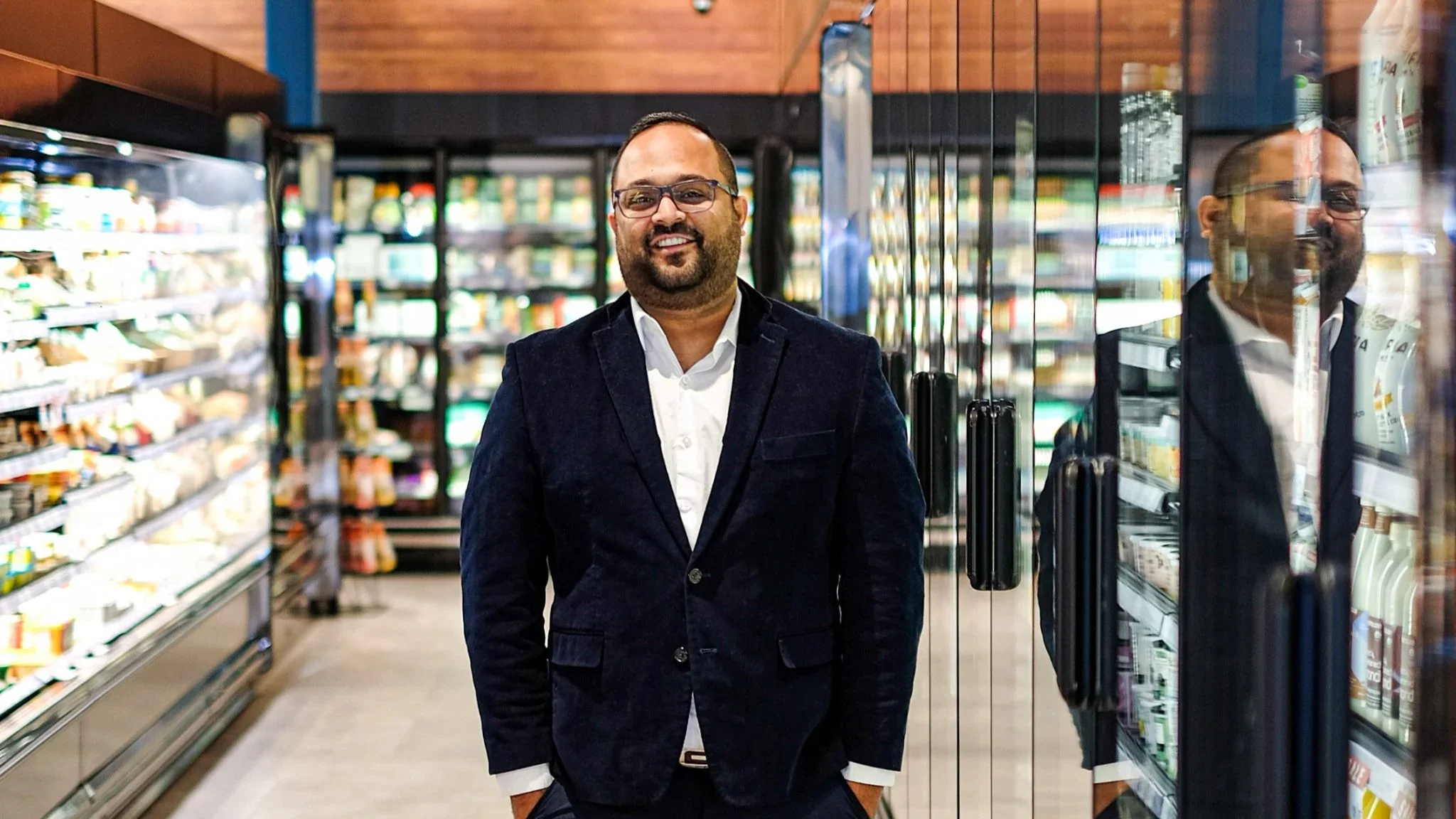
“Today we meet founders with wonderful products who are up against global brands whose marketing budgets they will never match.”
– Muhammad Mohamedy, General Manager at Healthy Planet
A little context on who’s writing the cheque. Healthy Planet has been a Canadian family business since 1995 and started as a small kiosk.
It now calls itself Canada’s largest online health store, and it’s about to open its 46th Ontario location, an 11,200 square-foot store in Scarborough, on October 1.
Exterior of Healthy Planet’s soon-to-open location at 3607 Sheppard Avenue East. Photography courtesy Healthy Planet
A fair reading needs 2 honest notes.
“Media value” means promotional placement priced at what it would normally cost a brand to buy: featured spots in stores, promotions online, that kind of exposure. It won’t pay your co-packer or cover payroll. For an early brand, though, it covers the exact line item that usually gets cut first.
A few details aren’t public yet: how many brands will be picked, how the $1 million will be divided, and when the programs run. There’s also an interesting tension in the criteria. Brands must be new to Healthy Planet’s shelves, yet they’re shortlisted from sales data. My read is that the sweet spot is brands recently listed whose early numbers already show traction.
Why visibility is the expensive part
Healthy Planet’s general manager, Muhammad Mohamedy, framed the grant around a problem every CPG founder knows. Small founders, he said, are up against global brands with marketing budgets they’ll never match, and visibility is “the one thing we can give them that they would otherwise have to buy.”
He’s right about the price tag. Getting onto a shelf costs money before a single unit sells. Farm Credit Canada estimates listing fees (what a brand pays a retailer to place a new product) at about $100 per store for each product, while smaller retailers often ask for a free case per product per store instead. It also advises brands to plan on at least 3 to 4 price promotions a year at 15% to 25% off.
And that’s only the cost of being there. Being seen is a separate budget: promos, flyers, end caps, sponsored listings online. That second budget is where small brands lose, because a product nobody notices doesn’t sell, and a product that doesn’t sell gets delisted.
Healthy Planet also has a very practical reason to find these brands early. Its own numbers show that Canadian brands carry the store. In June, Mohamedy said Canadian-owned brands make up only about a quarter of the roughly 2,200 brands it carries but drive about 2/3 of its sales. In some aisles it’s close to total: roughly 98% of its magnesium sales and 97% of its vitamin sales come from Canadian-owned brands. The retailer carries close to 600 Canadian-owned brands, many of them small.
So this grant is generous and good business at the same time. Healthy Planet gets first access to the next brand its shoppers will love, right as the “buy Canadian” habit keeps growing. I don’t count that against it. The partnerships that last are the ones where both sides win, and founders should read the grant as a clear signal of what this retailer wants more of.
How to get picked for Healthy Planet’s Homegrown Grant
Since nobody can apply, the only way in is to already look like a winner. These 6 moves make that happen, whether or not you ever get the call.
1. Treat your sales data as your application.
Healthy Planet picks from its own numbers, and it runs the rest of the business the same way: store openings are chosen using local demographics, existing e-commerce penetration and customer density. If you’re already listed somewhere, know your sales per store per week cold, and send buyers a one-page update when those numbers climb.
2. Aim for the gaps on the shelf.
The same Healthy Planet data shows where Canadian brands are missing: they’re only about 4% of its cosmetics sales and 9% of baby, because credible local options are thin. Mohamedy called that exactly where retailers and Canadian makers can partner. A strong Canadian brand in a thin category stands out.
3. Make your Canadian story findable in 2 seconds.
Healthy Planet already uses maple leaf shelf tags, a Canadian products section online and dedicated shopping filters to help shoppers spot local brands. Meet it halfway. Put “Canadian-owned” or “Made in Canada” on the front of the pack, in your online product titles and in your retailer product data, so every tag and filter actually catches you.
4. Build for the second purchase before the spotlight hits.
Mohamedy’s definition of success is specific: a shopper discovers the brand and comes back for it, and the brand gets to hire someone and add a product. Visibility only compounds if people rebuy.
Before any big promo, make sure you have inventory to cover a spike, a reason to repurchase (a bigger size, a bundle, a subscription online) and a plan for when the promo ends. Loblaw’s Small Supplier Program offers new small suppliers a 6-month on-shelf commitment for the same reason: repeat buying takes time to build.
5. Start with retailers that can actually see you.
A 45-store regional chain notices a small brand. A national grocer with thousands of SKUs per aisle might not, at least not yet. Win the specialist first, then use those numbers to open bigger doors. And stack your options. Loblaw’s program, for example, promises subsidized retail fees and 7-day payment terms for small suppliers. Different doors reward the same thing: proof that shoppers want you.
6. Show up where buyers go looking for new brands.
Healthy Planet announced the grant the same week as CHFA NOW, where retailers get VIP perks designed to help them discover emerging brands and the Launch Pad competition puts new products in front of the industry live. Buyers can only shortlist brands they’ve heard of.
What to do if your Canadian brand isn’t picked
Unsolicited grants have a downside worth naming: you can’t control whether you’re picked. If your brand isn’t listed with Healthy Planet yet, this round probably isn’t yours, and chasing it would be a distraction. If you were listed recently, the best thing you can do is keep doing what got you there: fill the shelf, fix out-of-stocks fast, and give store staff a reason to recommend you.
The smarter move is to treat the grant as a public description of what one growing Canadian retailer values: founder-led brands, clear Canadian ownership, early traction, and products shoppers come back for.
That list pays off even if you never sell a single unit through Healthy Planet. Every good buyer runs through the same checklist in their head. This time, a retailer wrote it down.
Lidia Vijga is a content engineer focused on building in-house growth engines and training AI agents that help companies scale content and dominate brand visibility across traditional and AI search. She is also co-founder of DeckLinks, bringing firsthand founder experience in building and scaling technology products.